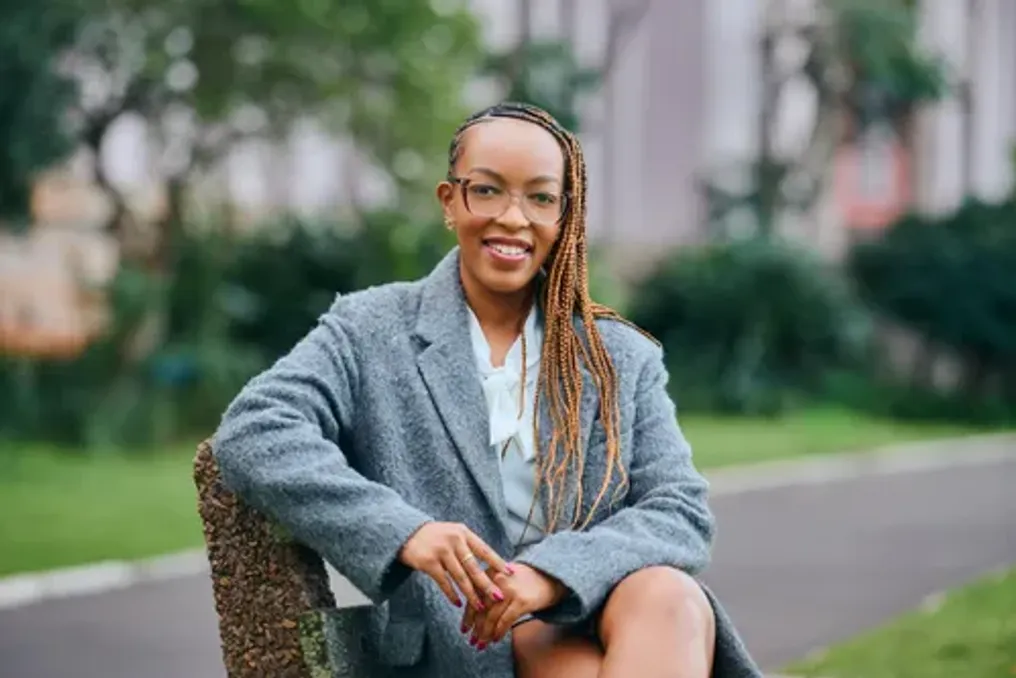
Melissa Sibanda, a postgraduate student at the University of KwaZulu-Natal (UKZN), will represent South Africa at the final stage of the international BRICS debate championships in Moscow this December. She earned this right after winning the national championship.
Sibanda, 29, who is pursuing a doctoral program in Geography, Planning and Housing at the UKZN School of Social Sciences, won the national debate tournament organized by the BRICS Research Institute.
She will now compete against national champions from other founding BRICS countries: Brazil, Russia, India, and China. The winner will receive a fully sponsored academic exchange at a university of their choice in a BRICS country.
Sibanda's research focuses on the disproportionate burden faced by women living in informal settlements lacking reliable and accessible energy. Her work has also highlighted broader issues of poverty, gender inequality, energy access, and urban development in the Global South.
Sibanda shared that her interest in the BRICS debates arose after receiving funding from the Humanities Research Directorate to participate in the III Conference of the BRICS Research Institute in China in 2024.
She noted: 'I came as a housing researcher and left convinced that the issues that concern me, such as poverty, gender, energy, and how cities are globally built, are precisely the issues discussed in multilateral forums.' She added that the experience strengthened her understanding of the importance of the Global South defining its own terms, rather than merely inheriting others'.
This experience prompted Sibanda to take a more active role in these discussions, leading her to apply for the open BRICS debate competition in March of this year.
In preparation for the competition, she deeply studied the history, structures, and institutions of BRICS, as well as analyzing the political and economic interests of member states and discussions on global governance reform.
Sibanda emphasized: 'This tension is the core topic of the debates: whether BRICS is reforming global governance or reproducing existing inequalities.' She intends to approach the international finals with the same composure that helped her pass the national rounds. 'My strategy for the final is to remain calm and think clearly under pressure. That is what the national rounds taught me, and I plan to take that with me,' she stated.
Furthermore, she believes that effectively representing South Africa will require not only argumentation but also the ability to listen. 'A good representation of South Africa does not require shouting over anyone; instead, it requires serious engagement with their positions while maintaining my own evidence-based viewpoint with clarity,' said Sibanda.
In addition to her doctoral studies, Sibanda works as an academic development officer at the UKZN College of Humanities, where she assists students in their academic growth and development. Her own educational journey at UKZN began with an undergraduate program, after which she obtained a master's degree from the same university.
Dr. Norma Zondo, Executive Director of the UKZN Corporate Relations Department, congratulated Sibanda on the achievement, calling it a proud moment for the university and a reflection of the caliber of its students and staff. Zondo stated: 'We congratulate Melissa on this outstanding achievement, which reflects not only her intellectual capabilities and confidence but also the global perspective and critical engagement we strive to cultivate in our students.' She continued: 'Her success demonstrates the value of rigorous scholarship, reasoned debate, and the ability to address complex global issues with clarity, evidence, and purpose.'
Zondo also noted that Sibanda's ability to connect her academic expertise with pressing social issues shows the broader impact of scholarship. 'We are particularly proud of how Melissa applies her academic knowledge to issues that have profound implications for communities, including poverty, gender inequality, energy access, and urban development in the Global South,' she said. 'Thus, she demonstrates how scholarship can go beyond the classroom and make a meaningful contribution to the conversations shaping our common future.'