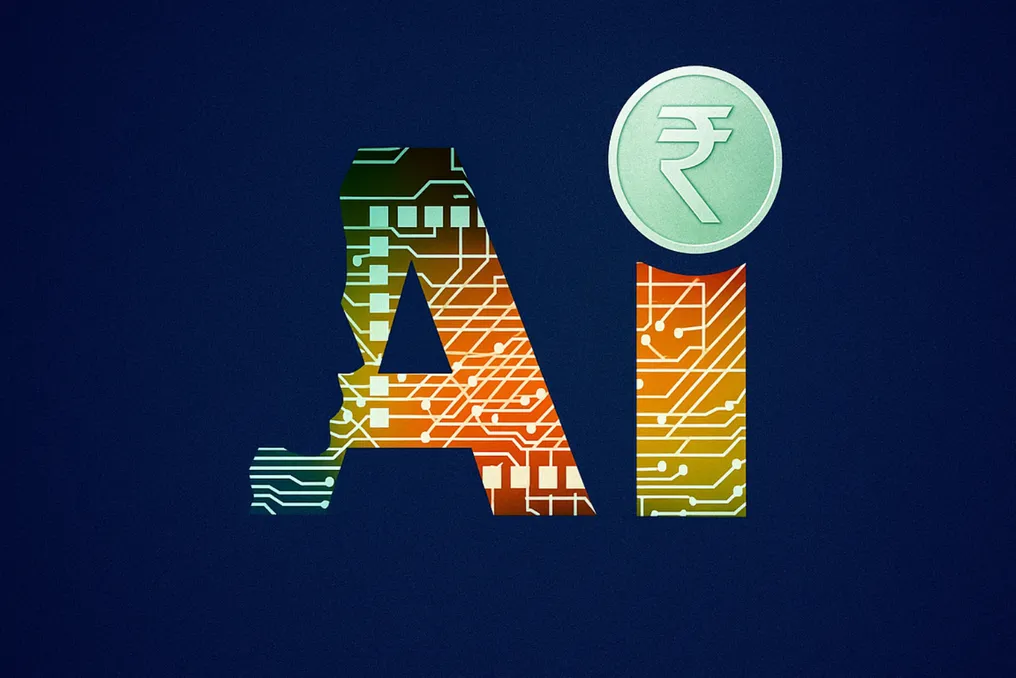
The World Bank reported on Tuesday that India ranks among the top ten emerging markets in terms of readiness to use artificial intelligence (AI). Thanks to its large technical staff, globally integrated IT sector, and digital public infrastructure, the country is well-prepared to implement this technology.
In its latest report titled 'India and Artificial Intelligence: Harnessing the Opportunity for Development,' the World Bank noted that private investment in AI in India has more than tripled. In 2025, the volume of these investments reached $4.1 billion, compared to $1.2 billion in 2024.
Furthermore, in 2025, the number of specialists employed in Global Capability Centers (GCCs) increased to 2.36 million from 1.9 million the previous year. Nevertheless, the report emphasized that the long-term impact of AI on the labor market and economy remains uncertain.
In this regard, the World Bank called for the adoption of comprehensive policy measures. These measures should aim to deepen the infrastructure supporting AI development, improve the business climate, expand access to AI, and enhance human capital so that the benefits of the technology can be widely distributed.
Paul Rossi, World Bank's Director for India, stated: 'India is one of the top ten emerging markets in terms of AI readiness.' He added that 'using AI as a tool for development, rather than just as a technology, can be one of the most powerful levers available to India to boost productivity and improve public services.'
The Bank's global group also invests through AgriConnect in 'small AI' tools that are locally adapted and aimed at ensuring that the benefits of AI reach wider segments of the population while supporting workers during the transition.
The 'India Development Update' is a supplement to the World Bank Group's 'South Asia Economic Outlook,' which analyzes economic development and prospects in the region. According to this outlook, South Asia is projected to grow by 6.9 percent in 2026, maintaining its status as the world's fastest-growing region.
The report also indicated that for most South Asian countries, the greatest gains from AI are likely to come from adapting and applying the technology to local conditions, including using small AI applications suitable for resource-constrained environments.