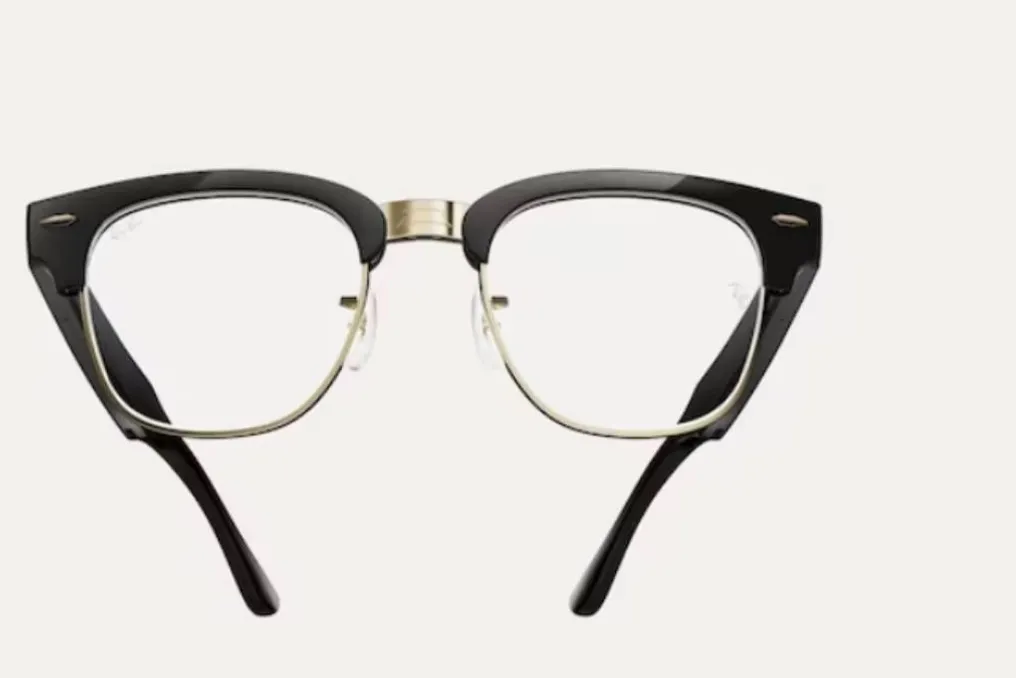
The South African Information Regulator held a meeting with Meta Platforms in September, during which the company demonstrated its camera-equipped smart glasses to the privacy oversight body.
The Regulator informed TechCentral that the meeting took place last month when Meta representatives showcased smart glasses with recording camera functionality. This meeting occurred in the same month that Meta and eyewear partner EssilorLuxottica announced the inclusion of South Africa in the list of markets where Ray-Ban Meta and Oakley Meta models will be officially sold.
The Regulator emphasized that this meeting is not a sign of approval. In written responses to TechCentral's questions, it stated that the body 'does not approve, endorse, certify, or authorize commercial products or services,' and that 'any interaction or awareness of a specific product or technology should not be construed as approval.'
Nevertheless, the Regulator noted that the Protection of Personal Information Act (POPIA) may apply to what the glasses record. It clarified that the concept of 'processing' under this law is very broad and includes the collection, recording, storage, use, extraction, and dissemination of data.
According to the statement, recordings made via smart glasses could potentially involve the processing of personal information if people are identified in the video or audio. Such processing must comply with the eight conditions for lawful processing established by POPIA.
Applicability of POPIA
However, the Regulator pointed out that 'there is no single law that regulates such a product.' It added that several existing laws 'may be potentially relevant,' including POPIA, because 'South African legislation already deals with issues of privacy, surveillance, interception, and unauthorized processing.'
When asked if these laws are sufficient to control the use of glasses in public places, given the possibility of concealing their use, the Regulator remained evasive. It stated that 'the existing legal framework can handle a range of harmful activities related to recording devices,' and reiterated that POPIA applies when personal information of identifiable individuals is processed.
The Regulator's response did not address the gap highlighted by TechCentral in July: POPIA does not apply to processing carried out 'in the course of purely private or domestic activity,' which could cover a significant part of everyday device use. The Regulator, however, expressed support for 'responsible innovation that respects and promotes the fundamental right to privacy and the protection of personal information.'
Other governments are acting more actively. On Monday, the Norwegian government announced its intention to propose a temporary ban on AI glasses in certain locations, such as schools, kindergartens, playgrounds, medical facilities, gyms with changing rooms and showers, parks, beaches, museums, shopping centers, and public events. The Norwegian Parliament has yet to make this decision, and an expert group will provide recommendations for permanent rules.
Digitalization Minister Torger Michaelssen expressed concern about the implementation of powerful new technologies where people risk being photographed, filmed, or recorded without their knowledge.
In Germany, the conference of federal and state data protection authorities stated in September that users are responsible for their recordings, and that an LED indicator is insufficient to inform recorded individuals. Meanwhile, the Dutch Data Protection Authority stated that filming other people through camera glasses is 'almost always' prohibited.
Closer to home, the Kenyan Data Commissioner's office began an investigation in March after Swedish newspapers Svenska Dagbladet and Göteborgs-Posten reported that Meta subcontractor Sama employees in Nairobi were viewing intimate footage recorded by these glasses. Meta terminated its cooperation with Sama in April.
In the UK, Paul Arnold, CEO of the then Information Commissioner's Office, wrote last month that he was 'shocked and outraged by some irresponsible and harmful ways people are using these technologies.'