An entrepreneur from KwaZulu-Natal, who stepped away from an uncertain career in media and was close to selling his company after many failures, is now focused on converting invasive alien vegetation into charcoal while creating jobs and supporting rural producers.
Mxolisi Mhlongo, 36, founder of the green enterprise Euphrosyne in KwaZulu-Natal, has been named a finalist in the 'Young Entrepreneur of the Year' category at the Business Partners Limited Entrepreneur of the Year Awards 2026 ceremony. The awards ceremony will take place on October 22.
The company clears about 60 hectares of invasive vegetation monthly, transforming it into approximately 40 tons of charcoal. Euphrosyne employs nine permanent staff members and four temporary workers, and collaborates with small-scale rural producers.
Before founding the company, Mhlongo worked as a journalist for publications such as eNCA, Media24, Kwesé Sports, and Kaya FM. Multiple layoffs and job losses forced him to start over repeatedly.
He noted that 'losing a job meant starting from scratch, and after experiencing the painful process of losing everything three times—from a car to furniture—it had a heavy emotional impact.'
By 2018, he reached a turning point. He decided he could no longer return to Johannesburg to pursue corporate positions; he needed to create something of his own.
Euphrosyne started when he explored supplying timber to a commercial buyer. Since he lacked the necessary certification for timber, he discovered the buyer was willing to accept charcoal. Researching permits and timber sources in uMkhanyakude changed his perspective. Mhlongo observed the pressure charcoal production placed on local forests in the water-scarce uMkhanyakude region.
He realized that simply demanding communities stop logging was unrealistic, as their livelihoods depended on it. His solution was to use invasive alien vegetation as raw material, linking land clearing with charcoal production.
Euphrosyne identifies invasive species, collects biomass, and converts it into charcoal in metal kilns using pyrolysis. Mhlongo asserts that this model provides communities with an alternative to cutting down local trees while creating jobs in clearing, transportation, and production.
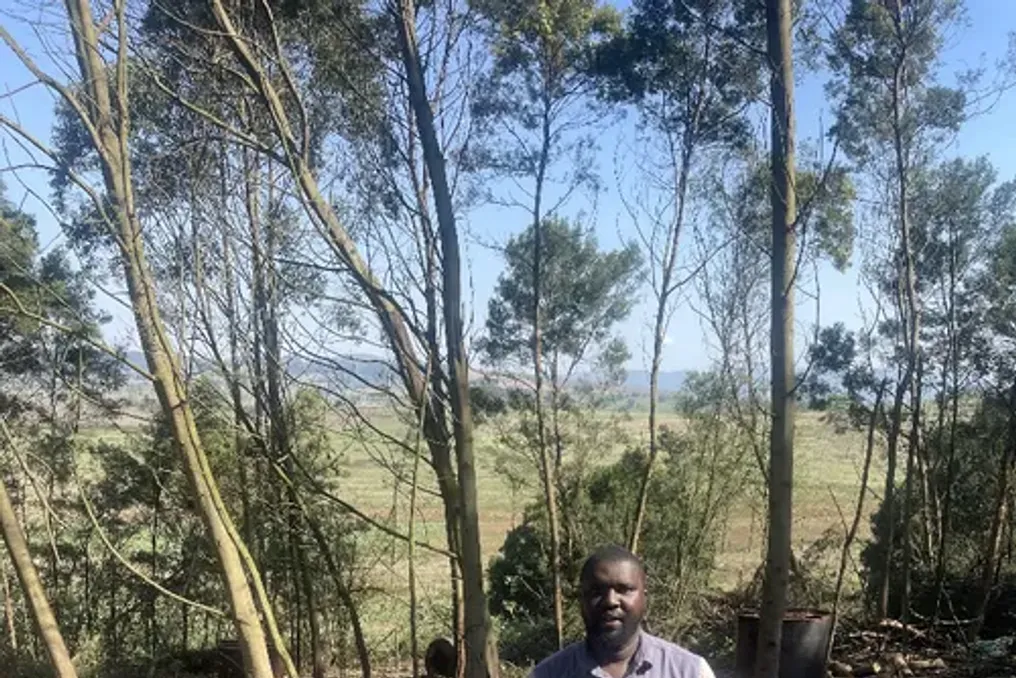
Euphrosyne employees cut down invasive trees, which are then turned into charcoal, thereby supporting rural employment and helping clear degraded lands in KwaZulu-Natal.
Initially, the company operated on the Coastal Cashews farm in KwaNgwanase, where rented equipment helped it get started. However, subsequent local political tensions led to the farm's closure, forcing Mhlongo to purchase equipment and relocate.
A contract with the Ilangabi cooperative from Durban secured large orders, but Euphrosyne faced another downturn when it lost a client. Then came the unrest in July 2021. Mhlongo reported that losing an entire shipment set the company back by about four months and made it unable to pay employee salaries.
Further difficulties arose in KwaJobe, where local groups demanded a minimum daily wage that the startup could not afford. Despite having a work permit, Euphrosyne was eventually forced to leave the area.
By 2023, Mhlongo hit his lowest point. He recounted that they lacked permanent land to operate on and survived by purchasing small quantities from local producers. Burned out and exhausted, he almost gave up and was ready to sell the entire venture to an investor for 500,000 rand.
His mentor, Rest Kanju, convinced him to stay. Mhlongo noted that Kanju helped him realize that the company's environmental focus, impact on rural areas, and business model held value beyond immediate financial struggles.
The partnership with E&C Charcoal later became a breakthrough that Euphrosyne needed, providing greater market stability. The company has since expanded its operations beyond its own production. Small-scale rural producers receive technical guidance, quality control support, and access to buyers they might otherwise not reach.
Mhlongo emphasized: 'Instead of keeping operations strictly centralized, working with rural producers creates a real multiplier effect throughout the local economy.'
One example is Sizakele Gumede from the Mtikini area in uMhlabuyalingana. Mhlongo stated that the knowledge she gained through her involvement with Euphrosyne allowed her to train five women-led enterprises. She also helps connect local producers with buyers.
On one occasion, a group delivered wet charcoal, causing a load that should have weighed 10 tons to register on the scales at about 16 tons. The client rejected it and withheld payment. Mhlongo said that Gumede faced accusations from producers but helped explain commercial quality requirements and restore trust. She also encourages the women she works with to formally register their businesses.
Mhlongo noted that his journalistic experience continues to influence how he manages Euphrosyne. He explained that broadcasting and digital media teach you to transform complex problems into clear, compelling stories. Journalism also taught him to listen, build relationships, and solve unexpected problems—skills he applies when dealing with traditional leaders, landowners, workers, and clients.
The company name is a tribute to his grandmother, Euphrosyne Khathazile Mhlongo, who was a teacher and community activist who helped establish the Vimbukhalo primary school in northern KwaZulu-Natal. She once told him about a young runner who was competing but looked back at the crowd before the finish line and was overtaken. 'The lesson was clear: focus on your goal, never relax or be distracted by the crowd, and ignore the surrounding noise,' Mhlongo said. He kept this lesson during periods when Euphrosyne's survival seemed unlikely.
As a nominee for 'Entrepreneur of the Year,' he stated that it gave years of setbacks a different meaning. He concluded: 'After going through periods of complete loss and multiple starts from scratch, this recognition confirms that our business model is not only viable but also meaningful.'
Over the next five years, Mhlongo plans for Euphrosyne to transition to eco-bricks, activated carbon, exports, and larger restoration projects, while expanding transport capacity and production capabilities. He concludes: 'Environmental protection and economic development in rural Africa do not necessarily have to contradict each other; they can directly stimulate each other.'