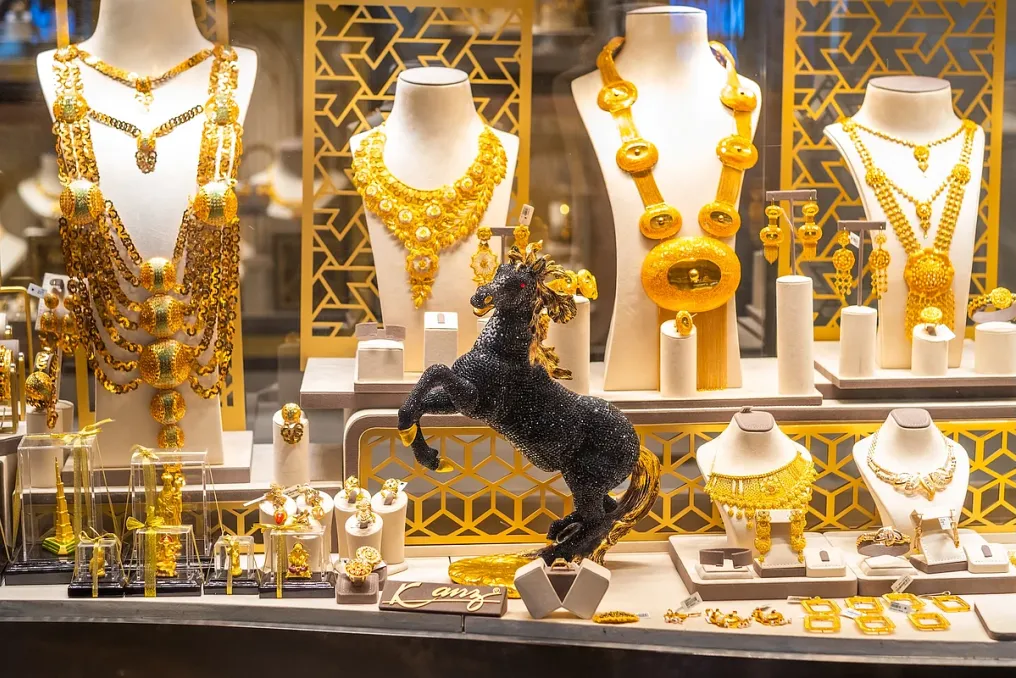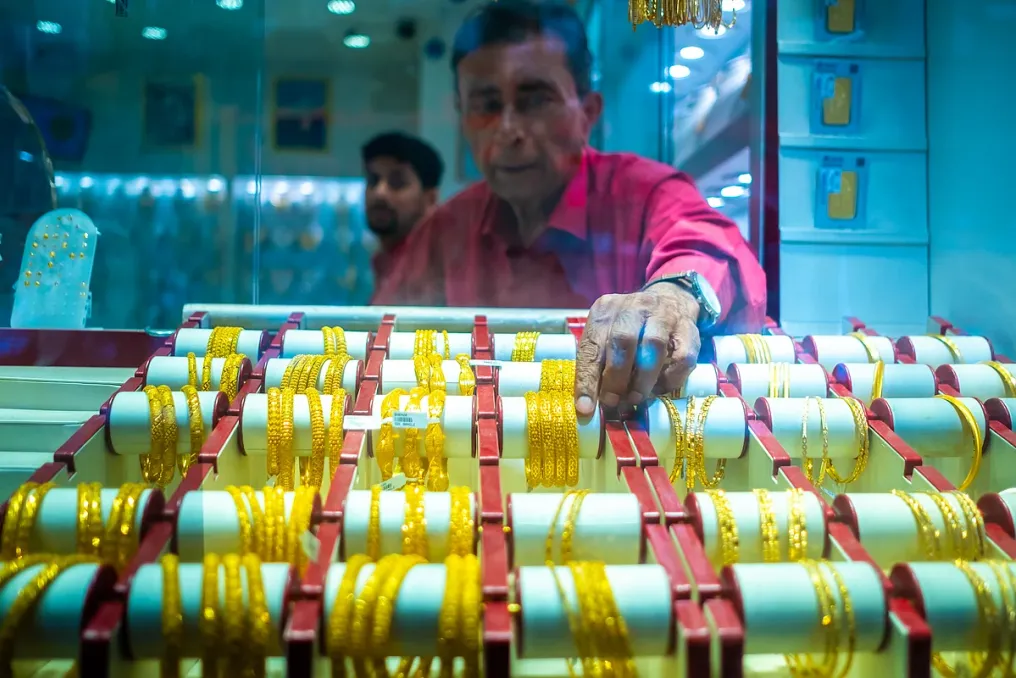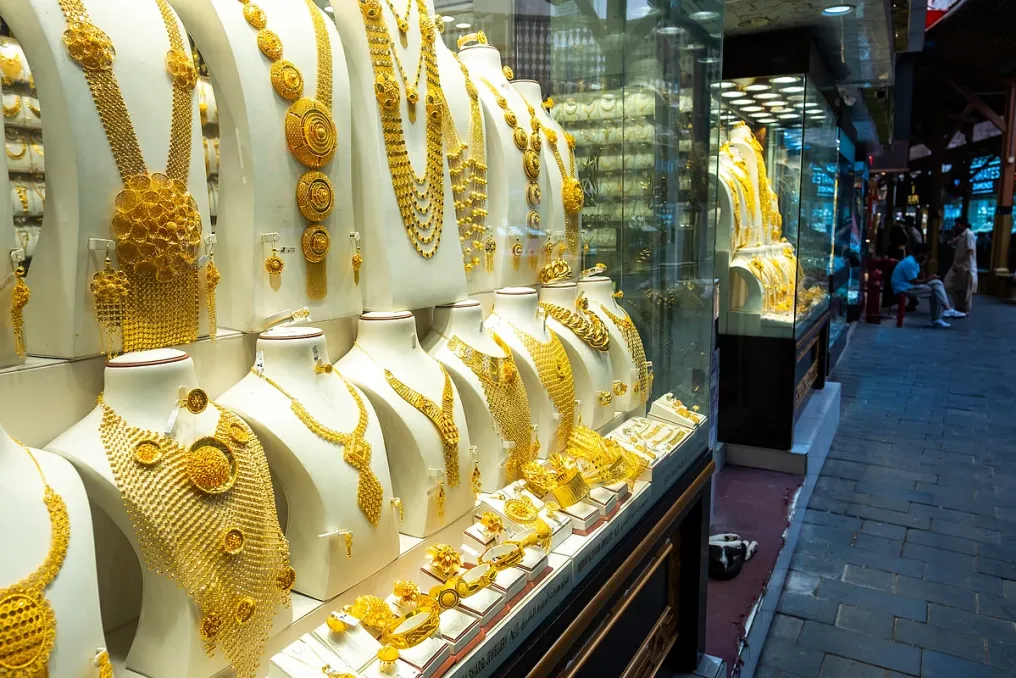
Gold prices in Dubai continued to decline on Tuesday morning due to the strengthening US dollar and rising treasury bond yields. The price of 24-karat gold dropped to 496.75 dirhams per gram at the market opening on Tuesday, compared to 498.50 dirhams per gram recorded at the close of trading on Monday. Over the last month, the metal has lost 37 dirhams per gram.
Other varieties of the precious metal also showed a decrease: 22K, 21K, and 18K fell to 460.00, 441.00, and 378.00 dirhams per gram, respectively, on Tuesday morning. Spot gold decreased by 0.18 percent, reaching $4122 per ounce.
The drop in gold prices in Dubai and across the UAE is occurring shortly before the start of the Indian festive season, which brings some relief to buyers preparing for Navratri, Dhanteras, and Diwali celebrations. As previously reported by Khaleej Times, the decline in prices below 500 dirhams per gram has prompted some expat and Non-Resident Indian (NRI) families to accelerate their gold purchases ahead of the festival.
Chris Weston, Head of Research at Pepperstone, noted that short-term investment prospects for gold remain challenging. He stated that the price, which is a key factor in sentiment and flows, continues to look heavy and is in a short-term downtrend. There is rapid selling after the rally, and sellers maintain control. Weston believes that a break below recent lows around $4110 is becoming increasingly likely, which could accelerate sales towards $4100, and potentially even $4000, where strong demand was observed in June, July, and August.
In Weston's view, the market currently remains a seller's market. For the situation to become more favorable in the near term, a breakthrough above the $4275 mark is necessary. He added that the basis of this weakness is the growing alternative cost of holding gold, as several traditional macroeconomic factors work against its investment appeal. Weston pointed out that there is limited inflow into GLD ETFs or gold mining company ETFs, while the US dollar remains well-supported, and the USD index holds above 102 and approaches multi-year highs. Furthermore, the real yield on 10-year US bonds rose to approximately 2.93 percent, sharply increasing in August and September and reaching cyclical highs. This poses a significant obstacle for an asset like gold, which does not generate income.