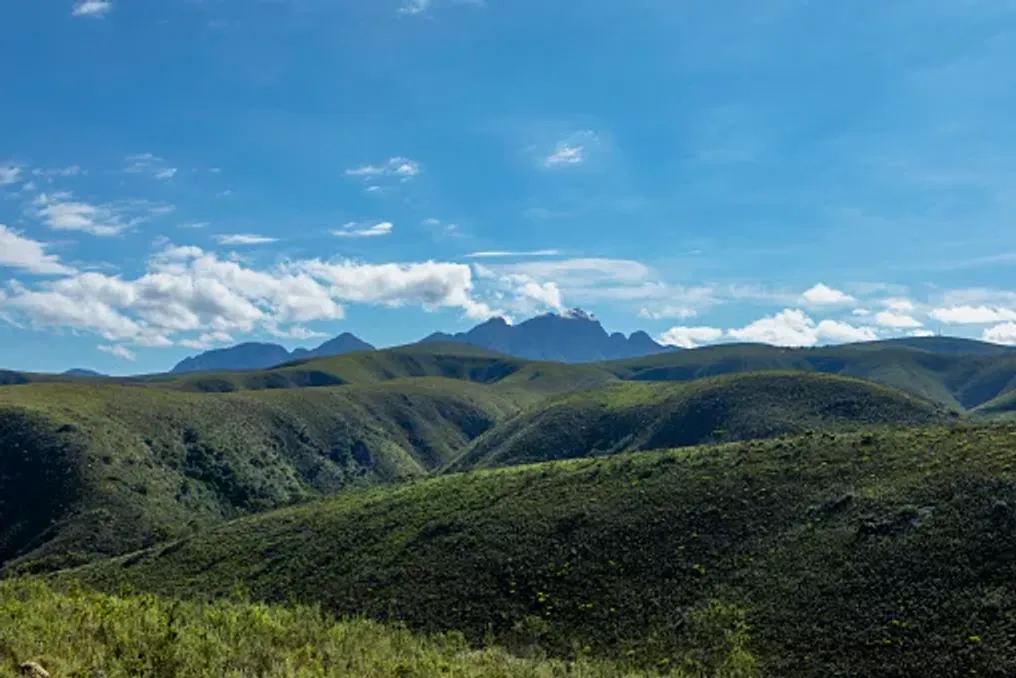
Baviaanskloof is often associated exclusively with its road—a rugged track winding between the mountains of Baviaans and Kuag, offering steep passes, river crossings, and impressive views. However, this World Heritage landscape deserves more than just a quick drive-through.
As part of the 'Protected Flora Areas of the Cape Region' World Heritage site, Baviaanskloof is known for its exceptional plant diversity, endemic species, and varied landscapes. Furthermore, it possesses rich archaeological heritage, including Stone Age monuments found throughout the area.
Spending 48 hours allows you to slow down and discover what lies beyond the famous road: mountain trails, natural pools, waterfalls, rock formations, wildlife, farm stays, and surprisingly quiet wilderness.
Entering Baviaanskloof itself is an adventure, but one should avoid the temptation to treat the route as something to be rushed through. The landscape changes drastically when the road enters the mountainous terrain, where the Baviaans and Kuag ranges create a harsh backdrop of cliffs, valleys, and plateaus.
The Cambrian Route offers an easier introduction to this landscape and is accessible by a sedan, whereas some deeper trails are better suited for high-clearance vehicles or 4x4s.
It is necessary to stop safely to observe the geology, vegetation, and the immense sense of space. This area is part of one of the world's most important centers of plant diversity, making even an apparently ordinary roadside landscape worthy of closer study.
Instead of using Baviaanskloof merely as a passage between settlements, it is worth spending at least one night in the wilder areas or nearby. Accommodation options range from rustic campsites to farm stays and eco-lodges. Deep within the reserve, places like Ruikhoek and Dudsklip offer particularly secluded experiences with basic amenities and minimal separation between visitors and the environment.
If you prefer more comfortable conditions, the farms and lodges around Baviaanskloof allow you to experience the rural side of the region. For example, Baviaans Lodge offers cottages and camping alongside activities such as hiking, bird watching, mountain biking, and viewing San rock art.
The key is to make your stay part of the journey. Wake up to a view of the mountains, listen to the river or birds instead of traffic noise, and let the landscape set the pace.
One of the simplest ways to see Baviaanskloof beyond the roads is by walking. The reserve offers several hiking options, including the Portjies waterfall trail, the Komdomo River trail, and routes from Bergplaas.
Portjies is particularly appealing because the landscape transitions from open mountain vistas associated with the road to a greener, more sheltered environment. The forest, river, and waterfall setting serves as a good reminder that Baviaanskloof is far more diverse than its rugged, arid reputation suggests.
A hike to the Cider waterfall in the western part of Baviaanskloof is another option. Go Baviaans currently lists the Cider waterfall as a day hike, and the Leopard Trail as a four-day trek.
Choose a hike that matches your physical fitness, vehicle access, and available time, rather than trying to visit as many trails as possible.
Baviaanskloof is not a traditional safari destination, and that is part of its appeal. The wider protected area supports species such as mountain zebra, black rhino, Cape buffalo, and Cape leopard, according to the Kuag Municipality.
You may also encounter smaller and more common inhabitants, from baboons and birds to reptiles and insects. Bring binoculars and take time to observe rather than just drive past.
Birdwatching is especially beneficial near riverine and forested areas. The Portjies area, with its trees, water, and more sheltered conditions, offers a different habitat compared to the open mountain slopes.