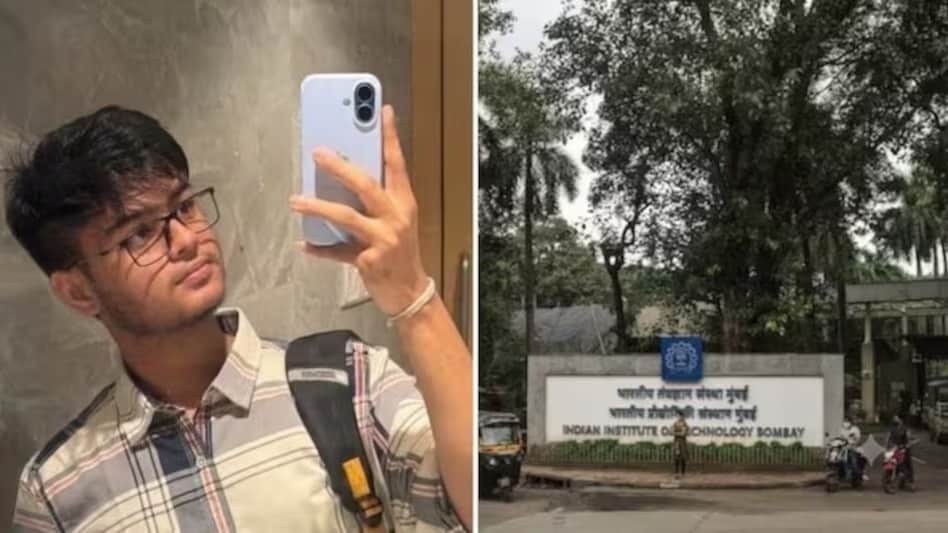
Changes planned for hostels at IIT Bombay, including improvements to mental health and food systems
Read more
Aaj Tak
www.aajtak.in

Changes planned for hostels at IIT Bombay, including improvements to mental health and food systems

Following the death of Sahil Wakode at IIT Bombay, steps are being taken to strengthen students' mental health. The campus has developed a plan to improve student well-being and hostel living conditions, although not all these changes will be implemented simultaneously. Some initiatives have already begun, while others are in the stages of receiving approval, gathering student suggestions, or final decision-making. According to the institute, a phased strengthening of the well-being support system will be launched.

New Responsibility for Student Well-being

IIT Bombay has established a new position—Associate Dean (Student Wellness). Professor Dipak Marla has been listed on the institute's official website as Associate Dean (Student Wellness). His duties will involve overseeing matters related to student well-being and strengthening the support system. Furthermore, a system for appointing student wellness secretaries at the hostel level is being prepared. The goal of this step is to ensure that students can receive prompt assistance regarding well-being directly within their hostel. The appointment process is in its final stages.

Review of Examination Schedule Changes

The discussion is not limited to student well-being; the institute is also reviewing the semester examination schedule. Work has begun on an alternative examination schedule, but this change has not yet come into effect. Therefore, it cannot be stated that a new exam schedule has been approved for students; the alternative option is still under consideration.

Changes to Hostel Food System

A transformation of the hostel food system is also being prepared. IIT Bombay has completed a survey among students regarding food, and a new system will be developed based on the results obtained. The institute has prepared a revised model of the Flexi-Mess system. The process of re-tendering and hiring catering services for the mess has started. There is also a plan to create recreational areas so that students can find a better place for relaxation and physical activity besides studying. Suggestions for choosing these locations will be collected from student representatives, sports consultants, and wardens, aiming to select a location easily accessible to hostel residents.

Replacement of Fans in Hostels

The institute is also working on options for replacing the fans installed in IIT Bombay hostels. Some options have been determined after testing and negotiations with manufacturers, but the final decision will be made based on feedback from students gathered through a survey.

Emphasis on Increasing Student Participation

The institute is identifying various committees where student engagement can be increased. At the departmental level, there is also a discussion about improving the support system and increasing student participation in solving their problems. This means that the work is not only being done within hostels or wellness centers but is also aimed at more actively involving students in institutional decision-making.

Existing Student Wellness Center

Student Wellness Centers are already operational at IIT Bombay to support students. Counseling programs, peer support, group therapy, mindfulness workshops, and other programs to improve condition are conducted here. Information about these services and programs is available on the institute's wellness website. Therefore, the new changes should be viewed not as the launch of a completely new well-being system, but as an attempt to make the existing system more robust and comprehensive.
Similar stories

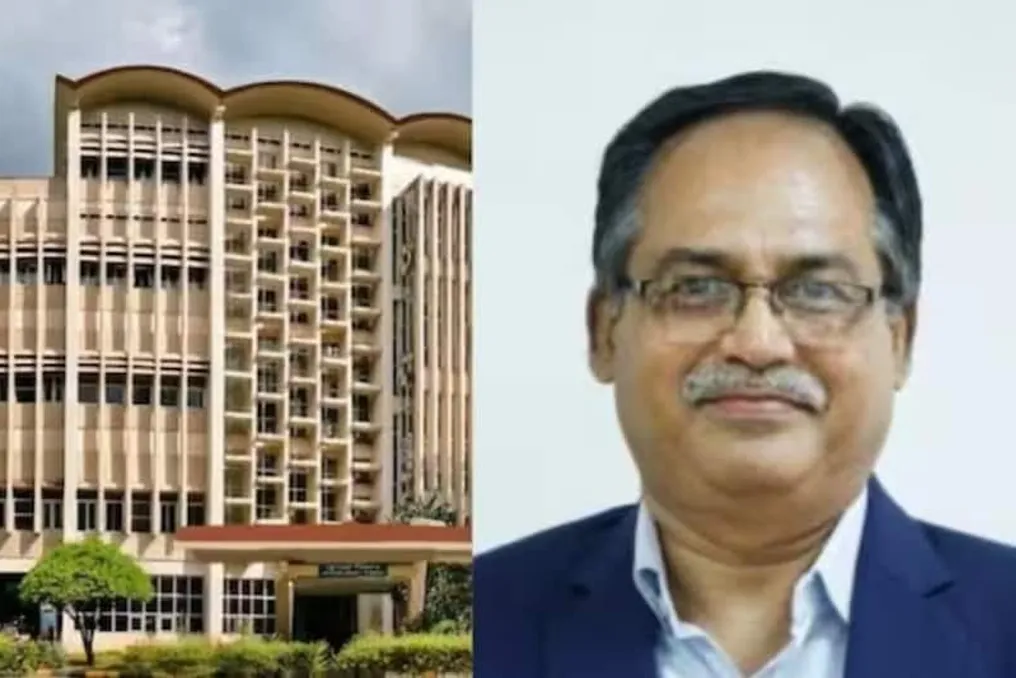
IIT Bombay students demand resignation of Director Shirish Kedare following suicide tragedy
Read more
www.aajtak.in

IIT Bombay students demand resignation of Director Shirish Kedare following suicide tragedy

Following the death of student Sahil Wakode at IIT Bombay, two professors are drawing the most attention: IIT Bombay Director Shirish Kedare and Professor Suryanarayan Dula. Sahil's parents and students are demanding the resignation of both faculty members.

Professor Shirish has long ties to the institute, having known the campus for 41 years. He himself received an engineering degree from IIT Bombay and now heads the institution. Furthermore, he has worked in various capacities.

Professor Shirish's connection to IIT Bombay is very deep. He has been familiar with the institute for 41 years. In 1985, he obtained a bachelor's degree in mechanical engineering, and later in 1992, he earned a Ph.D. there. In May 2024, he was offered the position of director.

Before becoming director, he held academic and administrative posts. His responsibilities included membership in the Indian IIT Council appointed by the Ministry of Education, as well as participation in the IIT Madras Board of Governors, and work as a former independent director of ONGC.

According to the IIT Bombay profile, Shirish Kedare has published 57 international and 10 national articles. Additionally, 44 international and 7 national papers have been published in conferences and proceedings. His research interests differed from traditional engineering fields; he focused his research on the reciprocal wind mechanism, which converts wind energy into useful power.

After completing his postgraduate studies, while most students dream of careers in large corporations, Professor Shirish Kedare decided to work on rural development. From 1992 to 1995, he was involved in rural development projects.

Professor Shirish Kedare also spoke about the culture of tutoring. He believes that excessive reliance on tutors can negatively affect students' ability to understand and deeply study material. In one interview, he noted that coaching centers often focus on exam passing strategies, which can harm conceptual understanding.

Professor Shirish Kedare also performed various duties in corporate and government institutions. He served as an independent director at ONGC, a Maharatna company. Additionally, he was part of the Research Advisory Council (RAC) of NTPC and the Board of Governors of IIT Madras.

Five Indian Campuses Offer Alternative Mental Health Support Models for Students After IIT Bombay Tragedy
Read more
thebetterindia.com

Five Indian Campuses Offer Alternative Mental Health Support Models for Students After IIT Bombay Tragedy

For many students, college marks the first experience of living away from home, the need to cope with intense studies, establish friendships and personal relationships, and make decisions about the future—often all happening simultaneously. However, when such pressure becomes excessive, knowing where to seek help is crucial.

This issue became particularly acute at IIT Bombay after the suicide of second-year BTech student Sahil Vakode on September 18. He was found dead in his hostel room several hours after the incident during an intermediate exam. The circumstances of his death are currently under investigation.

This case sparked protests on campus, during which students put forward 18 demands concerning accountability, student well-being, and mental health support. These included a demand for at least one counselor for every 250 students, one counselor in each hostel, and regular independent audits of the Student Well-being Center. Students also called for 24/7 psychiatric care and increased awareness among faculty and staff regarding mental health issues.

These demands brought to the forefront an important question: what does accessible mental health support in a university campus truly look like? Across India, educational institutions approach this problem differently. Some engage trained peers, others create informal spaces for communication, and a third group combines counseling with preventative wellness programs.

The Model at IIT Madras

At IIT Madras, students do not need to start their search for support in a formal counseling room. The MITR program offers peer support through trained students and faculty, providing an additional person to turn to during stress or personal difficulties. This program operates parallel to professional counseling services and the broader student well-being system at IIT Madras. Furthermore, the institute has counselors assigned to hostels and departments, and 24/7 telecounseling support is available. This approach recognizes a practical need: sometimes the first step toward getting help is simply having an accessible confidant.

The Approach at IIT Kanpur

At IIT Kanpur, an initiative called Samvad, implemented by the Centre for Mental Health and Well-being, aims to foster a more open dialogue about mental health. Through interactive sessions, lectures, and panel discussions, the program allows students to discuss emotional states and daily challenges outside the setting of formal counseling. For instance, the 'From Lost to Found' program encourages members of the campus community to share personal stories of struggle, resilience, and growth. Alongside these community-building efforts, the IIT Kanpur mental health center provides professional counseling and other forms of support. The goal is to make mental health a topic of conversation before a student reaches a crisis point.

Informal Approach at Bharati College

At Bharati College, located in Delhi, the Feelings Ka Adda initiative uses an even more informal method. This program creates a space where students can talk about what concerns them and be heard by their peers. Rather than trying to immediately solve a problem, the emphasis is on giving students the opportunity for self-expression and feeling heard. This works alongside the college's official counseling services, rather than replacing them. This distinction is important: peer support can serve as a friendly first contact, while students needing professional help can be directed to the counseling center. For a student hesitant to enter a counseling center, an informal conversation with someone from their campus community can sometimes feel like a more accessible first step.

Integrated System at CHRIST University

At CHRIST University, the Counseling and Medical Services Center combines professional counseling with a structured peer support system. Students have access to counselors assigned to schools and departments, as well as individual and group sessions, such as Listening Circles. The university also runs a Peer Education Program, where students are trained in areas such as active listening, empathy, emotional intelligence, and stress management. This creates multiple levels of support. Students can seek professional help directly, while trained peers also help normalize conversations about mental health in classrooms and campus communities.

The MAHE Bengaluru Approach

At MAHE Bengaluru, the Manam program integrates mental health into the broader concept of student well-being. Launched in January 2025, this program combines professional counseling and peer support with interactive sessions on emotional well-being. Students can participate in mindfulness, emotional regulation, and mind-body connection sessions. The program also provides digital resources for self-support through its online platform. Participation in the program is voluntary and non-graded, allowing students to engage without it becoming another academic obligation.

Conclusions on Support Models

There is no single way to ensure accessible mental health support on a campus. A counselor in the hostel facilitates access to professional help. A trained peer makes the initial conversation less intimidating. A community program helps students realize that stress, loneliness, or anxiety are not experiences they must go through in isolation. These initiatives also do not replace the need for adequately staffed professional services, emergency care, or strong institutional systems. Instead, they demonstrate how different levels of support can coexist. Perhaps most beneficial for students is knowing that there are several doors to knock on, and that seeking help can be a normal part of campus life, rather than something to wait for until a crisis occurs.

Popular