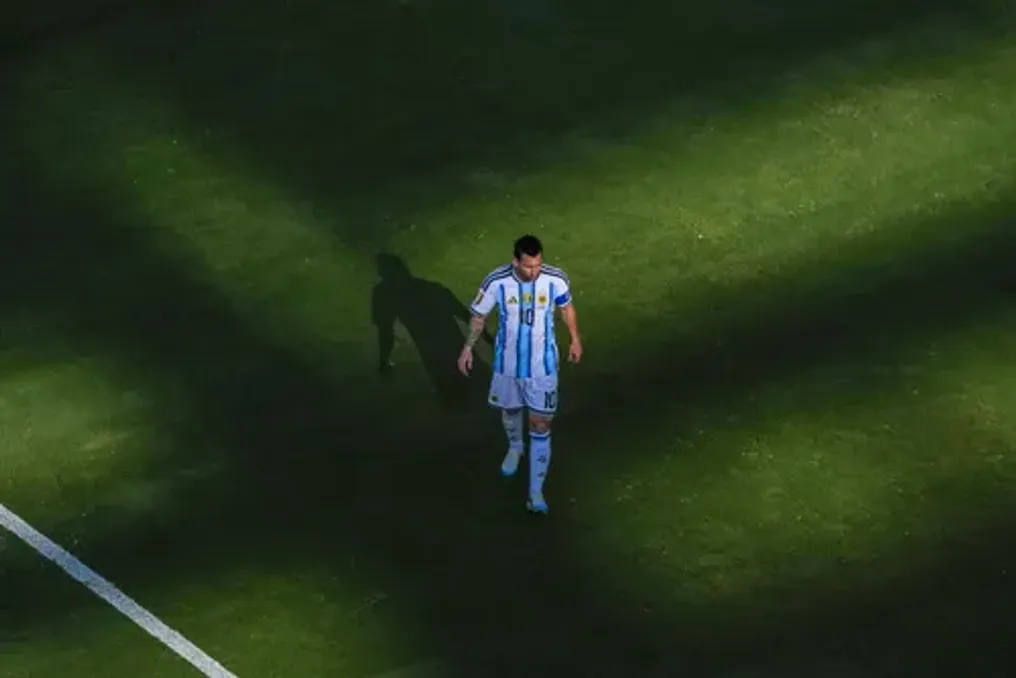
When the echo of 85,000 voices rings out at Estadio Monumental on Tuesday evening, there will be no dry eyes in the house. Fans will rise to sing 'Muchachos, Ahora Nos Volvimos a Ilusionar,' written by Fernando Romero, which conveys forty years of national aspiration, sorrow, and glory.
While singing songs dedicated to their homeland, they will honor Diego Maradona, Lionel Messi, and the young fallen soldiers of the Falklands conflict. They will sing with tears in their eyes, knowing that this is the last time they can delight their ears with the quiet genius who carried their dreams for two decades. The story concludes as the boy from Rosario, who left Argentina for Catalonia at the turn of the millennium, prepares to put away his international jersey one last time in Buenos Aires.
The boy from Rosario has completed his journey.
The Burden, the Struggle, and the Exit
For years, the heaviest burden Lionel Messi carried was not global expectations, but the quiet yearning of his own country. In Argentina, a genius is measured not only by trophies but also by soul.
While Maradona gifted the nation a passionate, religion-evoking spirit forged by resilience and theatrical glory, Messi offered a quiet, introverted ideal. For a long time, Buenos Aires wondered if that was enough. The heart of the fans suffered immensely: defeats in the Rio final in 2014, followed by two consecutive losses in penalty shootouts against Chile in the Copa América in 2015 and 2016, threatened to turn his international career into a tragedy of unfulfilled duty.
The pain experienced in East Rutherford in 2016 completely broke him. Overwhelmed by grief and public criticism, he stepped away, announcing the end of his time with the national team. However, true greatness lies in endurance. His absence lasted only a few weeks; the pull of the jersey was too strong, and the unfinished narrative too loud. Messi returned, taking on the role of captain with a new, hardened resolve.
He did not change his nature to appease critics; he simply overcame the doubts.
Captaincy Coronation and Mountain of Records
Receiving the permanent captain's armband transformed Messi from an ethereal playmaker into an undeniable leader. He guided a team in transition through the harsh South American qualifiers, single-handedly leading Argentina to the 2018 World Cup thanks to the famous hat-trick in Quito.
Then came the golden era, created by Lionel Scaloni. By winning the 2021 Copa América at the Maracanã stadium—his first major title at the senior international level—Messi broke a 28-year drought for his country. A year later, in Lusail Stadium in Qatar, he achieved the pinnacle of modern football. Scoring twice in the greatest World Cup final ever held against France, Messi brought Argentina its third star and cemented his place alongside Maradona.
After this, he won another Copa América title in 2024, turning years of injury into an unprecedented era of dominance. Messi leaves behind a statistical mountain that may never be climbed: 207 matches, 125 goals, and 68 assists.
He is the all-time top scorer among South American players, Argentina's record holder for matches played, and the only player in history to score in every round of a World Cup.
Standing Beside the Brothers
In this final act against Benin, beside him will be his comrades from Doha—Angel Di Maria, Nicolás Otamendi, Rodrigo De Paul—men who helped transform years of national anxiety into pure, unadulterated joy.
Messi departs from international football having answered every question posed to him, leaving no unfinished business, bitter disputes with time, or unfulfilled promises. Beyond medals and record books, his true gift was much deeper. He gave the world art and poetry disguised as sport, offering a rare perspective on what pure humility looks like at the absolute peak of human potential.
Long after the lights dim at the stadium in Buenos Aires, millions of children around the world will run on football fields with his name on their backs, inspired by the boy who conquered the world while maintaining a golden heart.