Artificial intelligence has long been a popular theme in Hollywood, but few films have managed to predict our current and future technological reality with high accuracy.
The author notes that although 'Terminator 2: Judgment Day' predicted a war between machines and humanity, this scenario has not yet materialized; however, films depicting AI working alongside humans rather than seeking to destroy them are more illustrative.
Below are four films that, according to the author, most accurately predicted the shape of modern AI.
Her (2013)
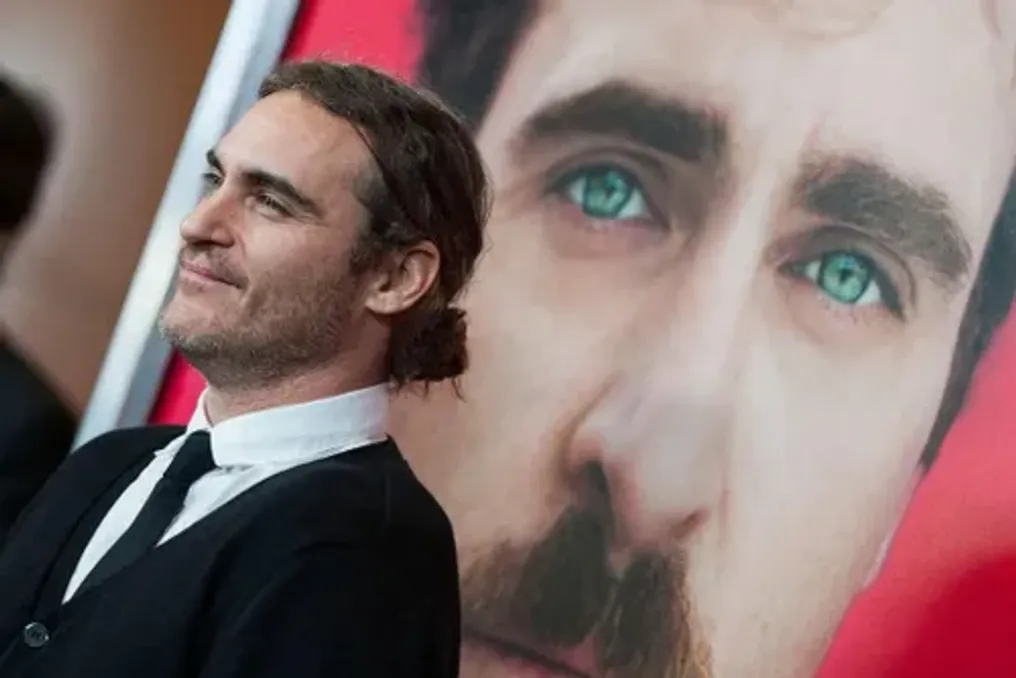
Despite being released relatively recently, in 2013, this film brilliantly demonstrated how a lonely person can develop a deep attachment to a virtual assistant. It is no surprise that Joaquin Phoenix's character fell in love with a non-material entity, especially considering that Scarlett Johansson voiced the AI role.
What seemed like pure science fiction back then is reflected today in conversational AI models, which create a strikingly similar dynamic as users form surprisingly close bonds with digital companions.
Bicentennial Man (1999)
The 1999 film, starring Robin Williams, touches upon important emotional aspects by showing how a household robot gradually acquires human traits over two centuries. The plot centers on Andrew, a robot possessing a much higher level of self-awareness than other synthetic assistants.
Due to a unique glitch in his programming, Andrew was able to experience, process, and develop genuine human emotions. The movie explores philosophical and moral questions about machine consciousness. Although true machine consciousness remains unattainable today, modern AI assistants have become exceptionally skilled at imitating human feelings and empathy in their responses, making viewers pause to consider if there is a spark behind the screen.
Minority Report (2002)
Although the core idea of using precognitive abilities in 'PreCrime' to prevent murders remains science fiction, the depiction of mass surveillance and predictive tracking in the film proved closer to reality than fantasy. From ubiquitous facial recognition networks to billions of people constantly recording events on smartphones, this 2002 blockbuster presented a remarkably prophetic image, portrayed by Tom Cruise.
Beyond surveillance, the film showed hyper-personalized targeted advertising that addresses people by name in public places, which has become a reality today thanks to modern algorithmic tracking. The most alarming aspect is how close modern society has come to this futuristic vision presented more than two decades ago.
Another example is '2001: A Space Odyssey' (1968), which may be the most accurate prediction of modern AI technology released long before basic computing power existed. During the space journey, the crew constantly interacts with HAL 9000, a conversational AI system controlling their spacecraft. HAL performs complex operational tasks, monitors system diagnostics, and engages in natural language dialogues with the astronauts.
Given that this film was released almost 60 years ago, the level of interactive technology was still far from reality. Kubrick captured the mechanics of modern voice assistants with great accuracy: seamless natural language processing, predictive automation, and the integration of computer vision, up to the alarming realization of system vulnerability when an intelligent agent operates with full operational control.
Honorable Mentions
The films 'AI: Artificial Intelligence' and 'I, Robot' are also mentioned. 'AI: Artificial Intelligence' was inspired by Kubrick and completed by Steven Spielberg after Kubrick's death. It is largely similar to 'Bicentennial Man', featuring an incredibly detailed story about a boy-robot yearning to be real. In turn, 'I, Robot' explored the potential danger of robots if they were to violate their own laws and harm humans.