Huawei and Qualcomm sign patent agreement recognizing Huawei's innovations
Read more
CGTN
cgtn.com

Huawei and Qualcomm sign patent agreement recognizing Huawei's innovations

Huawei announced on Monday that it has reached a broad patent agreement with Qualcomm. This contract marks the first deal for 5G patent licensing between the two companies and indicates growing international recognition of original Chinese innovations.

Under the terms of the agreement, Huawei will provide and transfer Qualcomm patents in areas such as computing systems, artificial intelligence (AI), and network technologies. This is the first instance where Huawei has licensed and transferred Qualcomm patents specifically in these fields, demonstrating that the value of its developments extends beyond 4G and 5G technologies.

It is reported that the deal concerns patents exclusively. Huawei emphasized that it uses patent transactions to disseminate and open up its latest technologies, facilitating their adoption. The company also noted that this agreement reflects Qualcomm's continuous recognition of Huawei's innovations and intellectual property in 5G and other technological areas.

Qualcomm agreed to acquire certain Huawei patents in the United States, which usually implies payments to Huawei. However, the detailed financial terms of the deal were not disclosed.

Huawei and Qualcomm have concluded various agreements over many years; the earliest dates back to 2001. In 2011, Huawei first generated revenue from intellectual property licensing after settling an IP dispute with Motorola. Since 2021, Huawei's revenue from intellectual property licensing has remained positive.
Similar stories

Huawei and Qualcomm sign patent agreement covering 5G and Artificial Intelligence
Read more
olhardigital.com.br

Huawei and Qualcomm sign patent agreement covering 5G and Artificial Intelligence

Huawei and Qualcomm have formalized a long-term pact focused on cross-licensing of technologies across various areas, including artificial intelligence, computing, networks, and 5G. Furthermore, the agreement includes the acquisition of certain Huawei assets by the American company in the United States.

For Huawei, this arrangement signifies the recognition of its intellectual property, which is the result of years dedicated to research and development. The deal establishes reciprocal licenses between the catalogs of both corporations, with Qualcomm also acquiring Huawei assets in the US related to computing, networks, and AI.

This is the first agreement between the two companies that encompasses 5G technologies. Both parties stated that the negotiation will be conducted under FRAND principles, which mean fair, reasonable, and non-discriminatory licensing practices. The exact values and specific duration of the agreement were not disclosed.

Statements on the Agreement

Alan Fan, Huawei's Director of Intellectual Property, emphasized the recognition of both companies' contributions to the sector. He stated that the agreement 'not only demonstrates the value of Huawei's innovations but also recognizes Qualcomm's fundamental contributions to modern communication technologies.'

John Han, Executive Vice President and General Manager of Qualcomm Technology Licensing, highlighted Qualcomm's role in advancing wireless communication technologies. He commented that 'this agreement reaffirms the industry's recognition of Qualcomm's technological leadership in 5G and the success of its essential 5G patent licensing program.'

With the finalization of this operation, Huawei projects that the total amount of its intellectual property licensing contracts will exceed US$ 6.9 billion (approximately R$ 36 billion). The company reports that this activity has generated positive revenue since 2021, a result achieved after long periods of investment in R&D, which gained relevance due to trade restrictions imposed by the United States.

The restrictive measures in place since 2019 have limited Huawei's ability to obtain advanced chips and crucial software. In this context, the commercial exploitation of its intellectual property has become a source of income for the company. The agreement also aligns with Huawei's goals of strengthening its presence in the semiconductor segment, aiming to expand its portfolio and reduce the gap with TSMC, located in Taiwan.

Among the central aspects of the negotiation, it is noteworthy that the completion of the process remains dependent on the necessary regulatory approvals.

Chinese games gain global popularity, attracting fans to festivals
Read more
cgtn.com

Chinese games gain global popularity, attracting fans to festivals

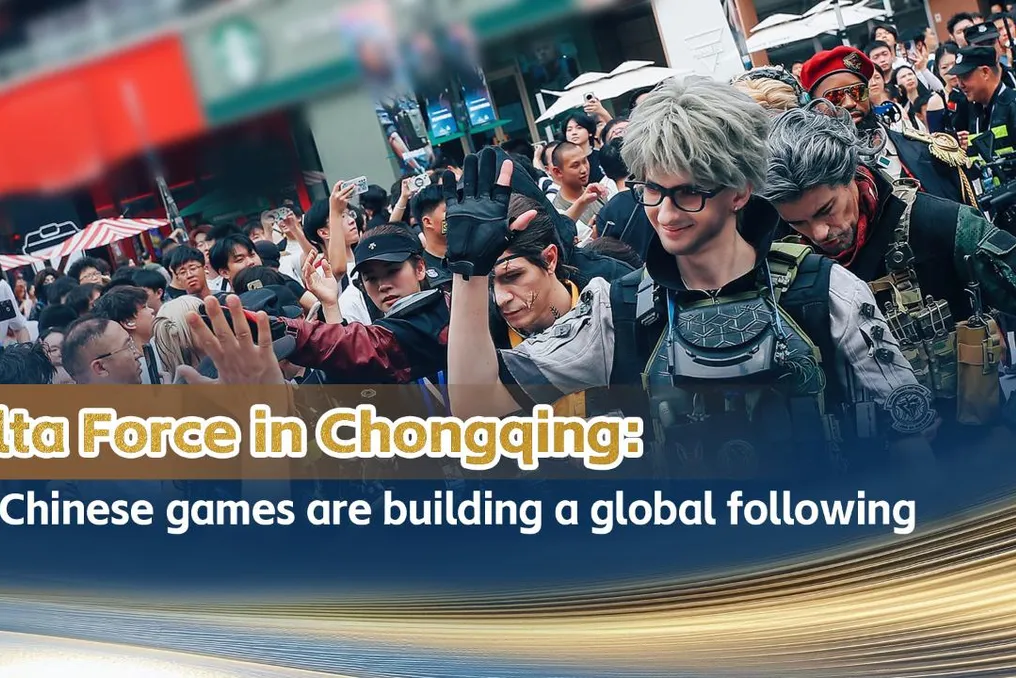
During the Mid-Autumn Festival, the vibrant and futuristic municipality of Chongqing welcomed visitors from all over the world. This year, the festival attracted enthusiasts from abroad, many of whom traveled specifically to China to celebrate the game's anniversary.

The second anniversary celebration of Delta Force took place in Chongqing, bringing together players from around the globe and professional esports athletes. For many international fans, this is a special opportunity to meet Chinese players and game developers face-to-face, as well as experience the city's unique culture during their stay.

The event also demonstrates the growing global appeal of Chinese games. Thanks to continuously improving capabilities in game development, production, and service, Chinese developers are creating experiences that resonate with gamers worldwide.

Popular