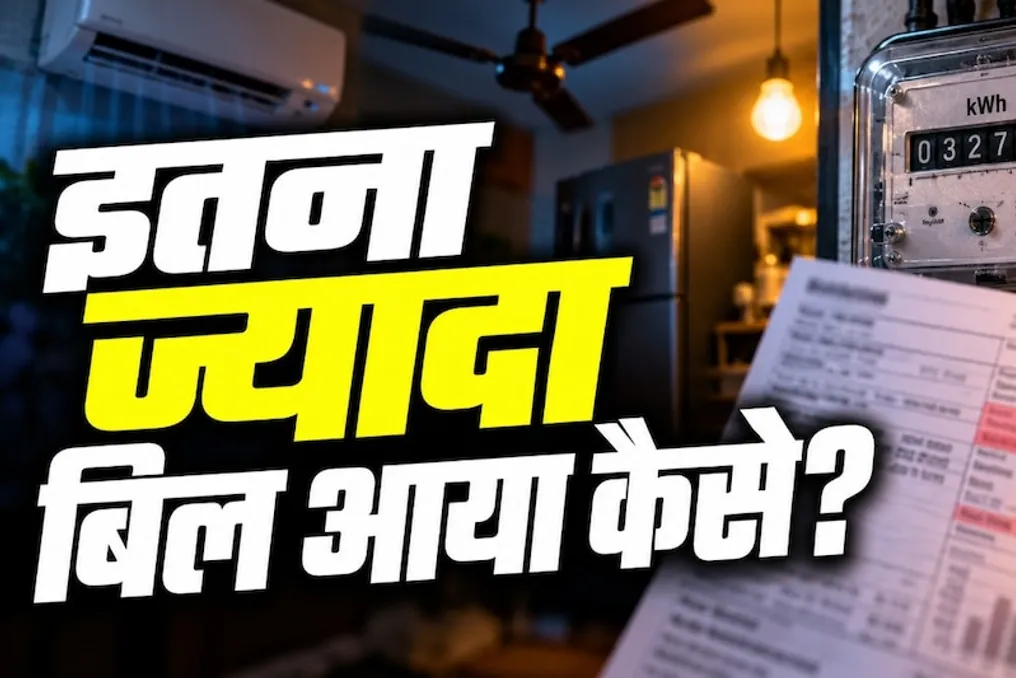
Regardless of the season, household electricity consumption constantly changes. However, there are times when it seems that the usage has remained the same, but the electricity bill is surprising. For example, if last month's bill was 2000 rupees, this month it might reach 3000 rupees or even exceed that amount. A natural question arises: how could the bill increase if consumption did not rise?
In reality, the size of the electricity bill depends not only on the number of appliances running in the house. There are a number of other factors that can lead to an increase in the amount, including meter readings, electricity tariffs, billing cycles, and other circumstances.
Meter readings are taken into account when compiling the bill. If the meter readings were not taken on time in a certain month, and the bill was issued based on estimated data, the difference in readings may be added to the next bill. This can cause a sudden jump in the bill amount. Therefore, after receiving the bill, it is recommended to compare old and new meter readings. It is also advisable to check whether the reading indicated on the bill matches the reading displayed on the meter itself.
It is not necessary for every monthly bill to cover exactly 30 days. Sometimes, due to shifts in meter reading dates, the billing period can increase. For example, if the reading was taken for 28 days last month, and for 35 days this month, the bill might be higher even if the actual consumption remained roughly the same. Consequently, instead of comparing only the amounts in rupees, it is worth paying attention to the duration of the billing period.
The electricity bill is determined not only by the amount of units consumed. Electricity tariffs and other components of the bill can vary in different regions. If changes occurred in tariffs or fees during a certain period, the total bill amount may differ, even with the same unit consumption. Therefore, it is important to look not only at the total amount but also at the cost per unit and other charges on the bill.
Furthermore, sometimes previous debts, fixed fees, surcharges, or other payments may be included in the bill even with normal consumption levels. In such cases, the total amount can suddenly increase. If you believe that the bill has increased without an apparent reason, be sure to check for items such as 'Arrears', 'Fixed Fees', or 'Surcharges' on the bill.
Sometimes it gives the impression that all household appliances are working as before, but some old or faulty appliance may be consuming significantly more energy. Special attention should be paid to the condition of devices such as refrigerators, air conditioners, water heaters, water pumps, and old fans. For example, if a refrigerator compressor runs too often or an air conditioner operates longer than usual, this can lead to increased energy consumption. Thus, even if the usage time remains the same, the number of units consumed can increase.
If you have checked the bill readings, the billing period, and all charged fees, but the reason for the bill increase remains unclear, you can file a complaint with the power company. If necessary, you can also request a meter inspection. Next time the bill is higher than usual, instead of panicking, you should check the following points: first, compare current and past meter readings; then, check the billing period (how many days it covers); next, examine the number of units, the electricity tariff, and the presence of old debts or other fees.
If the bill remains unclear after all these checks, it is best to contact the power company. Often, the reason for a high bill is not increased consumption, but rather some other aspects related to the billing process.