On Monday, October 5th, three researchers were awarded the Nobel Prize in Physiology or Medicine: Karl Deisseroth (Professor of Bioengineering and Behavioral Sciences at Stanford University), Peter Gehrmann (Senior Professor of Neuroscience at Humboldt University of Berlin), and Georg Nagel (Professor of Molecular Physiology and Biophysics at the University of Würzburg in Germany).
The prize fund of 12 million Swedish kronor, equivalent to 6 million Brazilian reais, will be divided equally among the three scientists. They developed optogenetics, which promises to revolutionize neuroscience.
This complex term refers to a new technique that allows nerve cells to be studied using light. It has made it possible to observe unprecedentedly how neurons form memory, emotions, and behavior in a living brain, opening up many new avenues for research.
The origins of this story lie in the alga Chlamydomonas, a single-celled organism with curious behavior—swimming towards a light source. Georg and Peter began studying this alga in the 1990s and discovered the channelrhodopsin protein in it, which was previously unknown.
This protein plays one role in the movement of the alga. When the protein is illuminated, it opens a channel allowing ions to pass through and initiate an electrical reaction.
As noted by the Nobel Prize, Gehrmann and Nagel realized they had made a revolutionary discovery. They tested introducing the channelrhodopsin gene into human embryonic kidney cells and hamster kidney cells. These cells became light-sensitive: upon exposure to light, they generated an electrical signal.
After this, Karl joined the project to conduct a series of experiments with this protein and turn it into a method for studying the brain. He introduced the channelrhodopsin genetic material into certain cells and noticed that all of them became light-sensitive. In the 2000s, this protein was introduced into laboratory-cultured rat nerve cells, which also demonstrated a nerve signal after illumination. They then repeated this on live rats and succeeded.
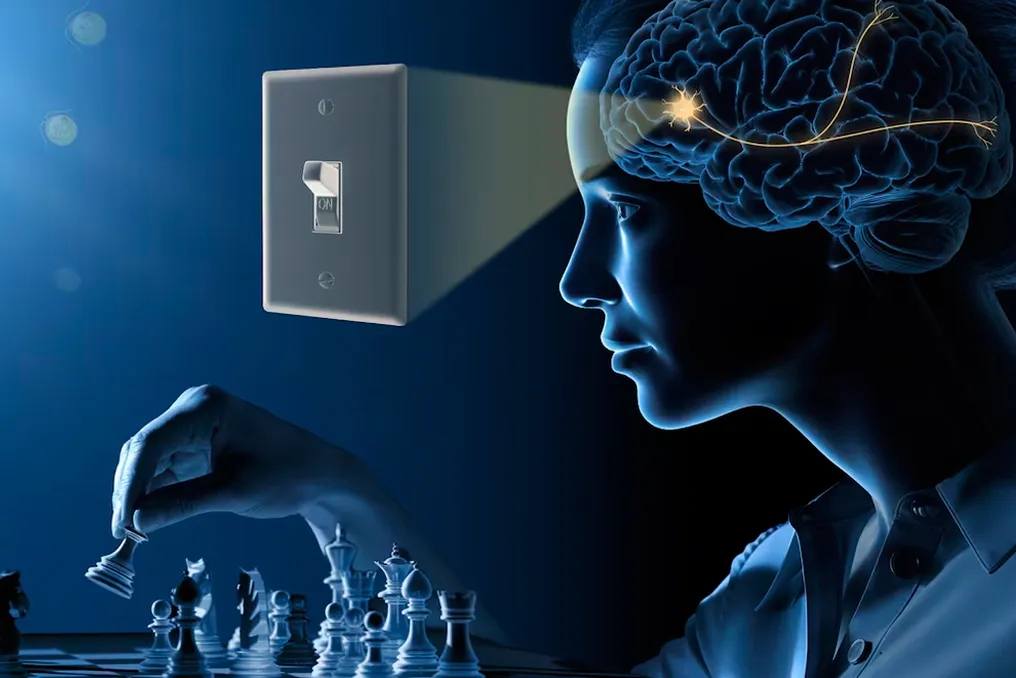
After placing the protein in the cell, researchers use light to activate specific neurons and observe the brain's response. This acts as a kind of 'switch' for neurons, helping to better understand the cause-and-effect relationships of each neuron's function and its interaction with the rest of the body. With optogenetics, neural circuits can be identified more easily, changing the approach to studying the living brain.
The Nobel Prize announcement states that the way the brain controls emotions, behavior, and bodily functions has long been a mystery. In the 20th century, researchers began to figure out which brain areas influence which functions, but the methods used could not prove cause-and-effect relationships. The image of the brain they created was like a schematic map full of question marks and unknown variables. Now, all of that is changing.
Despite the recognition of optogenetics, this technique still requires significant development. New research is aimed, for example, at using it to restore vision in people with impairments. Furthermore, this method allows the study of neurons involved in mental and neurological problems.