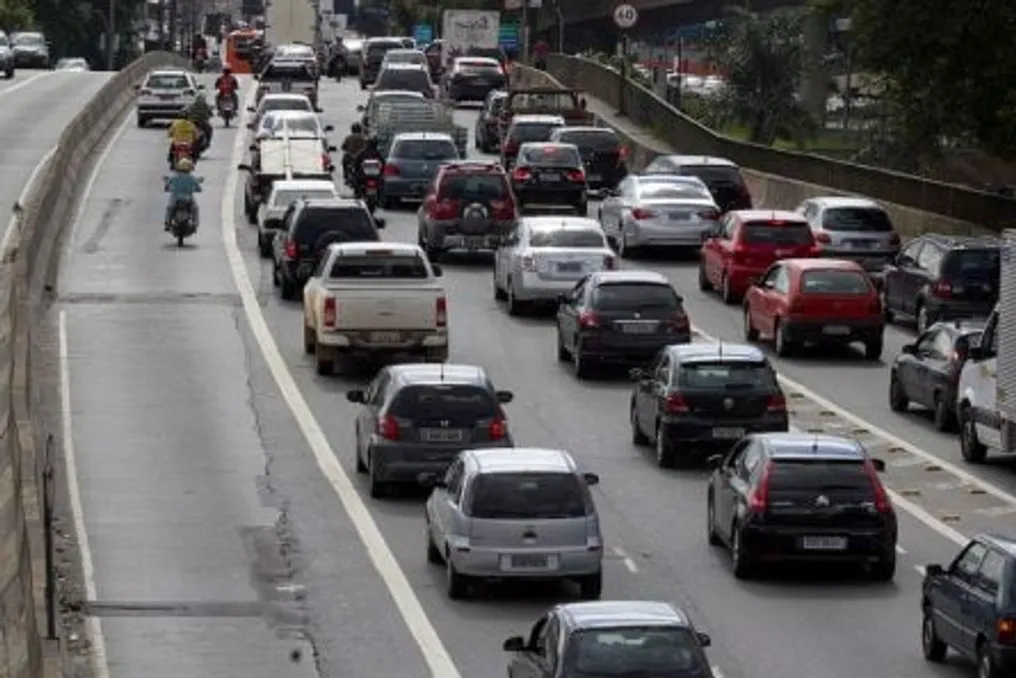
The Brazilian new vehicle market achieved its best historical performance in September, according to Fenabrave, the association representing dealerships. In total, 509,686 registrations were recorded, covering passenger cars, light commercial vehicles, trucks, buses, motorcycles, and road implements.
This volume represents an 8.3% increase compared to September 2025 and surpassed August's result by 1.2%. Regarding the year-to-date total, sales amounted to 4.23 million units, which constitutes a 14.4% rise, establishing the second-best performance in the first nine months, trailing only the 2011 record.
Arcelio Junior, president of Fenabrave, stated that demand remains high despite still restrictive credit conditions. This warming trend is attributed to intense competition among different brands and the existence of incentive programs, such as Move Brasil and Carro Sustentável.
Automobiles were the segment that contributed most to this advance, registering 216,366 units sold, corresponding to a 21.2% growth compared to the same period last year. When combined with light commercial vehicles, they totaled 268,721 registrations.
The Fiat Strada resumed its position as the best-selling vehicle in the country, with 16,002 units sold. It surpassed the Volkswagen Polo, which sold 11,095 units, and the electric model BYD Dolphin Mini, which registered 9,385 sales.
Electrified vehicles also show a growth trend; hybrids and electric vehicles together accounted for nearly 62 thousand units between cars and light commercial vehicles, more than double the figure from last year. In the 2026 cumulative total, this figure already reaches 433 thousand units.
However, not all sectors followed this positive trajectory. Light commercial vehicles showed a slight retraction of 0.9% compared to the previous year, while the motorcycle segment remained stable, with a small decrease of 0.4%. Furthermore, electric vehicles registered an 18% decrease compared to August.
In the heavy vehicle group, there was growth in truck and bus sales during September, but both segments still show a decline in the annual cumulative total, at 3.9% and 1.7% respectively. On the other hand, road implements, such as semi-trailers and trailers, advanced by 14.8%.
Fenabrave confirmed the maintenance of its forecasts for 2026, noting that it may revise them in November after the release of results for October.