Sesc plans new bistro in Serrador Building in Rio de Janeiro and presents other units in the state
Read more
Viagem e Turismo
viagemeturismo.abril.com.br

Sesc plans new bistro in Serrador Building in Rio de Janeiro and presents other units in the state

Residents of Rio de Janeiro are about to enjoy a new Sesc bistro, which will be installed at the top of the historic Serrador Building, located in Cinelândia. An agreement for the creation of this space was announced in early September, with an inauguration scheduled for October. This new gastronomic spot promises to be notable, as on the twenty-second floor it will offer a privileged view of Guanabara Bay.

Sesc Serrador Bistro

While the project for the Sesc Serrador Bistro is not progressing, the text suggests checking out other similar options maintained by Sesc RJ in various locations across the state. These bistros, all situated in historic buildings, are already active in four units, distributed throughout the city of Rio, in Petrópolis, and in Teresópolis.

One establishment, inside the Palácio Quitandinha, takes inspiration from the history of the renowned location in Petrópolis to create an environment that combines gastronomy with the legacy of Bar Central, a pioneer in receiving customers in the 1940s. This bistro features a bar, a waiting area (lounge), and a viewing balcony, focusing on tropical flavors. The Sesc CCSQ Bistro is located at Av. Joaquim Rolla, 2, in Quitandinha, Petrópolis, and operates from Tuesday to Sunday (including holidays), from 10 am to 5 pm.

Another unit, located in the facilities of the Sesc Alpina Hotel, is a spacious bistro with capacity for over one hundred people simultaneously and also hosts events with live music, as part of the venue's cultural programming. On Wednesdays, the venue offers karaoke sessions in the evening (from 6 pm to 10 pm), and shows take place from Thursday to Saturday (from 8 pm to 10 pm).

Sesc Teresópolis Bistro

The Sesc Teresópolis Bistro is located at Av. Delfim Moreira, 749, in Várzea, Teresópolis. Its operating hours are: Tuesday and Wednesday, from 11 am to 6 pm; Thursday to Saturday, from 12 pm to 10 pm; and on Sundays, from 12 pm to 6 pm.

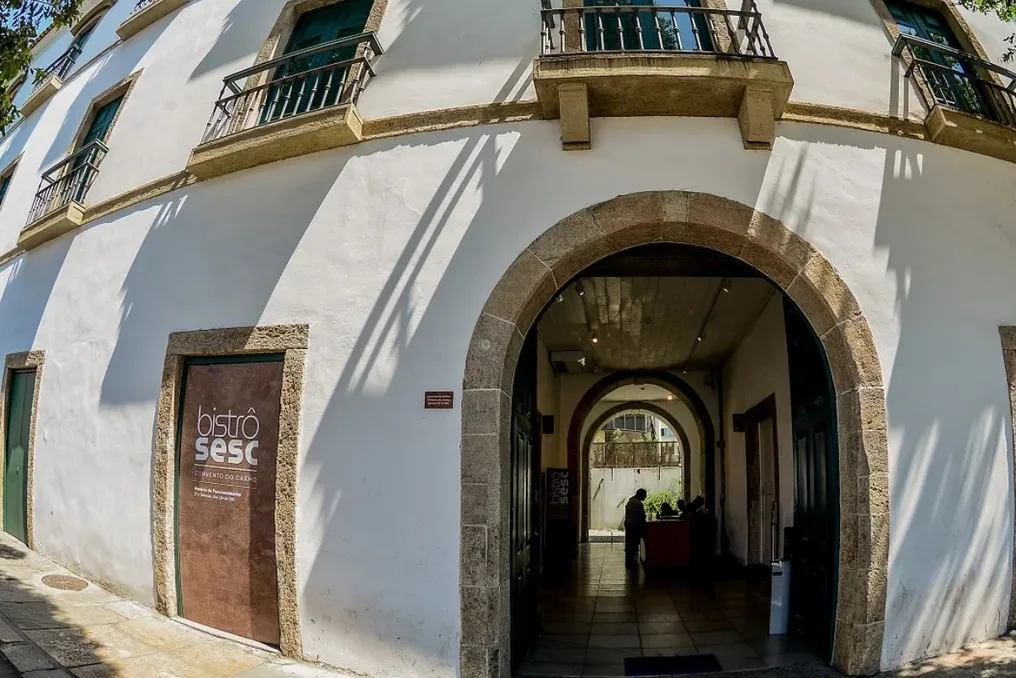
In terms of architectural and historical value, it is rare to find a Sesc bistro with such richness. This space is located within the Carmo Convent, preserving the characteristics of a building whose history dates back to the 16th century. In addition to initially being a residence for Carmelite friars, it served as the residence of the Portuguese queen, Dona Maria I, when royalty landed in Rio three centuries later.

The menu of this bistro follows the concept of eco-gastronomy, using ingredients supplied by small rural producers from the state. The Sesc Convento do Carmo Bistro is located at Rua Primeiro de Março, number 1, in Praça XV, in downtown Rio de Janeiro, and operates from Monday to Saturday, from 11 am to 6 pm.

Arte Sesc

Integrated into Arte Sesc, which operates in the premises of Casarão Figner, in Flamengo, this bistro stands out for utilizing the green courtyard of the imposing residence, built in 1912. It is recommended to visit the location for coffee or a snack, while also enjoying the activities regularly offered in the rest of the mansion, which includes three exhibition rooms and one education room.

The Sesc Flamengo Bistro is located at Rua Marquês de Abrantes, 99, in the Flamengo neighborhood, and operates from Monday to Saturday, from 12 pm to 7 pm.

Similar stories

INS Chilka releases largest batch of Agniveer in Navy; special training and deployment to follow
Read more
www.aajtak.in

INS Chilka releases largest batch of Agniveer in Navy; special training and deployment to follow

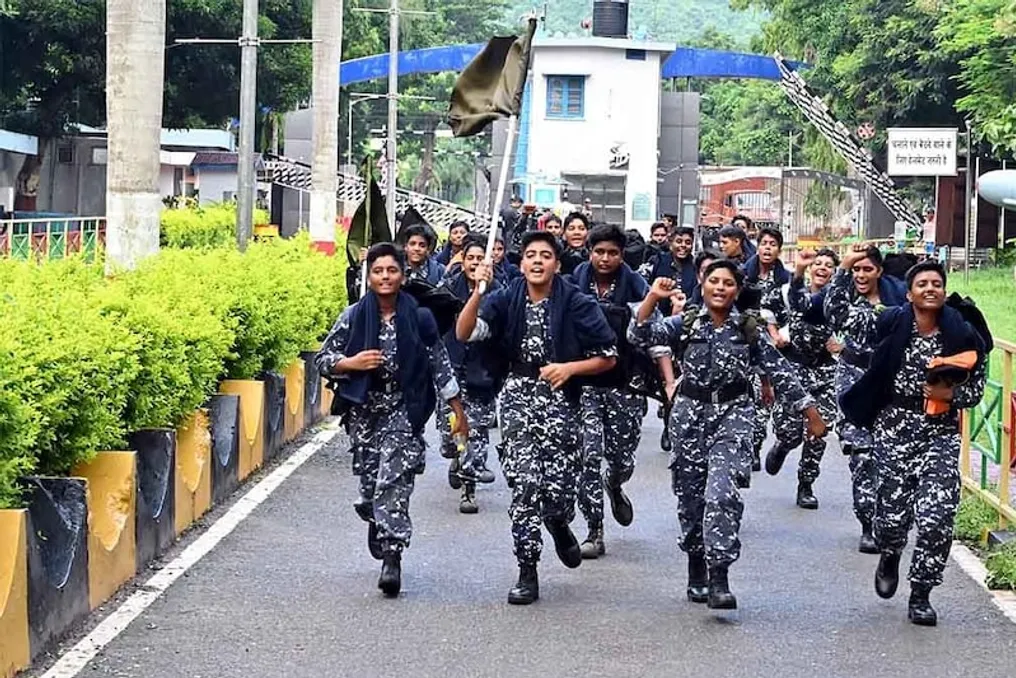
The Indian Navy is preparing to hold the commissioning ceremony for the largest batch of Agniveer to date from its main training center, INS Chilka, located in Odisha, which will take place on November 13. Over 3300 trainees, including the ninth batch of Navy marines and Indian Coast Guard sailors, will complete a 16-week basic training course.

The graduation ceremony will be conducted by the Chief of Naval Staff, Admiral Krishna Swaminathan. This event is significant for the Agnipath scheme, as the government recently approved an amended structure that paves the way for Agniveers to join the permanent cadre.

Following the parade, the graduates will not conclude their journey but will proceed to further training. They will undergo professional training at various naval establishments according to their specialization and branch. Furthermore, they are slated to be attached to Navy and Indian Coast Guard warships, allowing them to gain experience in real operational sea conditions.

Their future duties may include operating and maintaining naval equipment, weapon systems, sensors, radars, sonar, and communication systems. The Navy operates aircraft carriers, guided missile destroyers, frigates, submarines, and other advanced platforms.

The specialized training phase will be crucial in preparing the Agniveers for operational units, as the trained personnel play a key role in managing these platforms and maintaining their combat readiness.

This ceremony comes amid significant changes to the Agnipath scheme. On November 4, the Central Cabinet approved granting an additional two years of service to 75 percent of Agniveers who will not be selected for permanent duty after the initial four years. The existing provision for offering permanent employment to up to 25 percent from each batch based on merit will remain in effect.

The remaining 75 percent will be eligible for an additional two years of service. After six years, they can apply for inclusion in the permanent cadre, provided they are interested and meet the established selection criteria. The additional service will also provide higher salary, an improved pension package, and seniority benefits.

This decision is based on the performance evaluation of Agniveers over the last four years, including their physical fitness, motivation, technical adaptability, and professional skills. Although the amended structure opens the door to long-term service for the ninth batch, they must first undergo specialized professional training and complete the initial four years of service.

The parade on November 13 will mark the successful completion of the 16-week basic training for over 3300 trainees. This is the largest batch graduating from INS Chilka. The training program includes academic study, physical conditioning, swimming, parade drills, outdoor activities, and camp sessions.

Great emphasis is placed on discipline, leadership, character building, teamwork, and camaraderie, as well as the Navy's values: duty, honor, and courage. The closing ceremony will be led by the Flag Officer Commanding of the Southern Fleet, Vice Admiral Samir Saxena. Meritorious trainees, best teams, and best instructors will be awarded. A bilingual magazine, 'Ankur', will also be presented, and the parade will be broadcast live on the Navy's official social media platform.

This event strengthens the process of inducting youth into the Navy under the Agnipath scheme and preparing them for frontline operations. The graduation of the largest batch demonstrates the growing training capacity of the Navy. Through specialized training and attachment to warships, these young individuals will become capable of operating modern naval platforms.

The revised policy will offer more young people the opportunity to serve for a longer duration, increasing the benefit of their experience. Overall, this graduation is a vital stage in the preparation of the Navy's human resources, which will strengthen the young force to address future challenges.

Brazil establishes ranking of critical and strategic minerals to guide national industry
Read more
olhardigital.com.br

Brazil establishes ranking of critical and strategic minerals to guide national industry

The Brazilian federal government has implemented a three-level priority system for minerals considered critical and strategic in the country. This initiative aims to direct state actions in the sector and strengthen national industrial capacity, placing special focus on raw materials essential for energy transition, technological advancement, and national security.

The determination was formalized through Decree No. 13,146, signed by President Luiz Inácio Lula da Silva (PT) and the Minister of Mines and Energy, Alexandre Silveira. The regulation was published in an extra edition of the Official Gazette of the Union (DOU) on Wednesday (4), defining the parameters for categorizing mineral resources.

On Thursday (5), the National Council for the Industrialization of Critical and Strategic Minerals (CIMCE) validated a list containing 27 minerals, which were distributed across the three established priority classes.

The classification adopted by the council is based on five crucial elements: the geopolitical risk associated with the minerals, the global supply distribution, the feasibility of substitution with other materials, Brazil's position within the production chain, and the level of dependence on international suppliers.

The list approved by the council organizes the minerals into three groups: Class 1, with high priority; Class 2, with medium priority; and Class 3, with low priority. However, the inclusion of minerals such as niobium and iron ore in the third category does not imply a loss of economic relevance, given that the classification also considers Brazil's participation in world production and the degree of external dependence.

The decree establishes clear distinctions between the categories. For a mineral to be classified as critical, it must be vital for important economic sectors, present supply vulnerabilities, and pose a significant risk to the country in case of shortage. This analysis covers import dependence, the concentration of global production in a few nations, geopolitical conflicts, sanctions, trade barriers, and technological challenges. Furthermore, the government must weigh the possibility of finding substitutes for the material.

Additionally, the environmental impact of mineral extraction is part of the evaluation. Factors such as water availability, effects on communities and territories, susceptibility to climatic events, as well as recycling and waste utilization options, are considered.

Conversely, a mineral is considered strategic if it has considerable reserves in Brazil and is relevant to at least one of the following purposes: generating a trade surplus, boosting technological development, fostering regional growth, or assisting in reducing greenhouse gas emissions. It is possible for the same substance to receive dual classification, being both critical and strategic, provided it meets the requirements of both categories.

This division aims to guide the implementation of the National Policy for Critical and Strategic Minerals (PNMCE). The strategy seeks to increase Brazil's participation in global production chains, encouraging not only extraction but also the domestic beneficiation, refining, and industrial transformation of these raw materials.

The foreseen mechanisms include funding offers and guarantees for sector projects, along with initiatives focused on mineral processing and technological innovation. However, the classification itself does not automatically guarantee tax benefits, financing, or permits for enterprises; companies remain subject to legal requirements pertinent to each instrument.

The Ministry of Mines and Energy will be responsible for developing the technical studies supporting this classification. The list is scheduled to be reviewed ordinarily every four years, although the council has the prerogative to conduct extraordinary reviews.

Popular