
Activist Chef Julio Ritta moves Ana Maria Braga when discussing his work with homeless people in Porto Alegre
Read more
Grupo Globo
g1.globo.com

Activist Chef Julio Ritta moves Ana Maria Braga when discussing his work with homeless people in Porto Alegre

Julio Ritta, a chef who participated in the reality show Chef de Alto Nível, deeply touched presenter Ana Maria Braga during an appearance on the program Mais Você, on Globo, this Monday (5). Ritta, who is 42 years old and from Curitiba (PR), resides in Porto Alegre (RS) and identifies himself as an active advocate against hunger.

The emotion arose when Ritta shared how Ana Maria Braga's recipes were fundamental to his culinary journey. He related that his mother was a great admirer of the presenter and that, during the most difficult times of scarcity, one of the greatest joys was when she prepared her recipes.

Ana Maria was particularly moved upon hearing the Paranaense chef discuss the importance of the morning program for offering accessible recipes. The presenter even declared that she would not continue the program that day, just to cry. Ritta reinforced this idea, citing that his mother always said: 'I like Ana because she always teaches accessible recipes.'

He concluded his speech by emphasizing that, in a country where 16 million people face food insecurity and considering that a quarter of food is wasted, it would be possible to eradicate global hunger with inspiration, and that figures with Ana Maria's relevance bring hope.

Social Project

Julio Ritta, who has been active for about twenty years, dedicates himself to social activism through the project called 'Cozinheiros do Bem' (Chefs of Good). This initiative has been distributing ready-made meals (lunchboxes) for over a decade to people experiencing homelessness in the city of Porto Alegre. The project gained notoriety and evolved into a format of interviews on social media, boasting over a million followers. Ritta expressed the intention to expand food distribution to other Brazilian locations.

At the beginning of this year, Julio Ritta's trajectory was highlighted in an article in the UK's Forbes Life magazine, which emphasized that 'Julio Ritta's trajectory stands out as one of the most consistent examples of transformation driven by practical action.'
Similar stories

Traditional Baru Paçoca Recipe Taught by the Sabores do Campo Program
Read more
g1.globo.com

Traditional Baru Paçoca Recipe Taught by the Sabores do Campo Program

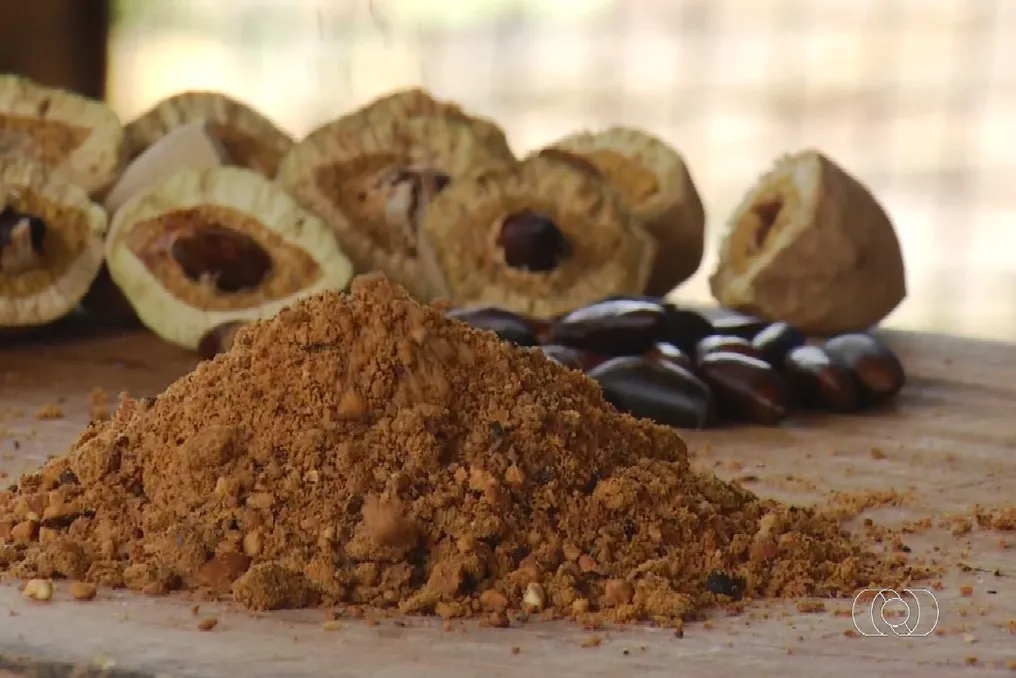
The Sabores do Campo program, broadcast on Sundays, presented a traditional recipe originating from the Cerrado: baru paçoca. The person responsible for the preparation is the rural producer Lázaro, who, together with his wife, Dona Arminda, manages over two thousand baru trees on his property.

The family has been exploring the fruits of the Cerrado for over twenty years, transforming the harvest of the nut into a source of income. The recipe has family roots, as Lázaro used to prepare paçoca in Bahia using sesame before adapting the preparation for baru.

Dona Arminda related that the inspiration to use baru in the paçoca came during a seed festival. Since then, Lázaro has started producing this recipe, which has become one of the main ways to utilize the nut.

Ingredients

The necessary components for the recipe include baru nuts, rapadura to taste, and salt to taste.

Preparation Method

The initial procedure consists of removing the baru from the fruit. Lázaro uses a modified sickle, developed by him and his son, or a machete. The sickle speeds up the cutting, but requires the pulp to be removed later. If the machete is used, the nut is almost ready for the next stage.

After extraction, it is essential to select each nut individually, similar to separating beans before cooking. High-quality nuts are light-colored, while damaged ones must be discarded to prevent the paçoca from becoming bitter.

Next, the nuts undergo a sieving process to eliminate any impurities. Only after this cleaning are they taken to the oven.

The baking time should be approximately thirty-five minutes. It is essential to stir the nuts every ten minutes to prevent them from burning on one side. The ideal point is reached when they acquire the characteristic, more reddish hue.

With the toasted nuts, the making of the paçoca begins. They are placed in a mortar along with some rapadura and a pinch of salt. The ingredients are pounded in the mortar until completely mixed, requiring some stirring during the process to equalize the distribution of the grains.

The paçoca will be ready to serve as soon as all elements are well incorporated and exhibit the typical texture of the sweet.

In addition to valuing a typical Cerrado fruit, this recipe preserves a family tradition. The production method also motivated Lázaro's son to develop other items derived from baru, with support from the National Rural Learning Service (Senar).

For the family, the preparation evokes memories of past generations, as the use of the mortar recalls stories of parents and grandparents who also used this utensil in the kitchen. Lázaro commented during the tasting of the paçoca about the variation in seasoning, saying: 'Did you see how much the pinch of salt changes?'

Popular