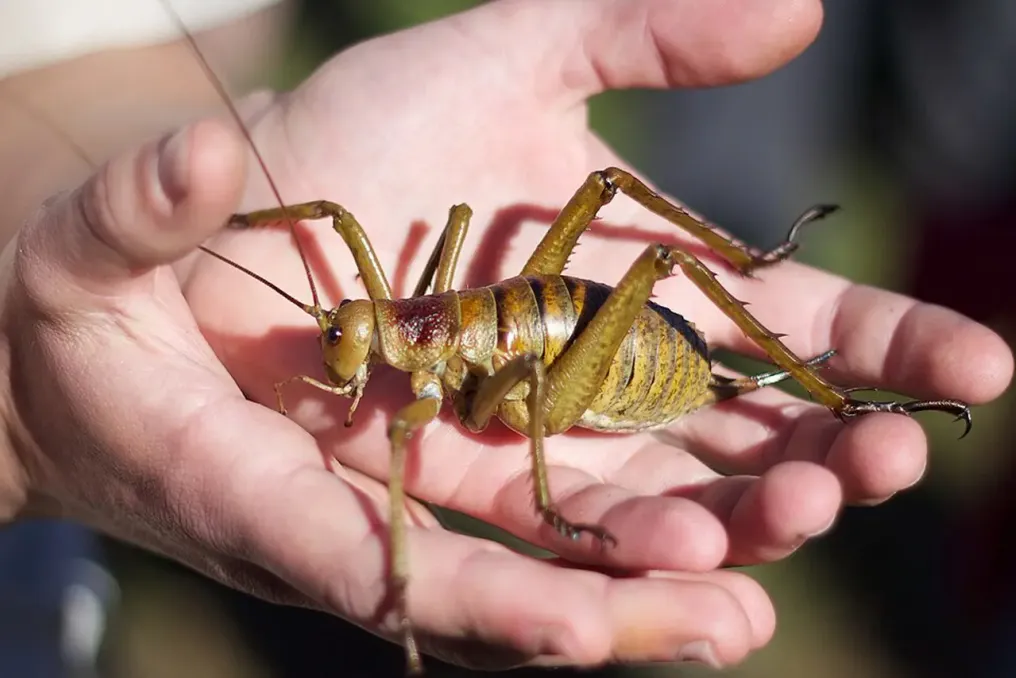
New Zealand has successfully restored the population of the wētāpunga species (Deinacrida heteracantha), which is one of the largest and heaviest insects in the world.
This success was made possible by a long-term captive breeding program, followed by the release of the insects into predator-free zones.
The Wētāpunga is a species of giant weta. Females can reach a length of about 10 centimeters, and their wingspan is approximately 20 centimeters. The weight of individual specimens is comparable to that of a small mouse.
Previously, this species was widespread in northern New Zealand. However, the arrival of predators and the loss of natural habitat led to a sharp decline in the population. On the mainland, the wētāpunga was virtually extinct in the wild, surviving only on a few islands.
To restore the population, specialists from Butterfly Creek and Auckland Zoo developed a captive breeding program. After being raised in specially created conditions, the insects were released into areas protected from predators.
Over a period of more than 15 years, about 11,000 wētāpunga were reintroduced into the wild. Releases took place on eight islands and in two fenced reserves on the mainland.
In some areas, self-sustaining populations have already formed, where at least four generations of wētāpunga have been born. Specialists consider this an indication of sustainable reproduction of the species without constant human intervention.
Thanks to conservation efforts, the status of the wētāpunga has improved. In 2004, the species was classified as nationally endangered, but it was subsequently moved to the category of species with a growing population.
According to The Guardian, the restoration of the wētāpunga was the result of a long-term conservation program for a species that was previously threatened by invasive predators and habitat loss.