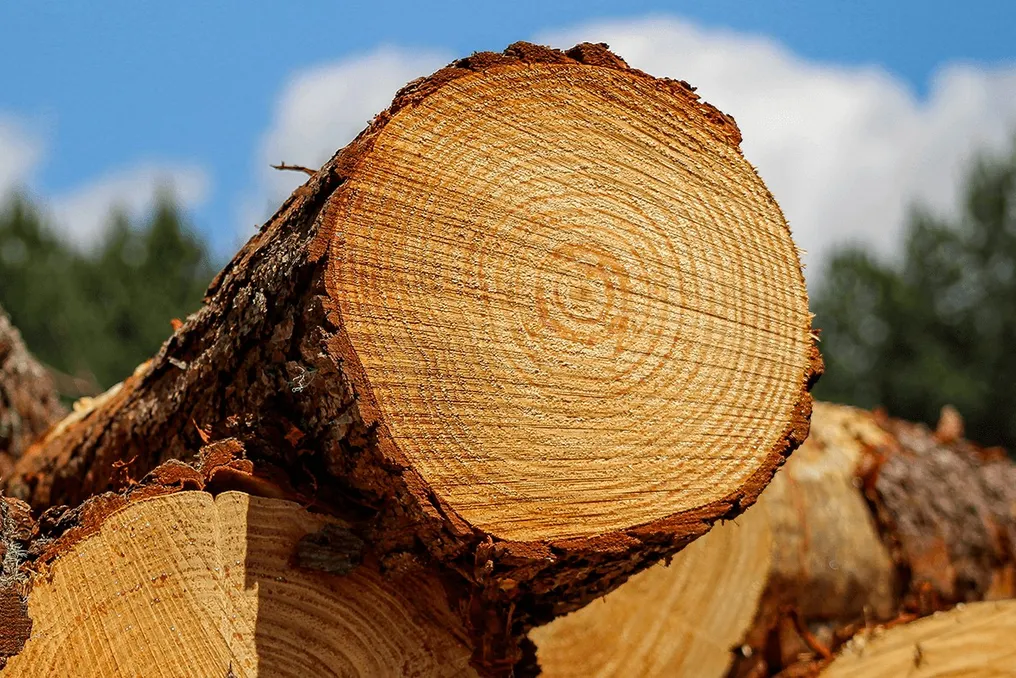
Apparently distinct products, such as diapers, furniture, pharmaceutical capsules, and chewing gum, share a common origin: raw materials from planted Pine forests. This species was introduced to Brazil 120 years ago, and its cultivation has acquired great economic, environmental, and social relevance.
Currently, a large part of manufactured items made from wood in the country comes from these Pine plantations, which helps protect native forests against inappropriate commercial exploitation.
According to data from the National Forest Information System (SNIF) of the Federal Government, the 10 million hectares of Brazilian forest plantings (with about 80% being Eucalyptus and 20% Pine) are responsible for supplying more than 90% of the wood used in national industry.
History and Commercial Consolidation
Initially, the uses of Pine were merely ornamental and experimental, as there was no consolidated commercial structure or technical knowledge to integrate it into the Brazilian forestry industry. However, starting in the 1930s, research institutions began to study species adapted to the Brazilian climate more systematically, introducing seeds of Pinus elliottii and Pinus taeda into test programs, especially in subtropical climate regions.
The phase of commercial consolidation occurred starting in the 1960s, concentrating in the South and Southeast. Tax incentives, resulting from the federal government's sectoral policy to promote paper raw material and other products, allowed for the deduction of Income Tax (IR) when planting trees. This policy was in effect between the 1960s and 1980s, a period when more than 6 million hectares were planted.
Embrapa Florestas points out that it was during this interval that the commercial-scale planting of Pine began to gain strength in the country. In the 1970s and 1980s, these plantations constituted one of the primary sources of raw material for the advancement of the forestry industry.
Thus, the trajectory of Pine in Brazil is not just that of a tree that spread, but rather of a culture that underwent processes of adaptation, genetic selection, research, management, industrialization, and technological improvement.
An institutional campaign by forestry sector entities highlights this evolution, showing how the species ceased to be seen as low-value wood to sustain industrial chains, employment, and renewable products. This initiative illustrates how a tree initially introduced for decorative purposes came to compose a complex productive chain, present in civil construction, furniture industry, paper and pulp production, energy generation, agriculture, and the development of bioproducts.
This campaign is promoted by associations of forest-based companies from Paraná, Santa Catarina, and Rio Grande do Sul—APRE Florestas, ACR, and Ageflor—which are members of the South Brazilian Forestry Companies Association (ASBR), with the national participation of the Brazilian Association of Mechanically Processed Wood Industry (Abimci).
The 120-year milestone refers to the record made in 1906 by the Swedish naturalist Alberto Löfgren in his work Notes on exotic plants introduced in the State of São Paulo.
Production Concentration in the South
The success of the investment in Pine can be measured by the distribution of planted forests. Paraná, Santa Catarina, and Rio Grande do Sul host about 89% of the national cultivation area, totaling approximately 1.7 million hectares, while the country has about 1.9 million hectares planted with this genus.
The high concentration in the Southern Region is due to a combination of factors such as climate, soil type, availability of appropriate land, forestry tradition, presence of research institutions and companies, in addition to the proximity between forests and industrial units.
In Paraná, for example, the forestry chain covers several regions, involving producers, companies, industries, transporters, equipment and input suppliers, universities, and research centers.
Fabio Brun, president of APRE Florestas, emphasizes that Paraná possesses a rare combination of elements, being the first to have a long-term vision, constantly investing in research, genetic improvement, and forest management, which has increased productivity and expanded the possibilities for wood use.
From Forest to Daily Life
Pine wood can be transformed into a vast range of products, including planks, beams, plywood, panels, doors, floors, furniture, packaging, pallets, and components for civil construction. Furthermore, it feeds the paper and pulp, resin, chemical, biomass, and energy sectors.
Its use is not limited to sawn wood. Cellulose and its derivatives are used in textiles, encapsulation materials, hygiene articles, cosmetics, food, and medicines. Advances in technologies such as nanocellulose open the way for applications in advanced materials, such as biological dressings, pharmaceutical coatings, and studies related to prosthetics.
In the paper industry, Pine's long fiber is valued for its resistance, a crucial characteristic in the manufacturing of technical papers and packaging that need to withstand great mechanical stress.
In civil construction, the wood is used in structures, finishes, floors, and industrialized systems. In carpentry, it appears in both solid pieces and reconstituted panels, such as MDF, MDP, and OSB.
Waste generated in the manufacturing process is also reused; bark and trimmings can be used to fuel boilers, generating steam and energy, which optimizes the efficiency of the chain and minimizes waste.
A Chain That Moves Municipalities
The economic impact of planted forests transcends the companies owning the areas. The productive chain includes rural workers, machine operators, specialists in forest planning and inventory, technicians, engineers, researchers, drivers, service providers, and employees of industries.
In numerous municipalities in the interior of Paraná, Santa Catarina, and Rio Grande do Sul, forestry activity is directly linked to municipal revenue, local commerce, and the sustenance of jobs at all stages of the production cycle.
Additionally, the industry maintains ties with neighboring communities through social, environmental, and economic projects. Such initiatives include environmental education actions, preservation area monitoring, health campaigns, waste management, professional training, and communication channels with residents.
In rural environments, forest planting can be integrated with other activities. Systems such as Integrated Crop-Livestock-Forestry (ILPF) allow for the simultaneous cultivation of trees, crops, and animal raising on the same property, whether in association, succession, or rotation. For small producers, this diversification represents a source of additional medium and long-term income, and the trees also provide shade for animals, aiding in thermal comfort and herd yield.
Research Transformed the Image of Wood
In the initial stages of its introduction to the country, Pine was considered a lower-value wood compared to native species with higher density, with its knots and lower density viewed as limitations. This panorama was changed thanks to scientific research.
A specific silviculture developed through genetic improvement, material selection, thinning, pruning techniques, and industrial enhancement, resulting in increased quality and predictability of timber production. Species are selected according to climate, soil, production purpose, and specific characteristics required for each application. For example, wood intended for the sawn industry requires different criteria than those used in the production of pulp, panels, or energy.
Paulo Pupo, superintendent of Abimci, describes this change as a process of planned insertion of a raw material into the economy. He states that the 120 years of Pine cultivation prove how a forest raw material can be incorporated into the economy in a planned manner, generating knowledge, technology, and serving as a basis for a diversified industrial chain.
Production and Conservation Can Coexist
The debate about Pine also addresses the relationship between planted forests and natural areas. It is essential to distinguish that native forests and planted forests perform different functions, although they can coexist in the same landscape. Native forests are vital for biodiversity preservation, protection of springs, climate regulation, and ecosystem maintenance.
Planted forests, on the other hand, are primarily aimed at producing renewable resources. According to Yeda Malheiros de Oliveira, a researcher at Embrapa Florestas, the two types of forests can complement each other. When arranged in mosaics, interspersed with legal reserves, permanent preservation areas, and ecological corridors, plantations create landscapes that harmonize production and conservation.
The logic behind this is to reduce the pressure exerted on natural forests. Instead of extracting native wood to meet industrial demand, production occurs in planned areas, following cycles of cultivation, harvesting, and replanting. However, this activity requires responsible management, which implies complying with environmental legislation, protecting sensitive zones, controlling fires, monitoring water resources, avoiding occupation of protected areas, and managing species regeneration outside the limits of the plantations.
Myths and Truths About Pine
The 120-year campaign also aims to dispel common doubts about planted forests, presenting the following points.
Planted Forests Cause Deforestation
This is a myth. Planted forests are intended for the production of wood, pulp, charcoal, resin, and other inputs. When implemented in suitable locations and managed according to legislation, they help relieve pressure on native forests. SNIF data indicates that in 2024, Brazil had about 9.9 million hectares of planted forests, corresponding to approximately 1.16% of the national territory. Sector reports indicate that about 94% of the wood produced in the country in 2024 originated from planted forests.
Pine Replaced Native Forests
This is also a myth. The expansion of silviculture must comply with environmental legislation, prohibiting the occupation of protected areas or the illegal conversion of native vegetation. Although the introduction and commercial expansion of Pine have, at times, been associated with degraded land or land designated for production, the current model follows rigorous guidelines.