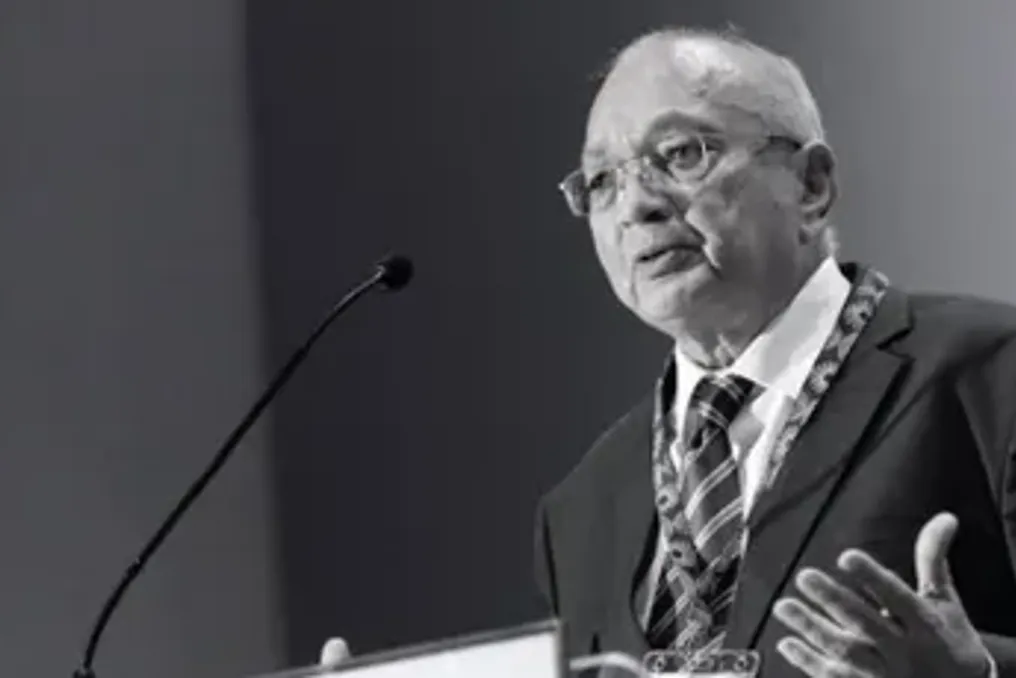
The passing of Mr. Samuel Benjamin Aranda Isaacs is noted with deep sorrow. He is regarded as a visionary, an inspiring leader, and the founder of the South African National Qualifications Framework (NQF). His life journey reflects an unwavering belief in education, learning, development, and work as tools for achieving social justice, personal empowerment, and national progress.
His deeply ethical approach was shaped even during his time as Minister of the Anglican Church. As South Africa transitioned to democracy in the early 1990s, he led the joint process of policy development aimed at creating an integrated and equitable educational system for the country, which later evolved into the South African Qualifications Authority (SAQA).
Role in the Development of the NQF
In 1995, as the coordinator of the Work Development Committee within the NQF, and later in 1996 as the first Chairperson of the SAQA Council, and from 1997 as the first Chief Executive Officer (CEO) for fifteen years, Mr. Isaacs brought intellectual depth, a strong sense of humanity, insight, and practical guidance to the development of the NQF.
He understood that building a national structure required not only sound policy; it needed democratic participation, constant dialogue, trust between institutions, and a firm commitment to continuous learning. His constant call was: 'we will navigate the NQF path reflectively, accountably, and boldly,' drawing on the fundamental works of Paulo Freire and Myles Horton.
This call reflected both the complexity of the work and his patient, courageous, active, and thoughtful leadership approach. He remained at the helm after the first review of the NQF and the adoption of the NQF Act, fostering stronger collaboration among NQF partners as the system 'began to dance.'
Cultural Legacy and Vision of the System
As a long-time admirer and advocate of the arts, he ensured these achievements were immortalized in sculptures of dancing figures placed in the Mwalimu SAQA boardroom. This sculpture was donated to SAQA by Orlando de Almeida and his wife Hildegard. He also provided the organization with pieces from his extensive private art collection, ensuring the SAQA building was always richly decorated with paintings and engravings by local artists.
His contribution was rooted in a compelling vision of a transformed education and learning system capable of overcoming past fragmentation and inequality, opening significant opportunities for all people for development, progress, and recognition of their knowledge. He championed a system linking various learning contexts, promoting redress, inclusivity, mobility, progress, quality, and transparency.
He spearheaded a national initiative to expand 'communication, coordination, and collaboration' within the context of the NQF, personally visiting various NQF partner organizations and stakeholders to establish a sustainable national career counselling system. He encouraged people to think not just about 'qualifications,' but about the 'social use of qualifications,' recognizing that knowledge, skills, and competencies are acquired in different settings and utilized as 'capital' in various ways.
In this work, he helped place fairness, transparency, and public accountability at the heart of the South African qualifications system. Mr. Isaacs recognized that long-term reforms could not be achieved by the efforts of any single institution or sector. His early ideas of the 'NQF as an ecosystem' provided an early roadmap for incorporating professional bodies and their designations, and more recently, for transitioning to include national micro-qualifications.
He valued consultation and brought together organizations and people with diverse histories, interests, and perspectives toward the common cause of the NQF. Through principled engagement, attentive listening, and a willingness to learn, he fostered the partnerships necessary to sustain the NQF.
His leadership combined strategic vision with understanding, enabling him to support participants while keeping the overarching goal—a more coherent, inclusive, and responsive system—in focus. He was an inspirational CEO, highly respected by the SAQA Board members, directors, and staff. Three hours of management meetings per week ensured that SAQA leadership benefited from the knowledge and involvement in vibrant developments and collaborations both within and outside his extensive national and international networks.
The current Chairperson of the SAQA Board, Dr. James Kivy, often notes that the foundations of his career began under Dr. Isaacs' guidance: 'As a young white man working in a new democratic institution at the time, which SAQA was a prime example of, there was no good reason for Sam to take me under his wing. Nevertheless, he did it again and again. He was a tough boss. A kind mentor. Mostly, he was the best example of a thoughtful, accountable, and bold leader any of us could wish for. I will miss him very much.'
In true democratic style, leaders were expected to demonstrate this approach to their teams. SAQA as an organization modeled the egalitarian approach it promoted. He also laid the groundwork and participated in establishing SAQA as a learning organization, providing all employees with opportunities for formal, informal, and non-formal learning—a tradition that continues to this day.