Tata Sons Chairman N. Chandrasekaran: Advanced manufacturing and energy security are necessary for India's growth
Read more
Business Standard
business-standard.com

Tata Sons Chairman N. Chandrasekaran: Advanced manufacturing and energy security are necessary for India's growth

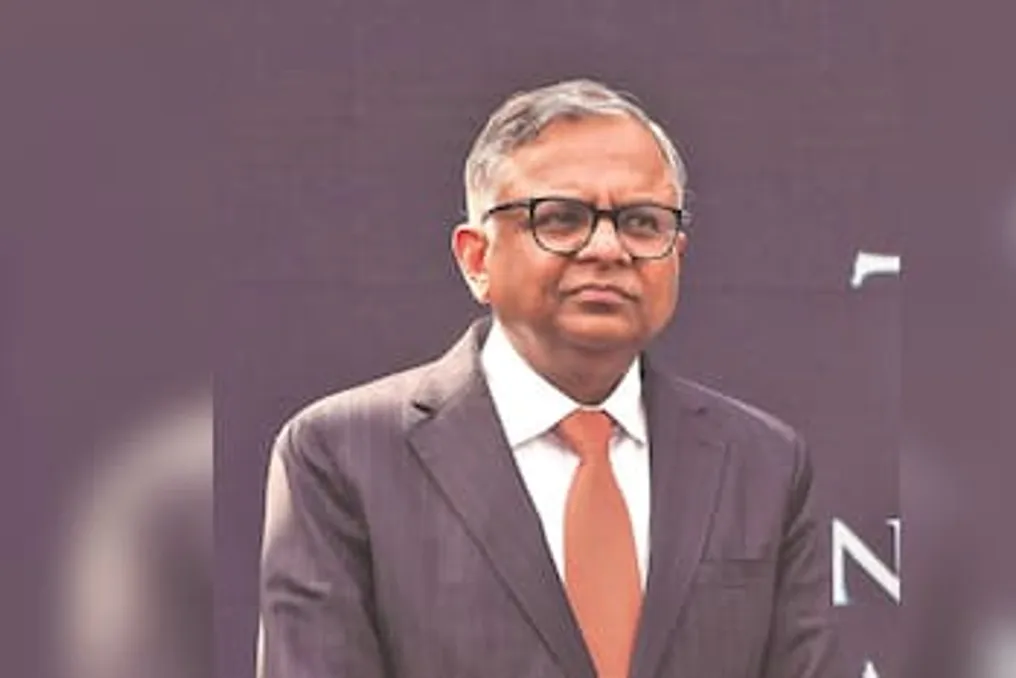
Tata Sons Chairman N. Chandrasekaran stated on Monday that constant investment in advanced and precision manufacturing, as well as in energy security, will be required to ensure stability in the complex and uncertain global environment and maintain India's long-term growth.

During his address at the Indian Foundation for Quality Management (IFQM) 2026 symposium, Chandrasekaran noted that the Prime Minister's vision of 'Viksit Bharat 2047' has permeated all spheres of the country. However, realizing this concept will require the creation of world-class infrastructure, institutions, and intellectual property, which will be critically important.

He emphasized that the country needs to transition from a product assembly-based growth model to becoming a manufacturer capable of producing a full range of products with end-to-end production capabilities. Although the economy is demonstrating steady growth due to increased domestic demand for goods and services, maintaining this pace requires focusing on developing jobs in advanced and precision manufacturing, as well as making significant investments in human capital.

Chandrasekaran highlighted that ensuring energy security is a fundamental prerequisite for growth. Furthermore, he noted the necessity of shifting from a low-productivity agricultural workforce to high-productivity manufacturing and modern services. He also stated that Indian companies should adopt and integrate sustainable production processes, which will help form a pool of experts to shape global opinion.

Speaking about product quality, he compared India to companies like Toyota or countries such as Germany, which are known for high global quality standards and focus on the final quality of supply chain components. He added that it is important to develop assembly-based growth, as this will lead to the formation of a strong small and medium enterprise (SME) segment.

Similar stories

K.M. Chandrasekhar's view: Kerala needs 7% growth rate and increased investment for job creation and economic momentum
Read more
www.aajtak.in

K.M. Chandrasekhar's view: Kerala needs 7% growth rate and increased investment for job creation and economic momentum

K.M. Chandrasekhar, Vice Chairman of the Kerala State Planning Board and former Central Cabinet Secretary, commented at the India Today Conclave South 2026 that the state should set a target of achieving an economic growth rate of 7% annually to maintain the pace of economic development and generate new employment opportunities. He emphasized the need to promote large-scale investment in the state to achieve this objective.

According to Chandrasekhar, the Kerala economy faces several hurdles, including rising public debt, low capital expenditure, slow progress in the service sector, and unemployment. He suggested that the state must change its traditional methods of economic planning and focus on measurable goals.

Chandrasekhar stated that Kerala aims to increase the state's Gross State Domestic Product (GSDP) from approximately ₹16 lakh crore to ₹28 lakh crore at current prices. Achieving this ambitious goal will require an annual economic growth rate of about 7%. He did not deem this goal impractical, as Kerala recorded a growth rate of nearly 8% during the period 2004-05 to 2012-13. He also mentioned that the country is also moving towards an annual economic growth rate of 8%.

However, achieving this target will require widespread investment. According to Chandrasekhar's estimates, Kerala needs to invest about 28% of its GSDP annually, whereas the current capital expenditure is only 1.34%.

He clarified that mobilizing such a large amount of investment solely through state government resources would not be possible. This requires integrating funds from the private sector, local bodies, cooperative societies, migrant Keralites, public-private partnerships, and central government grants.

Chandrasekhar stressed the crucial role of the private sector. Additionally, Kerala needs to develop the capacity to utilize central funds more effectively and secure greater financial assistance from central schemes. Revisions are also being made to the state's planning process, which emphasizes the SMART model. Under this model, plans will be Specific, Measurable, Achievable, Relevant, and Time-bound.

Speaking on Kerala's rising debt, Chandrasekhar said that borrowing itself is not a problem; the real question is how the borrowed money is being utilized. In his opinion, debt should be used in sectors that generate income and create sufficient resources to repay the debt in the future. If the debt is used for revenue expenditure or in areas that do not yield any economic benefit, it can become problematic.

He noted that Kerala's debt stands at about 35% of its GSDP, which is the highest among states. However, he also advised that rather than taking sudden large steps to reduce debt, gradual reforms are necessary.

Chandrasekhar listed unemployment as one of Kerala's biggest economic challenges. Citing data, he mentioned that the unemployment rate in the state is 29.8%, compared to 12.5% nationally. He also stated that the state aims to halve the unemployment rate in the next five years. To achieve this goal, Kerala must shift away from traditional industrialization and focus on sectors with the potential for large-scale employment and investment.

Highlighting several sectors with potential for increasing employment and investment, Chandrasekhar pointed to areas such as medical devices, gold, furniture, aviation, space, artificial intelligence, high-value tourism, sports, and creative economy. He mentioned that there are already about 110 medical device units operating in Kerala, and startups and small industries in the state have also expanded. Kerala has also implemented measures like the SERAL scheme and the Invest Kerala single-window system to simplify the process of starting a business.

S&P Global raises India's economic growth forecast to 7% for 2026-27
Read more
www.aajtak.in

S&P Global raises India's economic growth forecast to 7% for 2026-27

The confidence of major global agencies in the pace of India's economic growth continues to rise. The rating agency Standard & Poor's Global (S&P Global) has raised its forecast for India's growth, despite the complex global situation, high oil prices, and geopolitical tensions.

The agency increased the forecast for India's real GDP for the fiscal year 2026-27 from 6.6% to 7%. This increase came after economic indicators in the June quarter were better than expected. According to S&P, strong industrial activity, domestic consumption, goods exports, and government investments helped the economy, with consumption growth in India proving particularly resilient.

Investment activity in India also remains the strongest among leading economies in the Asia-Pacific region, allowing India to be considered one of the main growth drivers in the region.

Nevertheless, S&P warns of some future challenges. The agency forecasts a slight slowdown in growth rates in the second half of the current fiscal year. The additional momentum given to the economy through GST rationalization and income tax reduction is gradually weakening. Furthermore, weather will play an important role; up to September 9, the total rainfall in the country was about 15% below normal, which could significantly affect agriculture and rural consumer demand.

S&P forecasts that average consumer inflation in India in the current fiscal year will be around 5.1%. Consequently, attention will be paid to inflation and food prices. The agency expects the Reserve Bank of India (RBI) may raise its policy rate by 25 basis points during the current fiscal year. Thus, despite strong growth, there is pressure from the need to tighten policy due to rising inflation.

The most serious external challenges for India are the cost of crude oil and the dynamics of the rupee. If oil prices remain high amid Middle East conflicts, this could affect import bills, inflation, and the Indian rupee exchange rate. India imports over 80% of its required fuel. According to S&P, by mid-September, the Indian rupee had weakened by more than 5% against the US dollar. Despite this external pressure, the resilience of domestic consumption and investment remains, making the domestic economy India's main strength.

The rating agency adjusted the forecast for India's real GDP for 2026 by 0.4 percentage points, while the forecast for 2027 remained unchanged. According to S&P estimates, the next three fiscal years may look like this: 2025 – 7.8%; 2026 – 7.0%; 2027 – 7.2%; 2028 – 7.0%; 2029 – 6.8%.

India surpasses China and Japan in GDP growth rates according to S&P forecasts. China is projected to grow at 5.0% in 2025, 4.3% in 2026, 4.3% in 2027, 4.4% in 2028, and 4.2% in 2029. Forecasts for Japan are 1.2% in 2025, 0.8% in 2026, 0.9% in 2027, 0.9% in 2028, and 0.7% in 2029. South Korea is projected to show figures of 1.1%, 3.5%, 2.7%, 2.4%, and 1.9%. Although Taiwan's forecast for 2026 is 10.9%, higher than India's, this is attributed to strong activity in technology and artificial intelligence.

S&P is not the only one positive about India's growth. On September 18, Moody's Ratings also raised India's GDP forecast for the fiscal year 2026-27 from 6% to 7%. The agency attributed this to strong private consumption, investment, public infrastructure spending, and the strengthening of the services sector. Thus, there has recently been an improvement in growth forecasts for India from global rating agencies.

India's strong growth means that the foundation of demand and investment in the domestic economy currently remains solid. However, another side of the coin is important for investors: the inflation forecast of 5.1%, a possible 25 basis point rate hike, expensive oil prices, pressure on the rupee, and the risk of growth slowdown in the second half of the year cannot be ignored. In the coming months, key indicators for India's growth rate will be agricultural production, food inflation, crude oil prices, and the next RBI decision.

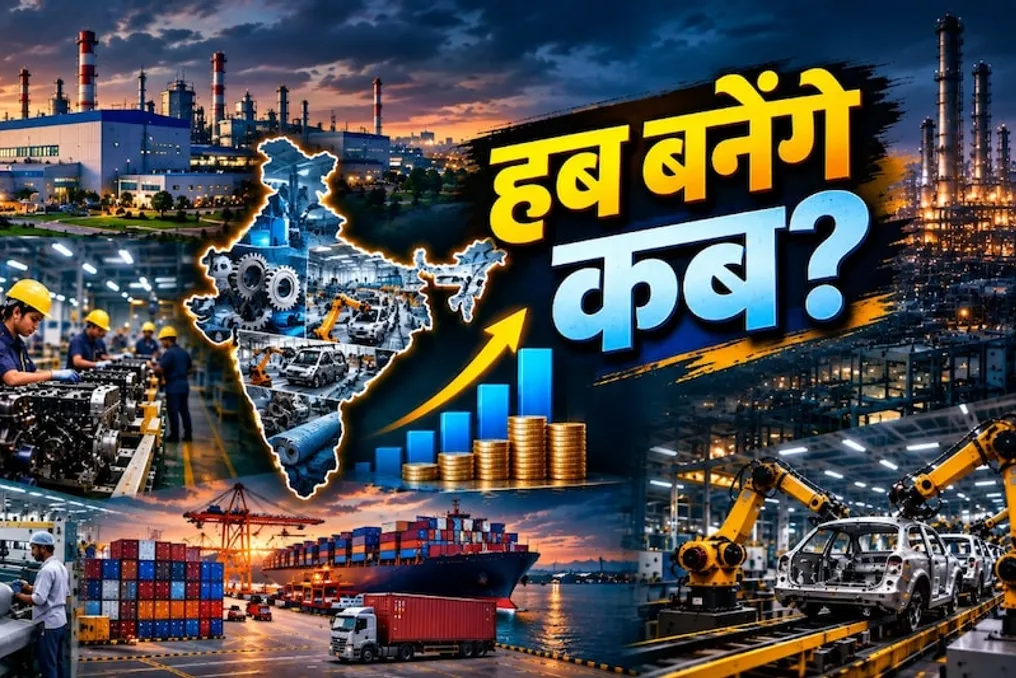
Comparison of Indian and Chinese Production Capacities: Prospects for Becoming a Global Manufacturing Hub
Read more
www.aajtak.in

Comparison of Indian and Chinese Production Capacities: Prospects for Becoming a Global Manufacturing Hub

There is an aspiration to make India a major manufacturing center. The global community is paying attention to India because the status of a manufacturing hub is critically important for strengthening any country's economy. However, the question arises: can India become the next global manufacturing hub?

When goods such as automobiles, mobile phones, and clothing begin to be manufactured in the country, import costs are significantly reduced. This leads to job creation for millions of young people, increased household income, and prevention of liquidity problems in the market. Furthermore, when a country begins to meet its needs and export products, foreign currency flows into the country. This is why the establishment of an Indian manufacturing hub is a key element of its economic stability and self-sufficiency.

India relies on production to realize its dream of transforming into a developed nation by 2047. As part of this process, India has intensified its industrial activities under the slogans 'Make in India,' 'Atmanirbhar Bharat,' and with the help of the 'PLI Scheme.' Nevertheless, the question remains open: when and how will this goal be achieved? Where does India stand in this global race, and how far behind China is it? What challenges does the country face?

Analyzing statistical data, India has achieved an initial advantage in the production race, but it is still far from the ultimate goal. India's share in the total global production volume is about 2%. Although India has already become the fifth-largest manufacturing country in the world, its scale remains limited.

On the other hand, China is rightly called the 'world's factory.' Its share in global production approaches 30%. China's annual industrial output exceeds $4.5 trillion, while India's figure is around $500 billion. Thus, China surpasses India by approximately nine times in terms of production volume.

The truth is that India cannot overtake China overnight, but changes have already begun. Global corporations are now adopting a 'China plus one' policy, meaning they aim to locate their factories in countries other than China. This presents a golden opportunity for India, especially considering the growing trade tensions between the US and China. Many American companies operating in China are viewing India as an attractive alternative.

The US also intends to break China's monopoly, but simultaneously does not want to allow India to become an 'economic superpower.' The recently passed US law, the 'Graham Sanctioning Act,' grants the right to impose high tariffs on countries purchasing Russian oil, which poses a challenge even for India. Since production is closely linked to energy, India imports over 85% of its required crude oil. Rising crude oil prices directly increase the cost of transporting goods, electricity tariffs, and raw material prices in India. This raises the cost of production in India, making it more expensive than goods from China, Vietnam, or Bangladesh.

The high cost of oil procurement depletes significant foreign exchange reserves of India. When government and company funds are spent on paying oil bills, capital for investment in infrastructure, new technologies, and research and development (R&D) becomes insufficient.

Over the last decade, India has made significant adjustments to its industrial policy. Under the 'Make in India' and 'Atmanirbhar Bharat' initiatives, production processes have been simplified, and special emphasis has been placed on 'Ease of Doing Business' to increase domestic production.

In accordance with the PLI programs, multi-billion dollar incentives have been provided for more than 14 sectors, including electronics, semiconductors, automotive, pharmaceuticals, and solar panels. As a result, India is now the second-largest mobile phone producer, and a significant portion of iPhones is assembled there.

Production in India will only grow if infrastructure is strengthened. In this regard, over the last decade, the construction of expressways, dedicated freight corridors, the PM Gati Shakti project, and new ports has helped reduce both the cost and time for transporting goods within the country. Simultaneously, India has attracted large investments in chip production, which is the foundation of future technologies.

Despite all efforts, the share of production in India's GDP has remained at 16–17% in recent years. The main reasons for this are four serious obstacles.

1. High logistics costs: The cost of transporting goods from factories to ports in India accounts for about 13–14% of GDP, whereas in China or Vietnam, this figure is maintained at 8–9%. Reducing this gap is a top priority.

2. Complex legislation and bureaucracy: Although attention has been paid to simplifying rules in recent years, at the state level, procedures for obtaining land acquisition permits, labor legislation, and environmental assessments can still take months. Active work is being done on this.

3. Skills shortage: India has a huge youth population, but modern factories and automation require different competencies.
Popular