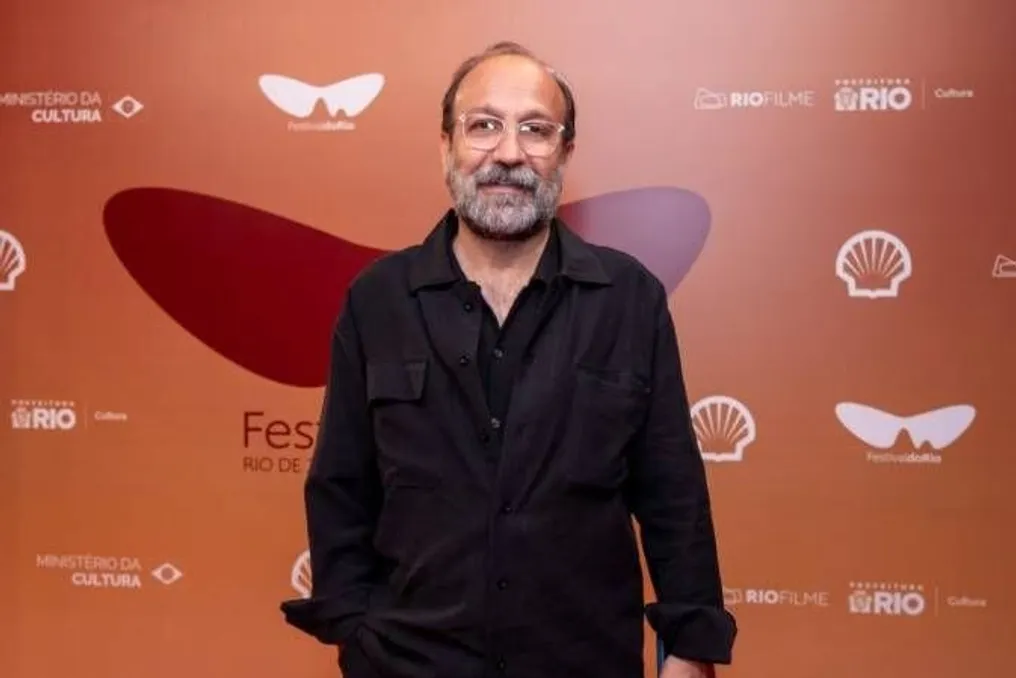
Renowned Iranian filmmaker Asghar Farhadi spoke at the Rio Film Festival, criticizing the perceived dominance of American cinema and warning that Hollywood is not a reliable source for authentic depictions of foreign cultures.
Farhadi, who was in Brazil to present his new film 'Parallel Stories' at the Rio Film Festival, made these remarks during a panel discussion, according to ISNA. The two-time Oscar laureate commented on the victory of 'Argo' in the Best Picture category just one year after 'The Separation' won the award for Best International Feature.
'When I watched this film, as soon as it came out, I felt it was something in the style of Hollywood,' stated Farhadi. In the true-story film 'Argo,' director Ben Affleck plays a Latin American extraction specialist who poses as a Hollywood producer to save six Americans captured in Tehran during the US hostage crisis in Iran.
He continued that the problem with such films in Hollywood and among some people in the United States is that they look at the world 'from above.' Farhadi asked: 'Why do you feel like you are on top, and we are below? I don't understand why they have such an ego that they are on top.' The Iranian director also stated that Americans often claim to possess 'democracy,' but this is not the case: 'You do not have democracy. It is a lie.'
Farhadi recalled his experience in the US several years ago while working on a project. During his research, he visited San Francisco to speak with incarcerated men. 'I met people in prisons there who were Black, [some of whom came] from other countries, and the real America was there. But people around the world do not see this part of the United States.'
He noted that he encounters a problem when people consider themselves superior to others and believe that 'others should be like us.' 'Even if it is done with good intentions and they want to be kind to you, they wish that 'someday you will be like us,' and no, I do not want that.'
Returning to 'Argo,' the director emphasized that such films are 'shallow.' 'They make these films for money; it is business. And in these films, it is always a white guy from the United States who saves others. My question is: why? Why does an American go to Cuba or Iran to save people? People understand that they can save themselves. Who asked you to come and save us?'
When asked how he addresses politics in his films, the renowned filmmaker replied that 'when you talk about society, you are talking about politics.' He added that even discussing family life, relationships, difficulties, and problems indirectly touches upon politics. In his works, he tries to avoid direct political themes because he considers them something distant from cinema. In his opinion, cinema should allow viewers to discover things for themselves.
Farhadi then mentioned Abbas Kiarostami's film 'Neighbors' as Iran's 'most political film.' This 1983 documentary closely follows drivers in the streets of the Iranian capital. 'He made a documentary about drivers in Tehran, but when you see how people talk to the police, the layers are very political.'
The filmmaker also noted that media and cinema do not provide a complete picture of people's daily lives. However, he stressed that empathy lies in the fact that people all over the world are similar to each other. Cinema is built on hate and love, and in matters of hate and love, it is the same everywhere. The love between a mother and child in Brazil and Tehran is the same. The way it is expressed may differ, but the essence remains the same.
Farhadi said that when he watches a Brazilian film, he quickly forgets that he is watching a story from another corner of the world and feels that it is 'a film about us' as people. He believes that the best way to know people is to travel to other countries and shake hands, rather than relying on the media. He does not believe that the media can give us a complete picture.
On this, the director emphasized that his last two films, 'Hero' and 'Parallel Stories,' are dedicated to how we perceive others and how we are perceived in return. They are also heavily influenced by how social networks have shaped our lives.
'When we see anything in the media, we must be careful,' he continued, adding that much of the information that mainstream media transmits about Iran, for example, is based on 'very simple knowledge' of life in the country. In the director's opinion, when a single discourse is established, it means that people are 'ready to accept' when someone says they are the enemy. He pointed out that the media does this because the most influential media belongs to powerful people. That is the problem.'
Farhadi briefly mentioned his next film, emphasizing that it will be shot in Persian. When asked if the film would address the current war in Iran or the conflict in Palestine, the director replied: 'Not directly,' hinting that the current political climate might have an underlying influence on the plot, even if it is not the subject of his project.
The director of 'The Seller' also recounted how 'Parallel Stories' was planned to be shot in the US: 'I spent three years there, writing, researching, doing casting. I did casting in the US with American actors, very famous names. But every day when I returned home, I told myself: I cannot connect with this. Something is wrong. It was a big problem. One night I decided to change course.'