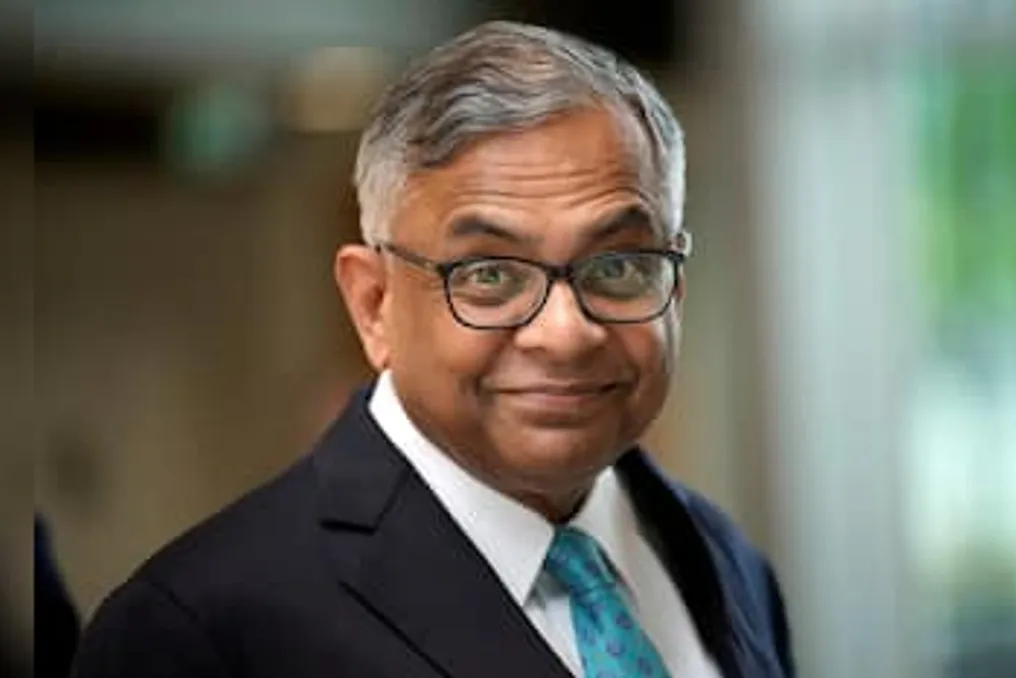
N Chandrasekaran, who recently secured his third five-year term as chairman of the board of directors of Tata Sons amid intense boardroom battles, stated that the Indian economy is showing very positive results.
According to the Chairman of Tata Sons, the Indian economy is resilient and strong despite global uncertainty. He noted that energy security, jobs in advanced manufacturing, and investment in human capital are critically important for sustaining long-term growth.
He also emphasized that the Viksit Bharat 2047 concept has permeated all sectors of the country. Achieving this goal, in his view, will require inclusive and sustainable development based on world-class infrastructure, institutions, and intellectual property.
Chandrasekaran added that over the past years, the Indian economy has consistently exceeded expectations, demonstrating the highest growth amidst a complex global environment. This growth is driven by strong domestic demand, service exports, and a favorable policy environment created by the government.
He pointed to confident growth in sectors such as auto sales, lending, energy, and cement. Among the indicators confirming India's stability and strength, he cited the current account deficit, which has remained consistently below one percent of GDP, service exports around 11 percent of GDP, strong foreign exchange reserves, and a low level of bad bank loans.
To ensure long-term growth, Chandrasekaran stressed the need to prioritize energy security, jobs in high-precision and advanced manufacturing, and investments in human capital.
Citing the example of Toyota, he mentioned that the Japanese automotive giant never viewed quality merely as an end result but simultaneously focused on innovation and productivity. He stated that for Toyota, quality became a key driver of innovation, productivity, and competitiveness.
He also mentioned that countries like Germany have managed to transform by focusing on national competitive advantage through the lens of quality. Chandrasekaran believes that a similar transformation is necessary in India, whether in product design, standard setting, precision, or building the entire ecosystem of suppliers and small and medium-sized enterprises.
Furthermore, he strongly urged Indian manufacturers to adopt sustainable production processes alongside quality and other factors, asserting that this must 'be embedded in our entire manufacturing ambition.' He expressed hope that this process will foster strong leadership not only among large corporations but also within the SME ecosystem, and that experts will emerge to become multipliers of strength, assisting the country and becoming a global voice in shaping the future of global manufacturing.