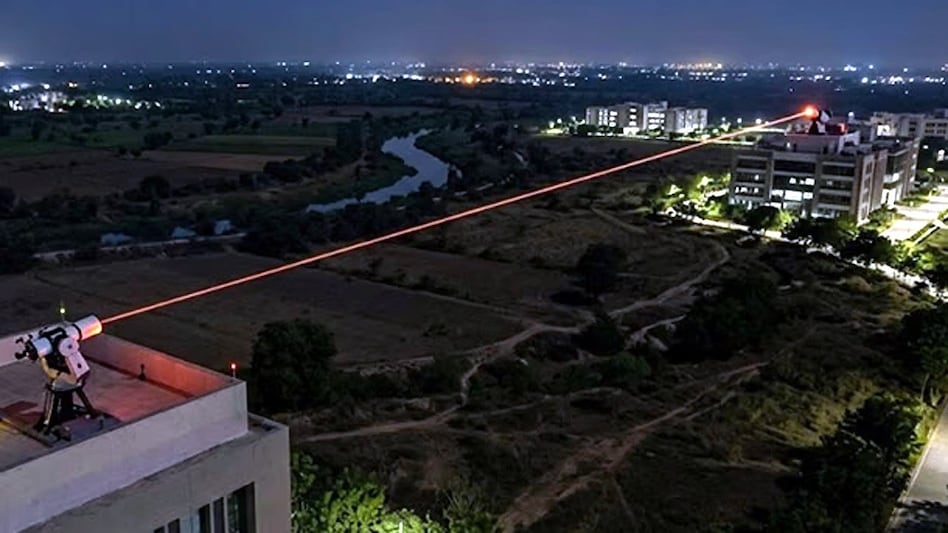
India has made a significant step forward in the field of Quantum Key Distribution (QKD) in open space. The tests were conducted between campuses in Gandhinagar by QNu Labs, BISAG-N, and IIT Gandhinagar. During this test over a distance of 5.56 kilometers, the quantum bit error rate remained below five percent.
The obtained keys were used for end-to-end encryption on the BISAG-N post-quantum cryptography platform. The system included both quantum hardware and software to ensure more reliable communication. Officials, such as Dr. Vinay Thakur and Sunil Gupta, noted that this is important progress towards creating quantum-resistant networks and satellite communication channels. This distance is double India's previous record in free space.
Quantum Key Distribution technology is based on sending information via quantum particles, specifically photons. Unlike traditional methods where hackers can intercept data, any attempt to interfere with the quantum system is immediately detected due to changes in the quantum state.
In this experiment, the signal was transmitted through free space, which differs from using fiber optic cables. The low error rate confirmed the practical applicability of this technology in real-world conditions. Integration with the post-quantum platform ensures protection even against attacks from future quantum computers.
According to information published in October 2026, QNu Labs, BISAG-N, and IIT Gandhinagar sent quantum keys over a distance of 5.56 kilometers through free space between two campuses. This is the first quantum key distribution channel in free space in India. The error rate was below 5%, and the key generation rate was between 230 and 260 bits per second. The keys were used for end-to-end encryption and decryption of real messages.
It is important to note that all components of the system were manufactured in India: QNu hardware, tracking and guidance system, and the IIT test platform. The architecture implemented aligns with the industry's development direction: physical level quantum key distribution supported by post-quantum cryptography and quantum random numbers, which guarantees security even if the quantum channel is lost. Free space is critical as it is a step before using satellites. Fiber optic QKD is limited to a few hundred kilometers, whereas in open air, the same guidance system used for 5.56 km will be used to hold the beam on an orbital spacecraft, which is QNu's goal.
India's National Quantum Mission includes satellite quantum communication as one of its objectives. The technology is not yet directly available to the public, but its impact will gradually strengthen daily security. The first areas of application will be banking and financial operations, where quantum keys will make data so secure that interception by a hacker becomes impossible.
Furthermore, this technology will enhance security when exchanging government services, such as passports or digital certificates. In healthcare, it will help securely transmit confidential medical records between doctors and hospitals. Personal photos, messages, and documents in mobile applications and cloud storage will become more protected.
In the future, when a satellite quantum network node is established, secure internet and communication will be available even in remote regions. In 'smart city' projects, data from traffic control systems, power grids, and video surveillance will be protected from hacking. Overall, this technology will make the digital lives of ordinary people more reliable, even if it is not obvious.
The National Quantum Mission aims to advance India in the fields of quantum computing, communication, and sensing. The conducted test demonstrates that the technology can be successful not only in the laboratory but also in real field conditions. The focus on satellite communication is important because satellites are necessary for secure communication across the country and internationally in the future. This approach—from short distances to long distances—is the right direction. Recognition by officials indicates the priority of this direction for the government. Additional tests are expected in the coming years, leading to commercial use. This victory is not just a scientific achievement but a step towards national security and digital self-reliance, allowing it to overcome the weaknesses of traditional encryption.