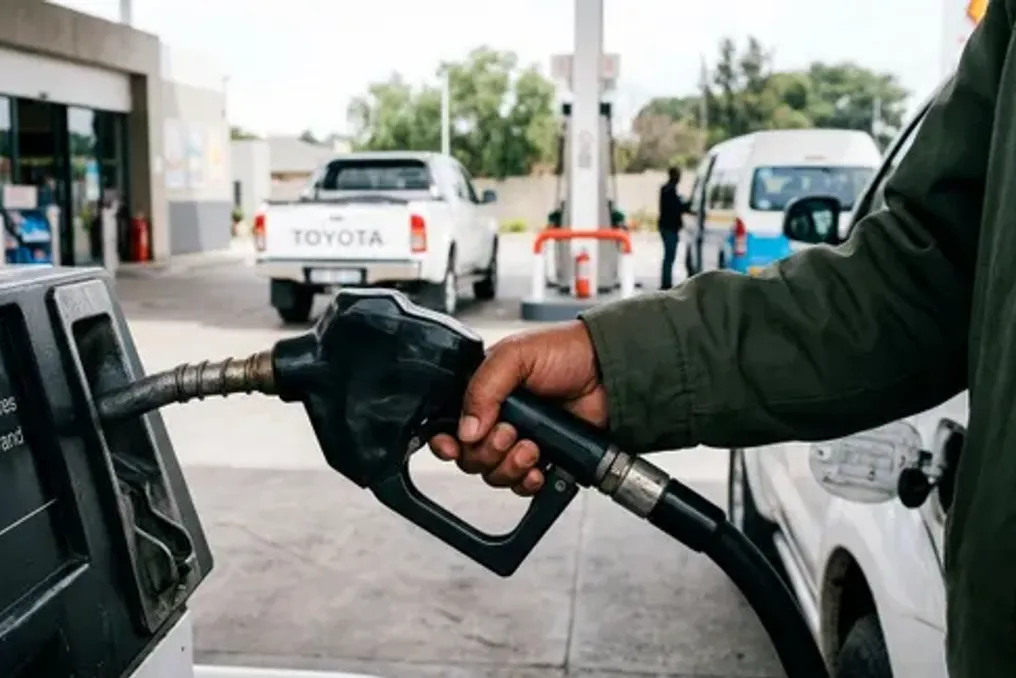
Rising fuel prices are putting serious pressure on household budgets, affecting the cost of daily goods, transportation expenses, and even interest rates. This effect is expected to intensify this week due to a forecasted new round of significant fuel price hikes.
Annabel Bishop, Chief Economist at Investec, notes that the October price increase is likely to push CPI inflation to the 5.0% mark, which could potentially trigger another rate hike in November. Bishop emphasized that the persistence of oil price shocks has negatively impacted real incomes, increasing inflationary pressure and leading to further growth in consumer debt burdens.
According to the latest data from the Central Energy Fund, petrol prices are expected to rise by approximately R3.18, while diesel fuel may increase by R2.80 (for 500ppm) or R3.15 (for 50ppm). These increases are set to take effect on Wednesday, October 7th, after drivers have already faced significant price increases in September.
If forecasts remain unchanged and the government does not announce support measures, unleaded petrol 95 could cost around R29.23 on the coast and R30.10 in Gauteng, and petrol 93 around R29.94 in Gauteng. Diesel 50ppm could also exceed R34 on the coast and R35 inland after accounting for the retail markup.
The government is not currently planning to intervene with temporary tax relief measures, as was done in April when the General Fuel Levy was reduced by at least R3 per litre for two months. Minister of Mineral Resources and Energy Gweed Mantsashe stated last month there were no immediate plans to mitigate the impact of fuel price increases on households and businesses.
Impact on Driver Costs
For motorists, the impact is most clearly seen by analyzing the cost per kilometer travelled. IOL calculations show that a small car consuming about 5.5 litres per 100 km cost approximately R1.11 per kilometre of fuel in March. By September, this cost rose to R1.47, and projected October prices will raise it to approximately R1.65 per kilometre.
For a compact SUV consuming 8.0 L/100km, the cost increases from approximately R1.61 per kilometre in March to R2.14 in September, with a forecast of R2.40 for October. The increase is even more noticeable for a diesel pickup truck consuming about 9.0 L/100km; its fuel costs rose from R1.89 per kilometre in March to R3.16 in September, with further increases expected in October.
Considering that the average driver in South Africa travels between 1500 and 1800 km per month, these increases accumulate quickly. For example, a small car like the Suzuki Swift cost about R1,666 for fuel over 1500 km in March, reaching R2,208 in September, and is projected to be around R2,470 per month in October. For an SUV like the Chery Tiggo 4, consuming 8.0 L/100km, the equivalent fuel bill rises from approximately R2,423 in March to R3,211 in September and is projected to reach R3,593 in October.
Fuel Price Cycle
The pressure is not limited to petrol stations. Bishop explained that the latest oil price shock is driven by concerns over the impact of the Middle East war on the supply and price of oil, petroleum products, and raw materials, as well as fears of further regional conflict escalation. She expects another repo rate hike of 0.25 percentage points to be factored in during the remainder of the year. If the rate rises again, raising the base lending rate from 10.75% to 11%, this will affect households even before they fill up their tanks.
A mortgage of R1.5 million over 20 years will increase from approximately R15,228 to R15,483 per month, adding about R255 to the payment. A car loan of R500,000 over six years will rise from approximately R9,453 to R9,517, adding another R64. For a household with both debts, this amounts to about R319 per month, even before factoring in higher costs for fuel, transport, and food.
Income vs. Cost of Living
Simultaneously, incomes are barely keeping pace with rising expenses. PayInc data shows that the average net wage increased from R21,399 in March to R21,622 in August, representing only slightly more than 1%. In real terms, the average net wage in August was 2.6% lower than a year earlier.
Higher fuel costs can also influence commodity prices, although the impact is not always directly proportional. The Road Haulage Association states that fuel accounts for 35% to 55% of the operating costs of road transport companies. Based on the September diesel price increase, they estimate that transport operating costs could rise by approximately 4% to 6%. Since over 80% of land transport occurs on roads, including the movement of food between farms, processors, distribution centers, and retail stores, this is significant.
PSG Senior Economist Johann Els noted that there is currently no clear pass-through of higher petrol and diesel prices into the prices of food and other consumer goods. He added that food inflation has actually decreased compared to the start of the year. Instead, consumers forced to spend more on fuel and transport have less money for other purchases, which, according to Els, creates a substitution effect. He also suggested that wholesalers and retailers might partially absorb the increased costs to avoid losing sales, which could cause 'deflationary forces' as consumers spend more on transport and less elsewhere, while businesses try to maintain sales volumes.
Nevertheless, food remains a significant burden on household budgets. The Pietermaritzburg Economic Justice and Dignity Food Affordability Index shows that the cost of its food basket has increased by 2% year-on-year to just under R5,500, and the average cost of priority food items has risen by 2.9%.
Potential Impact on Taxi Fares
The impact may also affect public transport users, although the National Taxi Council of South Africa (Santaco) considers it premature to discuss taxi fare increases in October. Santaco representative Mmatsihidi Rebecca Fala reported that taxi associations have made only one fare increase since the start of the fuel price rise in March, and operators are also facing increased costs for maintenance, administrative, and other operational expenses. Any fare increase will be decided by individual associations based on their costs and margins after consulting with passenger organizations. Fala noted that the Santaco Fare Index usually prevents increases of more than 10% at once unless conditions become exceptionally difficult. Santaco also called for fair subsidization of public transport and stated it remains open to temporary government assistance measures as operators face rising costs.
Debt Burden Increase
The latest quarterly bulletin from the South African Reserve Bank shows that household debt in the first quarter stood at 62.2% of disposable income, with debt servicing costs at 8.4%. Consumers, who are already under financial strain, have even fewer options for absorbing another increase. According to the DebtBusters Money-Stress Tracker, based on nearly 18,000 respondents, 53% spend more than 40% of their net income on debt repayment, compared to 48% last year. Among respondents earning over R20,000 per month, 75% spend more than the recommended 30% on debt. Consumers applying for debt restructuring are in an even more precarious position. The South African Financial Pressure Index showed that the median applicant at Debt Solutions 4U between June and August was dedicating 58.4 cents of every rand received to debt repayment. These figures cover 1,174 debt restructuring applicants and are not representative of the general South African population.