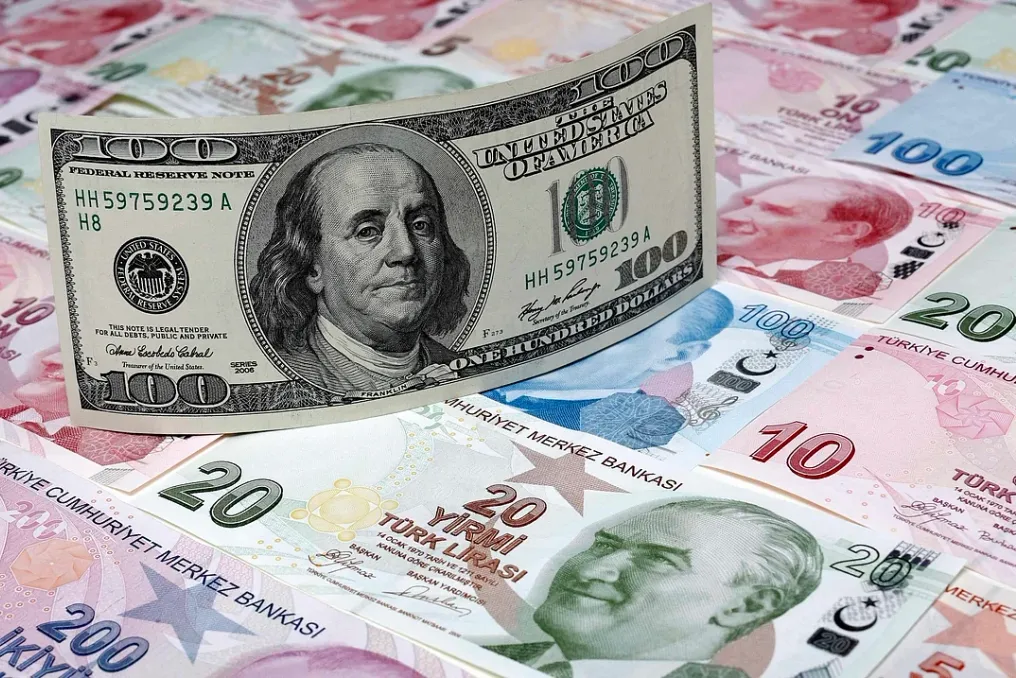
Investors from the United Arab Emirates (UAE) and the Persian Gulf region are showing significant interest in bonds as the yield on 10-year US Treasury bonds reached 5 percent, the highest level since 2007.
Representatives of the trading industry note that this demand is global in nature and includes Gulf countries. However, against the backdrop of uncertain geopolitical conditions, analysts advise investors to diversify their portfolios and keep some funds in reserve, considering the Federal Reserve's rate hikes and rising oil prices due to geopolitical tensions.
Wael Makarem, lead financial markets strategist at Exness, stated there is significant global interest in 5 percent yielding bonds, including the UAE and the Gulf Cooperation Council (GCC) countries. He emphasized that previously investors could not achieve returns from the bond market because rates were near zero, but now the yield on 10-year Treasury bonds is around 5 percent, allowing diversification between bonds, stocks, and other assets.
Makarem added that reserved funds aim to lock in a return of 5–6 percent on 'A' rated bonds, while riskier issuers offer several percentage points more. The yield on 10-year bonds reached 5 percent this quarter, which has not been seen since 2006 or 2007. The main risk remains price volatility if the Federal Reserve maintains its tightening policy. However, Makarem believes that any peace agreements or negotiations capable of lowering oil prices will ease inflation and expectations of rate hikes, thereby increasing bond values.
The U.S. Federal Reserve raised interest rates by 25 basis points in mid-September for the first time in three years, bringing them to a range of 3.75 percent – 4 percent, aiming to curb inflation in the world's largest economy.
Ahmad Assiri, research strategist at Pepperstone, noted that large capital inflows will not significantly impact the market, as US Treasury bonds are the world's largest and most liquid bond market, where major banks and institutions trade daily. He suggested that there are far fewer buyers than the market requires to lower yields, and many are merely 'testing the waters' by gradually building positions.
Assiri described Treasury bonds as an attractive source of income, especially for people aged 30 and 40 planning cash flows. He pointed out that yields on two-year, five-year, and ten-year bonds are approximately within 10 basis points of each other, which he termed 'near arbitrage.' The real yield on five-year bonds, adjusted for inflation, is about 2.3 percent, and he stressed the importance of diversification at present.
Ross Maxwell, Director of Strategy at VT Markets, stated that higher bond yields largely reflect expected rate hikes in the US, and that central banks have clearly shifted focus to fighting inflation. He noted that the Fed's hawkish stance may slow global oil demand, explaining the slight decline in prices from recent highs.
Maxwell highlighted three main risks: escalating geopolitical tension in the Middle East could disrupt oil supplies; tech stocks are performing well, but higher borrowing costs could negatively affect profits and infrastructure spending, potentially causing a correction; and continued rate increases could harm global economic growth. He advised investors, including small retail participants, to understand their time horizons and risk tolerance, as well as the risks inherent in each asset class. He concluded that some liquidity should be maintained to ensure greater flexibility in case such risks arise.