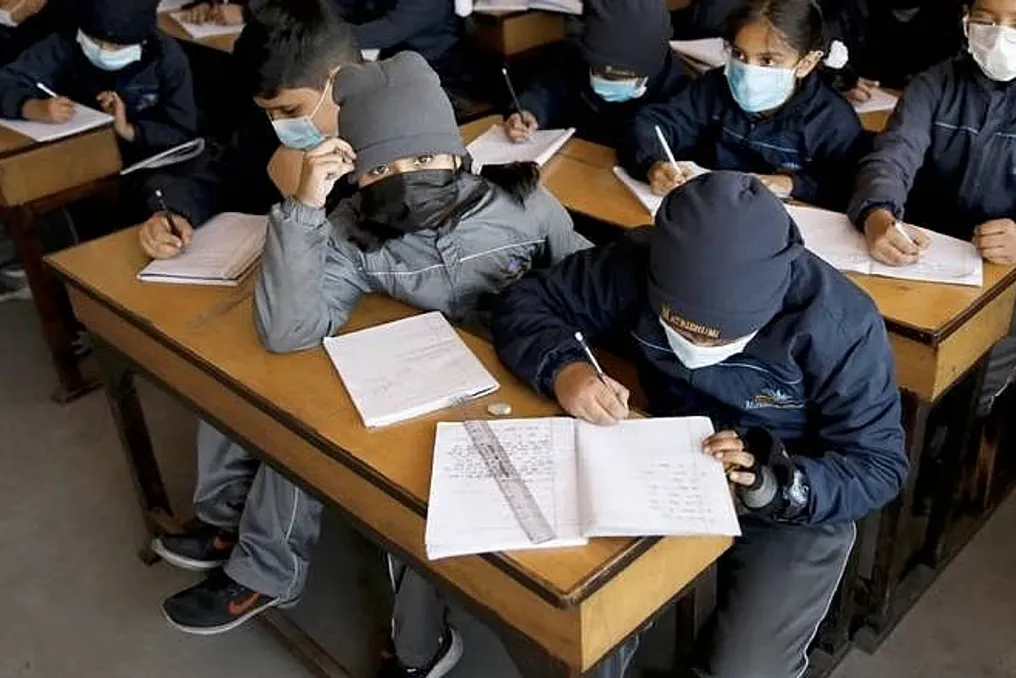
Sheikh Hamdan emphasizes the need for educational innovation as Dubai explores new school models
Read more
Khaleej Times
www.khaleejtimes.com

Sheikh Hamdan emphasizes the need for educational innovation as Dubai explores new school models

Dubai's Crown Prince Sheikh Hamdan bin Mohammed bin Rashid Al Maktoum has repeatedly stressed the necessity of implementing innovations in schools. This point was voiced by KHDA Head Aisha Miran, who stated that children in Dubai should not receive education the same way as previous generations.

According to the head of the Knowledge and Human Development Authority (KHDA), the idea of innovation is a constant theme in the emirate's educational strategy discussions, as Dubai investigates various learning formats and ways to transform education for future generations.

Aisha Miran explained that the emirate's leadership does not want the next generation to simply inherit the existing school model. She stated: 'We should not have the typical school or the school we attended. Our children and grandchildren should not attend the same type of school.'

These remarks came against the backdrop of Dubai considering alternative approaches to learning, including innovative models that can provide families with diverse educational opportunities. KHDA reported that the emirate has already approved an innovative licensing policy and is studying the requirements necessary for these models to function.

Miran emphasized that Dubai always acts as a testing ground for all types of innovation, and the emirate is open to experimenting with various methods. 'For us, we welcome any form of innovation, whether it is the Alpha model (which uses personalized AI-supported learning for teaching core academic subjects during a concentrated part of the school day) or any other model.'

The Authority is aware of other models being developed in the emirate, although details of these pilot projects remain confidential during the testing phase. The KHDA Head added that several such models are currently being implemented in Dubai that are not yet publicly available.

However, the official representative clarified that the pursuit of innovation does not mean abandoning the fundamental principles of education. Any new model must comply with requirements regarding child safety, academic standards, and student development. At the same time, certain parameters must be ensured, such as child protection, ensuring academic excellence, well-being, and self-development.

The drive towards new models is linked to the growing demand for school places in Dubai. Seven new schools opened in the emirate this academic year, and 11 applications are under review for the next two years.

In addition to introducing new formats, KHDA is working to increase Dubai's attractiveness for teachers and minimize student learning disruptions when educators leave. The Authority is developing a teacher well-being strategy aimed at improving their condition to support retention, motivation, and teaching quality throughout their career, 'from hiring to retention.'

The KHDA Head noted that to attract top specialists, the system must take into account several factors, including continuous professional development (CPD), recognition of achievements, and work-life balance.

KHDA is also considering introducing a policy prohibiting teachers from resigning during a school semester, focusing on reducing disruption for students. The authority's head is collecting data to develop this policy, pointing out that replacing a teacher mid-semester does not guarantee the maintenance of subject matter expertise for the student. 'Teachers should be discouraged from resigning during the school semester because our main goal is the student. We adhere to a student-centric approach.'

The school planning strategy is also aimed at preventing families from having to travel long distances to find the right curriculum or price range. The Dubai education master plan will analyze school locations, the adequacy or excess of places in communities, and the alignment of available schools with local needs. The KHDA Head reported that the authority collaborates with developers, zoning authorities, the Dubai Municipality, and RTA to better align the school supply with community needs.

Similar stories

UAE Universities Shift Focus from Diplomas to Practical Training and Industry Experience
Read more
www.khaleejtimes.com

UAE Universities Shift Focus from Diplomas to Practical Training and Industry Experience

When choosing a higher education institution, students from the United Arab Emirates are increasingly considering not only the qualification obtained but also what happens after graduation. Universities note a growing interest in aspects such as employment, internships, industry interaction, development of communication skills, and overall student experience.

At the Canadian University in Dubai (CUD), this shift required a revision of the approach to engaging with prospective students and their parents. Aya Sharif, CUD's Marketing Manager, reported that despite an increase in the total number of students compared to previous years, experience has shown an important lesson about what families now expect from higher education.

Sharif emphasized the need for a complete overhaul of the communication strategy to demonstrate the value and return on investment (ROI) in education, focusing on program employment outcomes. She noted that communication with families has moved beyond solely academic achievements; parents now want to know how the institution will help their children develop confidence and skills for future employment.

According to her, the more attention is paid to student life, the more significant it becomes. Today, students and their parents are looking not just for a diploma, but for a supportive environment where the child feels part of something bigger, where they are valued and heard. These values form a holistic, student-centric ecosystem.

Furthermore, students strive to develop outside the scope of their main academic discipline. CUD facilitates this by providing an individualized approach to each learner, helping them improve communication skills, confidence, and abilities.

The university actively integrates industry into the learning process. Sharif specified that a significant number of classes at CUD are conducted by industry professionals, and the faculty includes practicing specialists from relevant sectors. Students have daily opportunities to participate in new events, build contacts, or gain new opportunities.

This industry connection extends to partnerships and practical opportunities. CUD collaborates with organizations such as Dubai Media Academy, FinTech TV, and Dubai Municipality. Students also have access to AWS Academy, Cisco Networking Academy, and RedTeam Hacker Academy programs.

Students engage with the industry through case studies, guest speakers, site visits, seminars, and networking, as well as through specialized career and internship support. Sharif concluded that they 'live within the industry, not isolated,' which aligns with the concept of an urban campus or city university center.

The broader higher education sector is also being forced to adapt to changing expectations. Professor Dr. Amitabh Upadhyay, Director of Academic Affairs at Global Business Studies (GBS Dubai), stated that institutions must rethink methods for preparing students for an uncertain future.

He noted that higher education is at a crossroads, and the current structure and purpose of institutions may not meet the needs of society and the future industry. Therefore, educational institutions must implement a flexible model that instills ethically sound knowledge, necessary skills, and futuristic competencies for successful adaptation to uncertainty.

Meanwhile, universities use events like the Khaleej Times Uni Expo to gauge the demands of students and parents. Bhakti Rin, Head of Recruitment at De Montfort University, said the expo provided an excellent opportunity to communicate directly with families and education specialists. She called the event 'exciting and well-organized,' which helped showcase the university and establish meaningful connections.

Changes to KHDA Inspection System for Private Schools in Dubai for 2026–2027
Read more
www.khaleejtimes.com

Changes to KHDA Inspection System for Private Schools in Dubai for 2026–2027

Dubai's private schools have entered the 2026–2027 academic year with an updated quality assurance system from KHDA, as most established educational institutions resumed inspections after a two-year hiatus from full checks.

In June, the Knowledge and Human Development Authority (KHDA) confirmed that quality assurance visits will commence at the beginning of the new academic year, but schools should not expect a return to the previous inspection cycle in exactly the same form.

Under the revised approach, schools may receive either a comprehensive inspection or a more targeted monitoring visit. KHDA will determine the appropriate type of visit using existing data on performance and school information, instead of following a single inspection schedule. Another significant change concerns the notification period: schools will be notified no later than 24 hours before the inspection team arrives. This means that leaders and teachers must maintain readiness throughout the entire academic year, rather than preparing specifically for a scheduled visit.

Currently, the private school sector in Dubai serves approximately 387,000 students from 185 nationalities across more than 220 schools. KHDA has confirmed that quality assurance visits will take place in the 2026–2027 academic year, but there is no single schedule for all private schools in Dubai.

The authority is adopting a more flexible method, determining the time and method of assessment based on individual school data. One category has a clear requirement: private schools completing their third year of operation in Dubai will undergo a comprehensive quality review. Schools in their first or second year will not be subjected to a full inspection.

For well-established schools, the type and timing of the visit will depend on KHDA's assessment of circumstances, performance, and the school's improvement stage. Not every private school in Dubai will undergo a comprehensive inspection in 2026–2027.

KHDA uses a data-driven process to determine which schools require a comprehensive assessment and which are better assessed through monitoring. The information considered includes the school profile, history of previous inspections, student achievements, self-assessment data, and external evaluation data. Education specialists will analyze this information and use moderation to ensure consistency in decisions.

When selecting a school for a comprehensive visit, the assessment will cover the full UAE School Inspection Structural Framework. A detailed report will be issued, and an overall school rating will be published. However, for schools reaching their third year of operation, the comprehensive review is automatic.

A monitoring visit is a more focused form of quality assurance. Instead of examining every area covered by a comprehensive inspection, a smaller group will review specific areas or 'areas of inquiry' identified through KHDA's analysis of the school. The resulting report will indicate strengths and areas requiring further development. Nevertheless, this visit will not result in a new overall KHDA rating.

This means that parents or schools should not automatically interpret a monitoring visit as evidence of poor school performance. It is part of a new system designed to align with the nature of KHDA's interaction with the individual school improvement path. Thus, a school receiving a monitoring visit will retain its existing public overall rating.

Some schools will receive an overall rating and a new published rating during a comprehensive review. Schools selected for monitoring will receive a report on the reviewed areas, but their existing overall rating will remain unchanged. This will lead to a transition period where the last available rating will differ from school to school.

It is important to note that inspection standards remain based on the UAE School Inspection Structural Framework 2015–2016 and the DSIB Inspection Guide. The main change lies in how KHDA allocates its quality assurance resources, which are typically more detailed and conducted by education assessment specialists, culminating in a detailed report that includes an overall school rating and ranking. This does not replace the framework used to assess schools.

Institutions should continue to familiarize themselves with the established inspection standards while preparing for a more flexible inspection process. The UAE Ministry of Education has introduced a new inspection framework for public schools, but this framework does not apply to private schools in Dubai.

The reduction in notification time has been significantly decreased compared to the previous five working days. This step aims to give inspectors a fuller picture of normal school life, rather than allowing schools several days to prepare specifically for an inspection. This means inspectors expect to see teaching, learning, student well-being, and the daily operations of the school under conditions close to normal school routine. For school leaders and teachers, the practical implication is simple: preparation for inspection can no longer be viewed as a process starting a few days before the announced visit.

A key focus area in 2026–2027 will be the impact of schools' improvement work during the two-year inspection hiatus. Inspectors will examine what schools have done during this period and, importantly, whether these actions have led to measurable improvements for students. The emphasis, therefore, is not just on whether the school implemented new initiatives, but on the impact these efforts have had on the students.

Schools participating in the Excel Anywhere program will also undergo progress checks as part of the quality assurance process. This initiative was introduced as part of Dubai's Education 33 strategy to support improvement in schools with a high enrollment of Emirati students. KHDA also indicated that quality assurance work will consider broader circumstances in which schools operated, including recent regional events and disruptions affecting education.

The issue of inclusivity remains an important element of Dubai's school quality assurance system, including support for Students with Special Needs. The UAE School Inspection Structural Framework considers inclusivity alongside areas such as teaching and learning, curriculum, leadership, and student well-being. KHDA data shows that in 2023–24, 76 percent of Dubai's private schools received a 'Good' rating or higher for inclusive education. The focus on inclusivity also aligns with Dubai's broader Education 33 strategy and its All Rise initiative, which aims to strengthen educational opportunities and outcomes for students. For schools, this means that inclusive practice cannot be viewed as a separate area outside the inspection process. Evidence of how schools support diverse learners can be relevant in several quality assurance areas.

School self-assessment remains an important source of information for KHDA. In the previous inspection system, schools provided a Self-Evaluation Form (SEF) before the inspection. Since schools are now notified no later than 24 hours in advance, the role of continuous self-assessment becomes particularly significant. During the inspection hiatus, schools were required to provide regular SEF updates as part of ongoing monitoring. The current KHDA approach requires schools to maintain an accurate picture of their own strengths, weaknesses, and improvement efforts throughout the year. The practical takeaway for school leaders is that evidence of improvement should not only be collected after the inspection announcement.

It is important to distinguish between two concepts: the KHDA Compliance Guide, released in September 2026, establishes a separate process for compliance visits. These may include scheduled annual visits, complaint-driven or request-driven inspections from KHDA or other government departments, follow-up visits, and joint visits with other governmental bodies. Compliance visits may also occur without prior notice. In contrast, quality assurance visits relate to the assessment of educational quality and improvement through a comprehensive or monitoring visit.

This distinction is important for parents: a KHDA visit does not automatically mean that the school's overall educational rating is being reviewed or changed. The type of visit determines what is assessed and whether a new overall rating will be issued. The return of quality assurance visits will gradually provide families with more current information about private schools in Dubai after the inspection hiatus. However, parents should check the type of visit the school received before assuming its KHDA rating has been updated. A comprehensive review provides an overall rating and ranking. A monitoring visit provides a focused report but does not change the school's existing published rating.

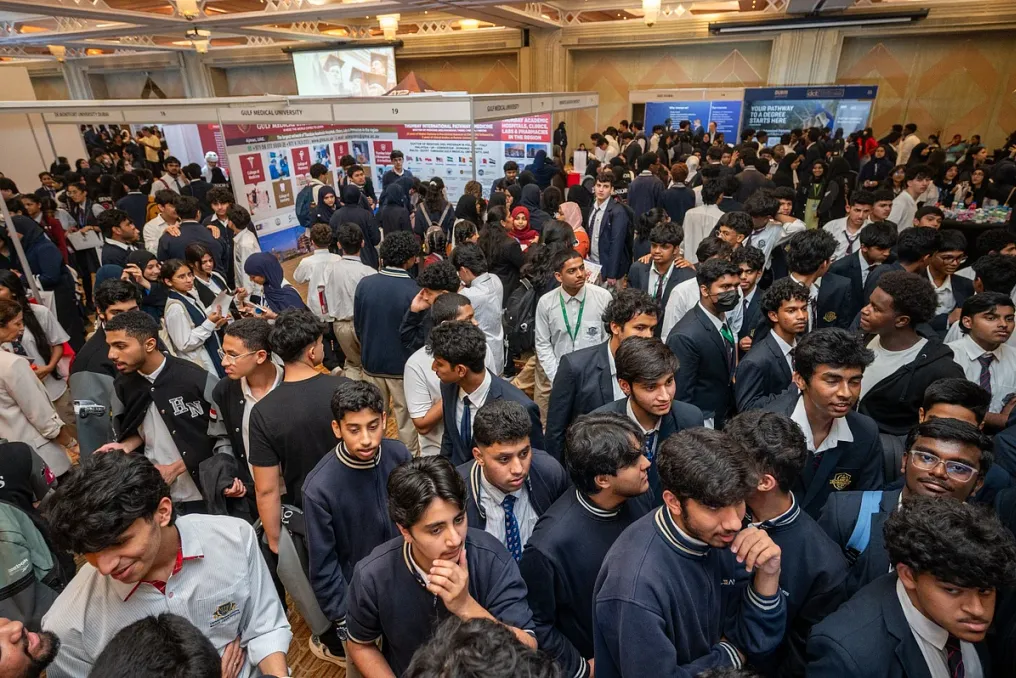
UAE Schools Urge Students to Use AI as an Assistant, Not for Completing Homework
Read more
www.khaleejtimes.com

UAE Schools Urge Students to Use AI as an Assistant, Not for Completing Homework

In many schools across the United Arab Emirates (UAE), artificial intelligence is becoming a popular tool for assisting with homework. It helps students grasp complex concepts, catch up on missed material, or solve problems when adults are not nearby.

However, as tools like ChatGPT become more accessible, educational institutions are drawing a clear line between using AI to support learning and allowing it to complete work for students. School principals emphasize that children can use this technology to find information, generate ideas, clarify concepts, and check their own work, but they must take responsibility for the final submission.

Seventh-grader Yahya Mohammed shared how AI proved useful after returning to school and missing two weeks due to a trip home. Since it was difficult for him to catch up through classmates and friends, he turned to ChatGPT to explain the missed topics in simpler language.

He recounted his experience: 'I missed two weeks of classes right before the summer holidays because I went home. I tried to catch up by talking with classmates and friends, but I still couldn't fully understand some topics.' Then, Yahya input these topics into ChatGPT and asked the tool to explain them more simply, adding: 'It really helped me understand and catch up on what I missed.'

Nevertheless, parents express concerns about the convenience of instant explanations, as this raises questions about how much of the learning process children might skip. Amal Khalil noted that her son uses AI when facing difficulties with homework, especially when no adult is around.

She explained: 'My son uses AI to help him solve problems while doing homework. If he doesn't understand something, he turns to ChatGPT for clarification or to resolve doubts, especially when there is no adult nearby.' While acknowledging that AI is 'incredibly useful,' Khalil warned against the risk of children becoming overly dependent on technology.

'AI provides instant answers and gratification, but in the process, children might miss out on the effort associated with research, trying different approaches, and finding solutions independently,' she stated. 'I believe that struggle and hard work have their value because they are part of the learning process.'

Schools are increasingly distinguishing between using AI as an aid versus using it to create work that the student then presents as their own. David Williams, principal of Regent International School, believes that a complete ban on AI is not the solution, given the growing role of this technology in students' lives.

He stated: 'We recognize that AI will become part of our students' lives, both now and in the future. Therefore, we do not think the answer is simply to ban it.' Instead, students are taught how to use the technology 'correctly and responsibly,' establishing clear boundaries for its role.

Williams clarified that AI can assist in generating ideas, supporting research, explaining complex concepts, or checking work, but it should not replace the student's own thought process. He stressed: 'For us, there is a very clear distinction between using AI to support your learning and asking AI to do your homework and then presenting that work as your own. Students must openly state when and how they used AI, especially where it contributed to graded work.'

He also noted that teachers assess more than just the finished assignment. 'Our teachers know their students very well, so we don't look at the completed work in isolation,' Williams said. 'We look at what students can explain, discuss, and demonstrate in class, as well as the process they went through to create their work.'

At Woodlem Park School in Ajman, the approach is similarly focused on keeping AI in a supportive role. Shayne Davison, principal of Woodlem Park School in Ajman, says that students are encouraged to conduct independent research, use reliable sources, and develop their own ideas. However, using AI to create or complete homework and presenting it as one's own 'is not considered proper use of AI.'

'Our clear AI usage policy is communicated to students, parents, and staff, ensuring a general understanding of responsible and ethical practice. Teachers continuously assess student comprehension through questioning, discussions, classroom assignments, and authentic tasks.'

Davison emphasized the school's core principle: 'AI can support learning, but it must never replace thinking.'

Williams also highlighted that students must understand the limitations of AI, rather than accepting every response as truth. 'We also want our students to understand that AI is not always right,' he concluded. 'The ability to question information, verify sources, and draw one's own conclusions is incredibly important. Use AI to support your thinking, not to do your thinking.'

Popular