Tunisia offers movie settings like Star Wars and Indiana Jones for tourism visits
Read more
Viagem e Turismo
viagemeturismo.abril.com.br

Tunisia offers movie settings like Star Wars and Indiana Jones for tourism visits

Located in North Africa, Tunisia possesses remarkable geographical and cultural diversity. Although its total area is relatively small, covering 163,610 square kilometers—placing it among the smaller states of Brazil by size—within a radius of approximately 500 kilometers, very varied landscapes are concentrated.

These landscapes range from arid deserts to ancient medieval fortresses and Roman vestiges, many of which are located in coastal areas. Combined with Berber architecture, characterized by the use of mud bricks and rammed earth, this wealth of scenery provides an ideal aesthetic both for representing futuristic worlds without excessive reliance on visual effects, and for recreating historical environments of other nations.

Due to these characteristics, several Hollywood film productions, some of the most famous of the last century, have chosen Tunisia as a filming location. Below, we detail some films shot in the country and how these settings can be visited.

The Star Wars universe

The Star Wars universe, conceived by George Lucas and initially produced by Lucasfilm, is filled with striking fictional locations that have fascinated millions of fans for decades. A significant portion of the memorable settings in the feature films was filmed in Tunisian soil.

A prominent example is the planet Tatooine, whose name is inspired by the Tunisian city of Tataouine. The interior of the Lars family farm, where the character Luke Skywalker (played by Mark Hamill) resides at the beginning of 'A New Hope,' corresponds to the Sidi Idriss Hotel. This location is an underground cave-style lodging, built in Berber style, situated in the town of Matmata and accessible during the day.

For those wishing to stay longer, there is the possibility of overnight stays at the location, and it is recommended to book several months in advance, especially during high season.

Sidi Bouhlel Canyon

This canyon is one of the most frequented spots by saga enthusiasts. Commonly called 'Star Wars Canyon,' it served as the representation for the Tatooine region, where Luke is attacked by the Sand People and the robot R2-D2 is captured by the alien species Jawas. Furthermore, in Ajim, an old Berber-style bakery was adapted to become the iconic Mos Eisley Cantina, famous for its soundtrack composed by John Williams.

The box office success of 'Indiana Jones and the Raiders of the Lost Ark,' released in 1981, introduced the world to the celebrated archaeologist who gives his name to the film, played by Harrison Ford. Directed by Steven Spielberg and co-produced by George Lucas, it is not surprising that many scenes from this film were also shot in Tunisia.

In this case, the Tunisian desert was not used to create fantastic worlds but rather to portray other countries. The Medina of Kairouan, a historic district of the municipality of Kairouan (a UNESCO World Heritage site since 1988), served as a backdrop for the streets and markets of Cairo, Egypt. This location is a highly visited urban center in the city and can be easily explored.

The Sidi Bouhlel Canyon was also used to illustrate the excavations in Tanis, an ancient submerged Egyptian city that was created specifically for the film.

However, many of these natural attractions can be difficult to find without the help of local guides or agencies. Therefore, there are companies such as Galaxy Tours, specializing in Star Wars and Indiana Jones cinematic tourism in Tunisia. These companies offer short trips or multi-day excursions for visitors merely passing through the region.

Biblical settings in Tunisia

Tunisia also served as a setting for a biblical nature scene. The satirical feature film 'Monty Python's Life of Brian,' released in 1979 and directed by the British comedy group Monty Python, narrates the journey of the prophet Brian Cohen (played by Graham Chapman), who was born in a stable near Jesus Christ in Judea.

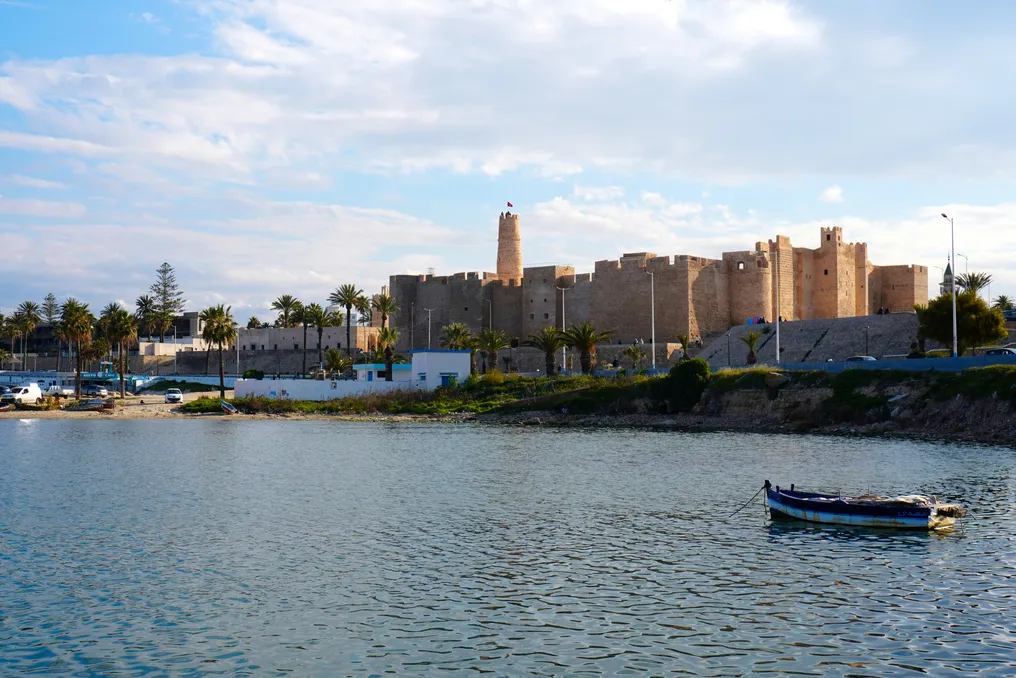
Ribat de Monastir

Thus, the Ribat de Monastir, an impressive Islamic monument, was used as the main setting to represent Jerusalem and the Holy Land. The Roman Theatre of Carthage, another Tunisian historical site, was used for the scene of the Jewish Popular Front, while the desert area of Matmata—where the Sidi Idriss Hotel is located—served as the stage for both the mountain sermon scene and the final crucifixion sequence.

As these are historical structures, these locations can easily be incorporated into conventional tourist itineraries. The Ribat de Monastir, for example, is located in the central region of the city of Monastir, facing the Mediterranean Sea, even providing a beautiful view of the beach.

Additionally, the Roman Theatre of Carthage, located in the eponymous city, in a suburb north of Tunis, the Tunisian capital, is a highly memorable tourist spot for travelers. This structure is part of an archaeological zone and was built in the second half of the 2nd century AD, under the reign of the Roman emperor Trajan.
Similar stories

Uzbekistan plans to build a film studio complex based on international experience, studying Turkish pavilions
Read more
podrobno.uz

Uzbekistan plans to build a film studio complex based on international experience, studying Turkish pavilions

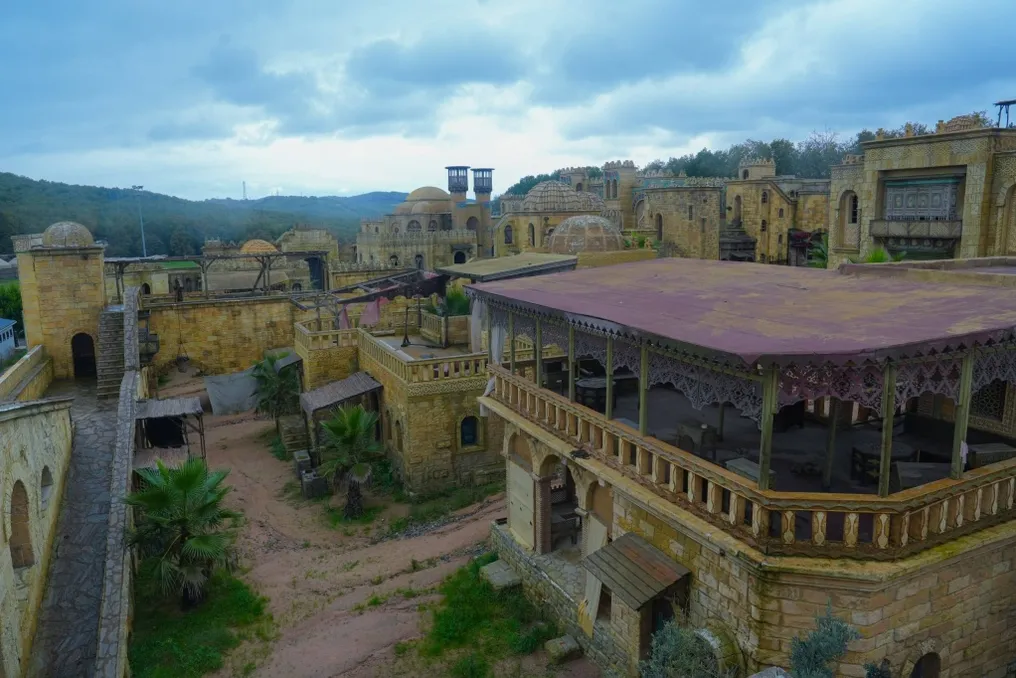
An Uzbek delegation, led by the First Deputy Minister of Culture and Director of the Cinematography Agency, Jakhongir Akhmedov, traveled to Turkey to study methods for creating modern film studios.

The acquired experience will be applied in the implementation of the 'Uzbekfilm' project, which is planned on a 10-hectare territory. Representatives of Uzbekistan familiarized themselves with the operation of several well-known Turkish filming pavilions, including the Heysem film studio complex.

This trip is part of the preparation for building an internal complex designed to consolidate all necessary infrastructure and services for film production.

Project Presentation and Financing

The project for this film studio complex was officially presented on October 26 at a meeting with representatives of the film industry held by President Shavkat Mirziyoyev. 400 billion soums have been allocated for the construction of the complex, and an additional 80 billion soums are designated for creating a modern Dubbing and Voiceover Center.

In accordance with the head of state's decree, the general plan for the future site and design and estimate documentation must be prepared within two months. The start of construction work is scheduled for March 2027. However, currently, there is no information about signing contracts with Turkish companies or their direct participation in the construction.

Previously, there was information about the abolition of the Cinematography Agency in Uzbekistan, after which a national film company is supposed to be formed based on the 'Uzbekfilm' studio.

Film Shot in Phoenix Showcases Potential of KwaZulu-Natal Film Industry
Read more
iol.co.za

Film Shot in Phoenix Showcases Potential of KwaZulu-Natal Film Industry

The production filmed in Phoenix, located in Durban, served as a showcase for the cinematic potential of the KwaZulu-Natal province. The province is striving to attract international cooperation and create more opportunities for local creative workers.

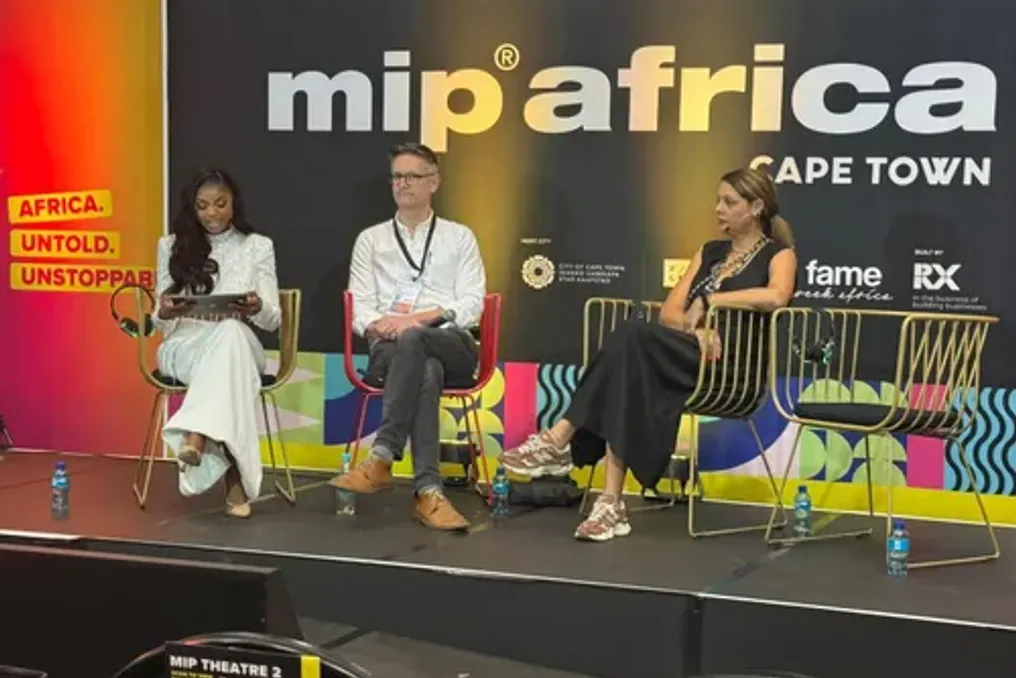
The film, much of which was shot on the streets of Phoenix in Durban, helps put KwaZulu-Natal on the map as a potential location for international film and television shoots. The production, titled 'Lucky Fish,' was presented among industry projects at MIP Africa, an international film and television market held in Cape Town. Representatives from KwaZulu-Natal Tourism and Film interacted with filmmakers and potential international partners there.

The market provided a platform to discuss issues of co-production, market access, and commercial opportunities available to the province's creative industry. Luke Rous, Executive Producer and Co-founder of Rous House Productions, noted that the experience of shooting 'Lucky Fish' in Phoenix demonstrated the value of working with local communities and production support structures.

Speaking during a panel discussion titled 'Why the World is Coming to KwaZulu-Natal: Culture, Content, and Creative Economy,' Rous highly praised the support received from KwaZulu-Natal Tourism and Film and the Durban Film Office. He stated: 'The community welcomed us. We had no problems. It was safe. It was reliable. It was wonderful.'

Rous also highlighted the accessibility of shooting locations and the enthusiasm of young talent, asserting that filmmaking can have an economic impact that extends beyond the screen. He specified that a significant portion of the production budget goes towards services and suppliers, including accommodation, transport, catering, and equipment. According to Rous: 'We know that filmmaking is a multiplier effect. 60% of the film's budget goes not to the screen, but to suppliers, hotels, fuel, vehicles, catering, etc.'

These benefits can extend to neighboring communities as the production creates business for local suppliers and service providers. Rous called for further investment in production incentives and skills development, as well as the realization of larger and longer-term projects capable of sustaining employment for local crews.

Despite the strengths of the province, such as its creative talent and production infrastructure, industry participants also pointed to the need for larger commercial investments. Jacinta de Nobrega, award recipient and founder of Arclight Productions, stated that the province offers a favorable environment for collaboration, with accessible industry networks and support from local organizations. However, she emphasized that creativity alone is not enough for sector growth, saying: 'Money, money, money, and business.'

The discussion, moderated by Ayanda G. Tabetche, explored how the province can develop its existing production capabilities while creating more opportunities for local filmmakers.

Fofo Gumede K, celebrity stylist and creative director, also emphasized the international potential of KwaZulu-Natal's cultural identity. Using the success of 'Shaka iLembe' as an example, he pointed to the ability of costumes, heritage, and cultural storytelling to resonate with audiences outside of South Africa. Gumede noted: 'Fashion is a language, identity, culture, sometimes rebellion.'

In addition to showcasing local productions, KwaZulu-Natal Tourism and Film used MIP Africa to explore potential partnerships with international industry stakeholders. Interactions with the UK Department for Business and Trade in South Africa focused on market access and strengthening ties with foreign film networks. Discussions with the French Institute in South Africa concerned opportunities to enhance cooperation under the existing audiovisual co-production agreement between South Africa and France.

Proposals included the participation of French filmmakers and the South African development community in Durban FilmMart, as well as familiarization tours of locations to introduce KwaZulu-Natal to international producers. Furthermore, the department contacted the Eastern Cape Development Corporation regarding the possibility of reviving a memorandum of understanding to encourage inter-provincial cooperation. These discussions require further engagement.

As part of its enterprise development program, KwaZulu-Natal Tourism and Film supported seven provincial filmmakers to attend MIP Africa, where they could connect with broadcasters, producers, distributors, and potential business partners. Pinky Radabe, Head of Public Relations and Communications at KwaZulu-Natal Tourism and Film, stated that these contacts laid the foundation for future collaboration. She said: 'There is something powerful about hearing filmmakers talk about their own experiences in KwaZulu-Natal. It tells a much more compelling story than any promotional presentation.'

Radabe added that the focus will now be on translating discussions into more productions, stronger creative ventures, and opportunities for the residents of KwaZulu-Natal. 'The province has a story worth telling, and the world is increasingly paying attention to it.'

Popular