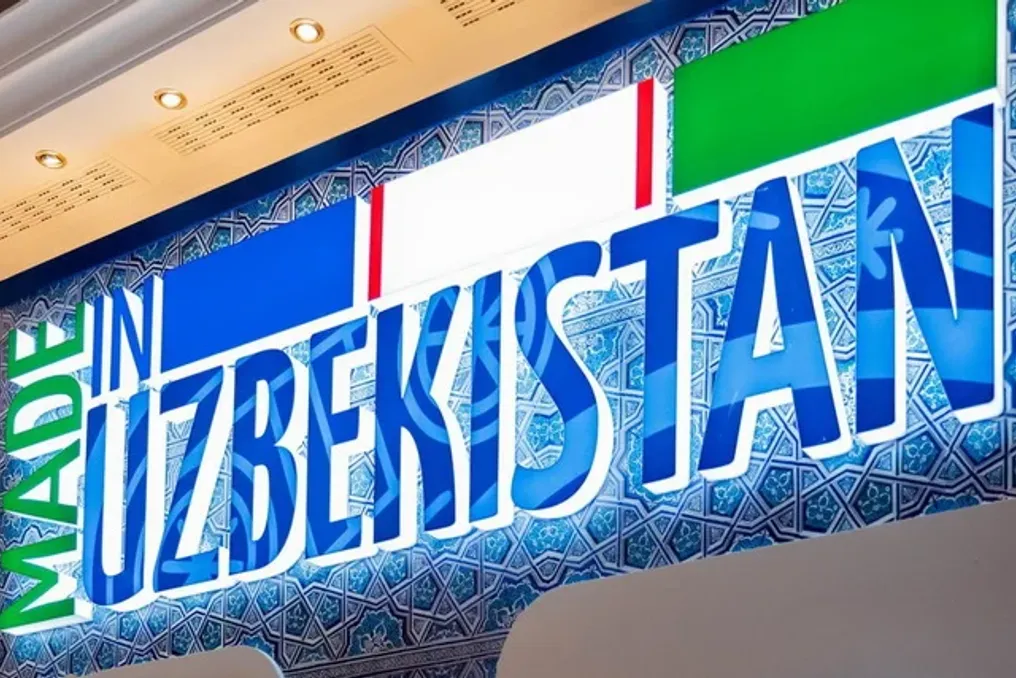
Uzbekistan expands food product exports to Kuwait
Read more
UzDaily
uzdaily.uz

Uzbekistan expands food product exports to Kuwait

A delegation from Uzbekistan, comprising local producers and exporters, held negotiations in Kuwait with representatives of fifteen local food importers and major trading companies. According to the Dunyo news agency, these business meetings focused on increasing export volumes, organizing supplies, and logistics.

Special attention was paid to opportunities for Uzbek meat, frozen products, confectionery, dried fruits, and legumes to enter the Kuwaiti market. The parties discussed supply terms for meat and frozen products, including quality, volume, packaging, and logistics requirements, during meetings with representatives of Abrar Universal Group and Alyasra Foods.

Separate negotiations regarding the export of confectionery took place between World Sweets and Zarqand and Krember. Opportunities for promoting Uzbek goods in the Kuwaiti market were also discussed with Souq Adan, Go Fresh, Cozmo Central Food, and SAF Kuwait.

Following meetings with Ariana Advanced General Trading, which specializes in wholesale food trade, a memorandum of understanding was signed with Amax Exim LLC. This document provides for cooperation in the export of dried fruits, legumes, and meat products.

The development of e-commerce was another topic of the visit. In a meeting with representatives of Alhafed National, the parties discussed ways to promote and sell Uzbek products to Kuwaiti consumers through e-commerce channels. The Yeeb e-commerce platform is scheduled to launch in October, and a special section for Uzbek products has already been created.

Uzbek exporters are expected to be gradually integrated into this platform, while product catalogs are being developed. During the visit, memorandums of understanding were also signed between the Ministry of Agriculture of Uzbekistan and Alhafed National, as well as export cooperation agreements with Amax Exim and Chortoq Mineral Water.

The parties also examined the potential for establishing a trade house for Uzbek products in Kuwait. A separate part of the discussions was dedicated to cooperation in transport and logistics. Representatives of Navoi Airport discussed the prospects of organizing air cargo transportation with Beyout Holding, KRH, and Sky Aviation Service Group.

Options for fast delivery of perishable food and agricultural products, as well as meat and frozen goods, including transit schemes and further cargo distribution, were reviewed. As a result of the visit, new mechanisms for promoting Uzbek food products in the Kuwaiti market were developed, which include direct business contacts, e-commerce, and the development of air transport logistics.

Similar stories

Uzbekistan and Oman Discuss Expanding Trade, Investment, and Industrial Cooperation
Read more
uzdaily.uz

Uzbekistan and Oman Discuss Expanding Trade, Investment, and Industrial Cooperation

Uzbekistan and Oman held discussions aimed at expanding trade, investment, and industrial cooperation between the two states, as well as improving transport and logistical connectivity.

The issues were discussed by Uzbekistan's Minister of Investment, Industry, and Trade, Laziz Kudratov, and Oman's Minister of Trade, Industry, and Investment Promotion, Anwar bin Hilal Al Jabri.

The parties reviewed measures that would increase bilateral trade and expand the range of goods, as well as simplify access for Uzbek and Omani companies to the markets of both countries.

Particular attention was paid to creating direct contacts between exporters, buyers, and importers, as well as eliminating barriers related to standards, certification, and customs procedures.

One of the key issues was the proposal to conclude a preferential trade agreement. The parties discussed accelerating technical work to determine the list of goods, tariffs, and rules of origin for products.

Furthermore, the possibility of updating the agreement on the promotion and mutual protection of investments is being considered, which is expected to create more favorable conditions for investors and expand economic interaction.

In the field of industrial cooperation, the parties discussed implementing joint production projects based on market demand and investment needs. The importance of direct interaction between companies to identify commercially viable projects was emphasized.

Logistics also became an important part of the negotiations. The possibility of using Oman's port infrastructure to develop maritime routes and facilitate the movement of goods between the countries was examined.

The further use of direct flights between Muscat and Tashkent to support trade and investment and expand companies' market access was also discussed.

Significant attention was given to the participation of the private sector. In particular, the parties considered the possibilities of creating export-oriented production facilities in Oman's economic and free zones.

Additionally, it was planned to establish a business council and hold a business forum to present investment opportunities and establish direct links between companies, investors, and potential partners.

The discussions also focused on preparing practical results for the sixth meeting of the Joint Intergovernmental Committee of Oman-Uzbekistan, which will take place in Muscat. The parties stressed the need to define priority projects and establish clear mechanisms for further interaction to develop cooperation in the fields of trade, investment, industry, and logistics.

Russia increased agricultural product exports to Uzbekistan by 36% in value
Read more
uzdaily.uz

Russia increased agricultural product exports to Uzbekistan by 36% in value

According to data from the federal center Agroexport, from January to August 2026, Russia increased supplies of agricultural and agro-industrial products to Uzbekistan. The export volume grew by 46%, and its value increased by 36%.

Over eight months, Russia supplied about 930,000 tons of agricultural products to Uzbekistan, with a total value reaching 916 million US dollars.

According to Agroexport estimates, both the physical volume and the monetary value of Russian exports to Uzbekistan for January-August 2026 reached record levels for this period.

The largest volumes of supplies were sugar (293,000 tons), soy meal and soy flour (211,000 tons), wheat (over 71,000 tons), non-alcoholic beverages (over 41,000 tons), and sunflower oil (over 31,500 tons).

Agroexport noted that the main factor in the growth of exports was the increased supply of sugar, soy meal, and soy flour, as well as other types of agricultural and agro-industrial products. Compared to the same period in 2025, Russian exports to Uzbekistan increased by 46% in physical terms and by 36% in value.

Uzbekistan expands financial support for the agricultural sector
Read more
uzdaily.uz

Uzbekistan expands financial support for the agricultural sector

Uzbekistan is adopting new measures to strengthen financial support for the agricultural sector. President Shavkat Mirziyoyev approved the relevant decree, which aims to increase the efficiency of financial assistance and improve the risk management system.

The new document provides for the provision of several subsidies for agricultural enterprises. For example, a subsidy of 500,000 soms will be paid for every ton of raw cotton harvested in 2026 (excluding fourth and fifth-grade cotton).

Additionally, cotton-textile clusters and enterprises created by them will receive 1.5 million soms for each hectare of land allocated for cotton cultivation in 2026.

Livestock farms will receive an annual subsidy of 500,000 soms per hectare of sown area where fodder crops are grown on main cultivated territories from 2027 to 2029.

The basis for making payments will be the conclusion of the Space Technology Research Agency. Also, from October 1, 2026, to June 1, 2027, entrepreneurs will be able to receive 2,500 soms per kilogram of imported chilled beef and lamb.

A pilot legal experiment is planned from January 1, 2027, to January 1, 2028, aimed at introducing a mechanism for subsidizing part of the expenses of agricultural producers for using water-saving irrigation technologies.

Payments will be made on a 'Results-based Subsidy' principle. The amount of such a subsidy will be determined based on the recipient's costs, as well as crop yield indicators, product quality, and other efficiency criteria.

The decree also introduces changes to the agricultural insurance system. Farms that have not had insurance claims for three consecutive years will be granted a discount on the insurance premium from 10% to 20% starting from the fourth year.

Simultaneously, 3% to 5% of insurance premiums will be directed to a reserve fund to finance preventive measures.

Popular