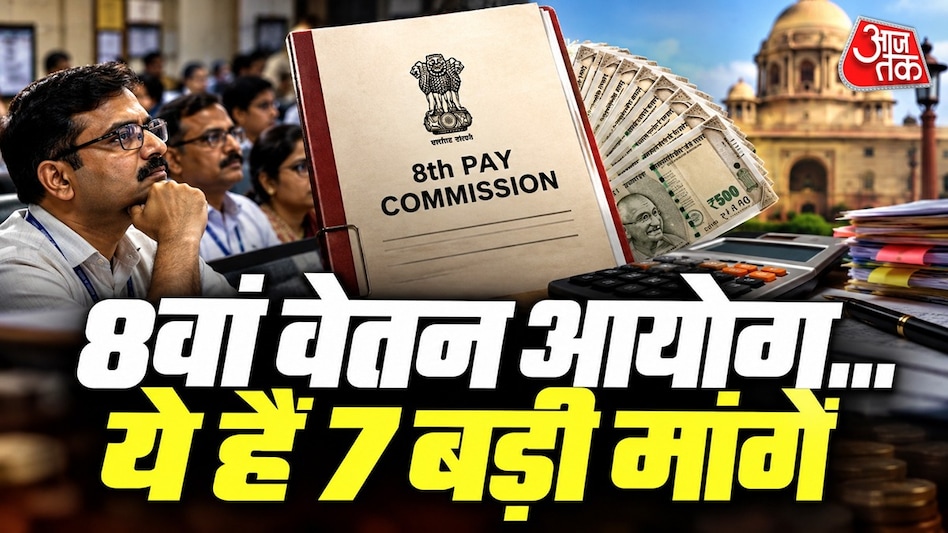
Information regarding the 8th Departmental Wage Committee is extremely important for central government employees and pensioners. Representatives of workers and pensioners presented the committee with a complete list of their demands. These demands go beyond a simple salary increase and include requests to restore the old pension system, ensure unimpeded medical care, support children's education, raise salaries without promotion, and improve several previous benefits related to pensions and risk allowances.
These demands may affect approximately 4.5 million employees and 6.8 million pensioners. The National Consultative Machine of the Joint Advisory Body (NC-JCM) plays a key role in conveying these demands to the government. This structure serves as a platform for dialogue between the government and workers, where issues such as wages, allowances, pensions, and working conditions are discussed. Currently, T.V. Somanantan's cabinet secretary chairs this council.
About six months ago, the government initiated the work process of the 8th Central Departmental Wage Committee. Since then, the committee has held meetings with various organizations of central employees and pensioners in different cities. At these meetings, numerous trade unions and pensioner organizations presented their proposals and demands to the committee. Although a final decision on these demands has not yet been made, adopting some of them could lead to significant changes in salaries, allowances, and post-retirement benefits for employees.
One of the most significant demands from the trade unions is the reintroduction of the old pension scheme (OPS). This demand is particularly relevant for employees who began state service after 2004 and are currently under the new National Pension System (NPS). In the NPS, contributions are made by both the employee and the government. Trade unions insist on returning to the old pension system, which provided a fixed pension upon retirement. In other words, the employees' side wants to make retirement more secure and guaranteed.
A request was also made for convenient and cashless medical care for employees and pensioners. This means that an employee or pensioner would not have to initially spend significant funds out of pocket for treatment; the cost of treatment should be paid directly through the relevant system. This requirement is especially important for pensioners, as medical expenses can constantly rise after retirement. Trade unions emphasized the need to make healthcare more accessible and comprehensive.
The workers' side also demanded increased benefits related to children's education. It was proposed to expand educational allowances and living subsidies up to the postgraduate level. This means that the scope of these benefits should be extended to higher education, exceeding current levels. This could ease the situation for employees whose children study for a long time.
Trade unions demanded improvements to conditions related to death benefits upon retirement, family pensions, and a lump-sum portion of the pension. The lump-sum portion is the amount a pensioner can take immediately in exchange for some reduction in their monthly pension. The workers' side wants the old provisions regarding the restoration of this reduced portion after 12 years to be implemented more effectively.
In the 8th Departmental Wage Committee, trade unions also demanded a change in the method of determining the minimum wage. Employee representatives proposed increasing the criterion defining family expenses from 3 to 3.6 units. Simply put, this means that when determining the minimum wage, greater attention should be paid to the needs and expenses of the family. This could directly impact the starting salary level. This proposal is based on the report of the Ministry of Labor's expert commission.
Many employees have struggled for a long time to receive a promotion. For such employees, a financial increase is provided at a specified time within the Modified Guaranteed Career Progression Scheme (MACPS). Trade unions demand the elimination of inconsistencies in this scheme. Furthermore, it was proposed to amend existing salary levels. The workers' side believes that salary levels that do not correspond to current job duties should be merged to create a more sophisticated compensation structure.
Unions associated with railways raised the issue of paying a risk and hardship allowance for railway workers within the 8th Departmental Wage Committee. Railway employees' work often involves risky and difficult conditions. The workers' side insists that these conditions must be taken into account.