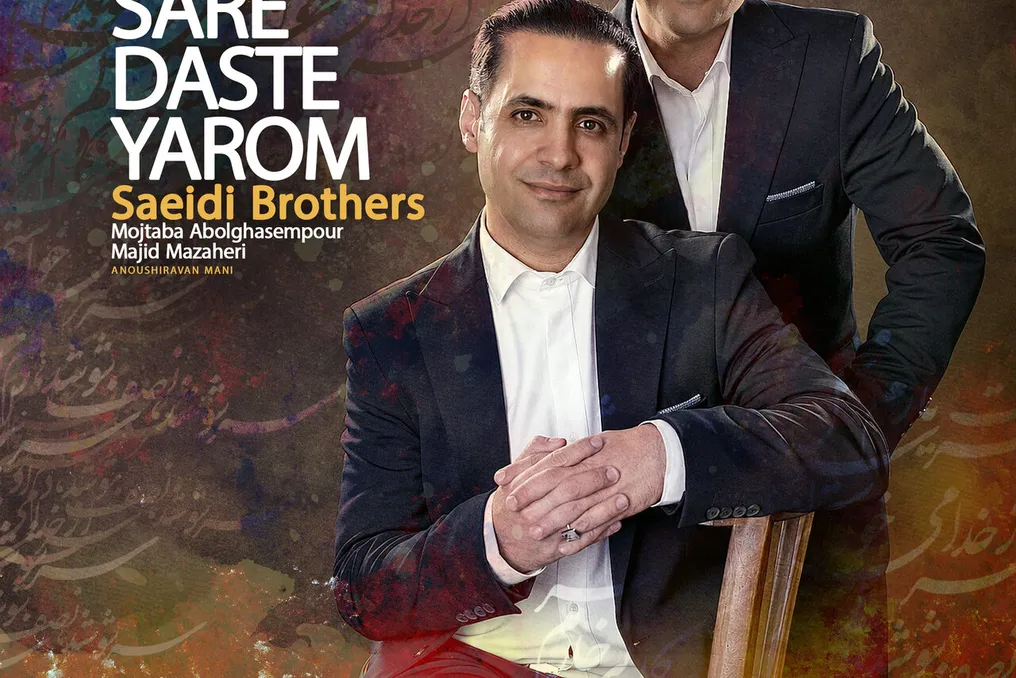
Saidi Brothers Release Reimagined Folk Song 'Sar-e Dast-e Yarom'
Read more
Tehran Times
www.tehrantimes.com

Saidi Brothers Release Reimagined Folk Song 'Sar-e Dast-e Yarom'

Iranian traditional vocalists, brothers Ali and Mohammad Saidi, have released their new single titled 'Sar-e Dast-e Yarom' ('The Cuff of My Beloved'), which is a reimagining of an old Iranian folk song.

This piece, performed by the Saidi brothers, is based on a traditional folk composition attributed to Hossein Kuhi Kermani and draws from the performance of maestro Mohammad-Taghi Saidi. The artists note that the song has roots in a folk tale related to fashion and the period when modern fashion began to penetrate Iranian society.

The brothers aimed to preserve the character of the original folklore material while developing it through modern musical arrangement; the track is presented as an expanded interpretation rather than a simple revival of the original source.

In the new release, Mojtaba Mojtaba Abolkasempour is responsible for playing the santur and electronic instruments, as well as arranging, mixing, and mastering. Majid Mazaheri plays the kamancheh.

Ali and Mohammad Saidi, born in Isfahan in 1981, are twins and traditional Iranian singers. They studied Persian vocal techniques and the repertoire of radif under masters such as Mohammad-Taghi Saidi, Mohammad Ali Kianinejad, and Fazlollah Shahzamani. Their work includes concerts both in Iran and abroad, as well as recordings based on traditional Iranian music.

Previously, the brothers launched a short song project aimed at introducing the audience to Iranian traditional art and music in a concise manner, releasing short music videos based on excerpts from Persian traditional repertoire. Furthermore, their collaboration with the world-renowned Iranian composer and conductor Ali Rahbari included the orchestral project 'Persian Nightingales.'
Similar stories

Kamel Daoud's novel 'Chorus' released in Persian in Iran
Read more
www.tehrantimes.com

Kamel Daoud's novel 'Chorus' released in Persian in Iran

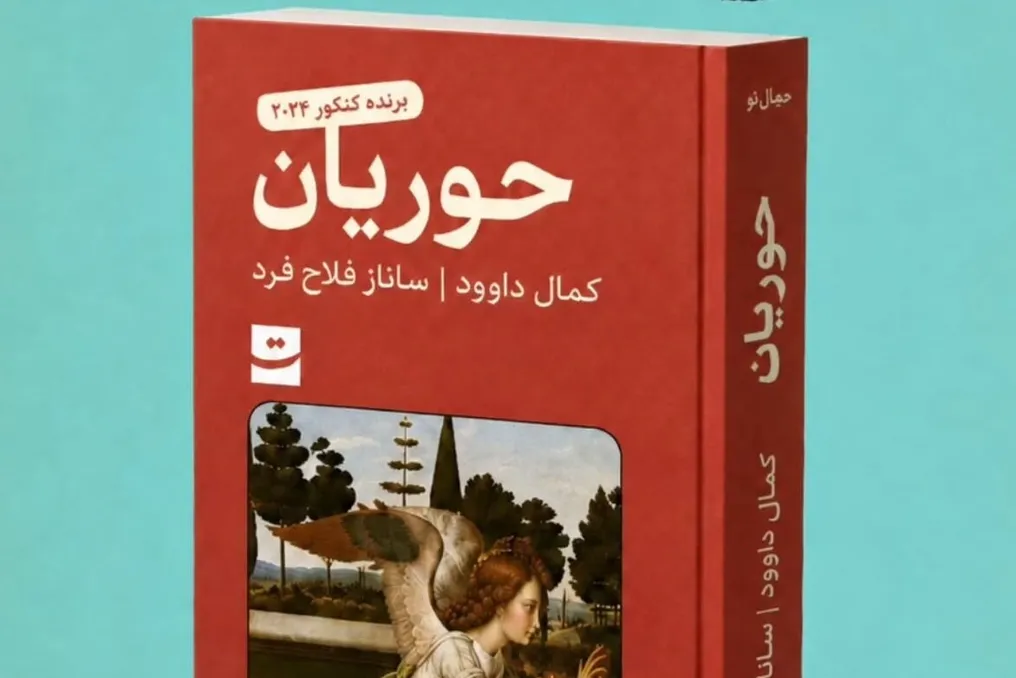
A Persian translation of the book 'Chorus,' also known as 'The Virgins,' written by Kamel Daoud, has arrived in bookstores across Iran. According to ISNA, the book was translated from French by Sanaz Fallahfard, and the publisher Tadaee Publication released it in a volume of 397 pages.

The novel 'Chorus' is dedicated to the victims of events that Algerians call the 'Black Decade.' During this period, tens of thousands of people died in the army's fight against the Islamist uprising. The conflict began in 1991 after Islamists won the first stage of legislative elections, which prompted the military-backed government to cancel the second round of voting.

The main character, Oub, is a young Algerian woman who must remember the war for independence she did not experience and forget the civil war of the 1990s that she herself endured. Her tragedy is marked on her body: a scar on her neck and damaged vocal cords. Silent, she dreams of regaining her voice and can only tell her story to the daughter she carries within her. However, the question arises about her right to keep this child, and whether life is possible when she is almost taken away?

In the country that adopted laws punishing any mention of the civil war, Oub decides to return to her native village, where it all began, and where perhaps the dead will answer her.

Kamel Daoud, 56, is a Franco-Algerian writer and journalist. He is best known for his 2013 novel 'Mersault Investigation' and his 2024 novel 'Chorus,' which won the Goncourt Prize that year.

The author previously stated this year that he was sentenced to three years in prison in Algeria for the novel 'Chorus,' which received France's most prestigious literary award. The writer, who resides in France, also stated that he was fined 5 million Algerian dinars ($38,000).

Daoud indicated that he was convicted based on the so-called Charter for Peace and National Reconciliation—a document adopted following a 2005 referendum that granted broad amnesties to both armed Islamists and security forces.

'This document criminalizes any public mention of the civil war,' Daoud stated. 'Ten years of war, around 200,000 deaths by estimates, thousands of terrorists received amnesty... and only one guilty party: the writer.'

In addition to the lawsuit initiated by the court in the Algerian city of Oran, Daoud is subject to two international arrest warrants issued by Algeria in May 2025, and faces the threat of losing his Algerian citizenship.

The Role of Shatrughna During Rama's Exile: The Story of a Little-Known Character from the Ramayana
Read more
www.aajtak.in

The Role of Shatrughna During Rama's Exile: The Story of a Little-Known Character from the Ramayana

With the release of the film 'Ramayana: Part 1,' which has generated significant public interest, details of this adaptation are being actively discussed. The film, directed by Nitish Tiwari, features Ranbir Kapoor as Shri Rama, Sai Palvi as Mother Sita, and Yash as ten-headed Ravana. Particular attention is drawn to the songs composed by A.R. Rahman and Dr. Kumar Vishwas, including the composition 'Jai Jai Ram.'

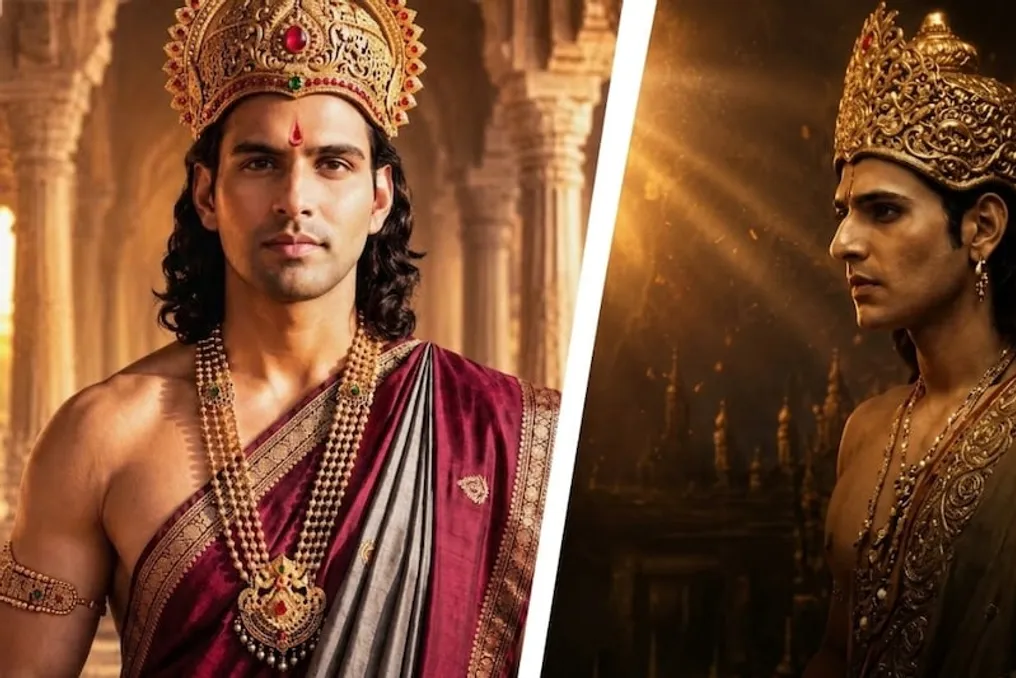
The song 'Jai Jai Ram' presents beautiful scenes of the wedding of God Rama (Ranbir Kapoor) and Mother Sita (Sai Palvi), as well as the meeting of God Rama and his younger brother Bharata. Furthermore, the trailer shows the images of Shri Rama's brothers—Bharata, Lakshmana, and Shatrughna—and Mother Sita's sisters—Urmili, Mandavi, and Shrutakirti. This track revealed that the role of Shri Rama's youngest brother, Shatrughna, will be played by actor Nitish Sharma.

In the mythological narrative of the Ramayana, the devotion of Lakshmana to God Rama and the renunciation of Bharata are often emphasized. However, there is another figure in this ancient story who diligently performed his duties without any personal gain—this is Shatrughna, the youngest son of King Dasharatha.

Shatrughna was the son of King Dasharatha and Queen Sumitra, and he was Lakshmana's twin. According to some legends, if Lord Shri Rama is an incarnation of God Vishnu, then Shatrughna is considered a partial incarnation of Shrihari's weapon—the 'Sudarshana Chakra.' When the weddings of the princes of Ayodhya were arranged in Mithila, Shatrughna married Shrutakirti, the youngest daughter of Kushadhwaja, the brother of Maharaja Janaka.

According to the Ramayana, when Shri Rama, Sita, and Lakshmana went into fourteen years of exile, and Bharata remained as an ascetic in Nandigram, Shatrughna took charge of the state apparatus of Ayodhya. He not only ensured the protection of the kingdom's borders but also completely and devotedly cared for the three royal mothers: Kaushalya, Kaikeyi, and Sumitra.

Shatrughna was not only a capable administrator but also an invincible warrior. After defeating Lanka and establishing Rama's reign, when a demon named Ravanasura terrorized the sages and monks in the Madhuvana area (on the banks of the Yamuna), Shatrughna launched an attack under the command of God Rama. Although Ravanasura possessed the mighty trident of the god Shiva, Shatrughna managed to kill him with arrows, preventing him from raising the trident thanks to his astute tactics. After this victory, he founded a magnificent and prosperous city there, which is known today as Mathura.

During the killing of Ravanasura, Shatrughna stayed at the ashram of Mudreshi Valmiki. That same night, Mother Sita gave birth to Lava and Kusha. Later, when Lava and Kusha seized the horse intended for Rama's Ashwamedha, Shatrughna encountered them during the battle. It is believed that Shatrughna also oversaw the guard of the horse during Shri Rama's Ashwamedha, overcoming all obstacles and enemy armies so that the ceremony could proceed without interruption. When the earthly incarnation of God Rama concluded, Shatrughna passed his kingdom to his sons, and then, along with his brothers, traveled to the Saru river and departed for Vaikuntha Dham.

Popular