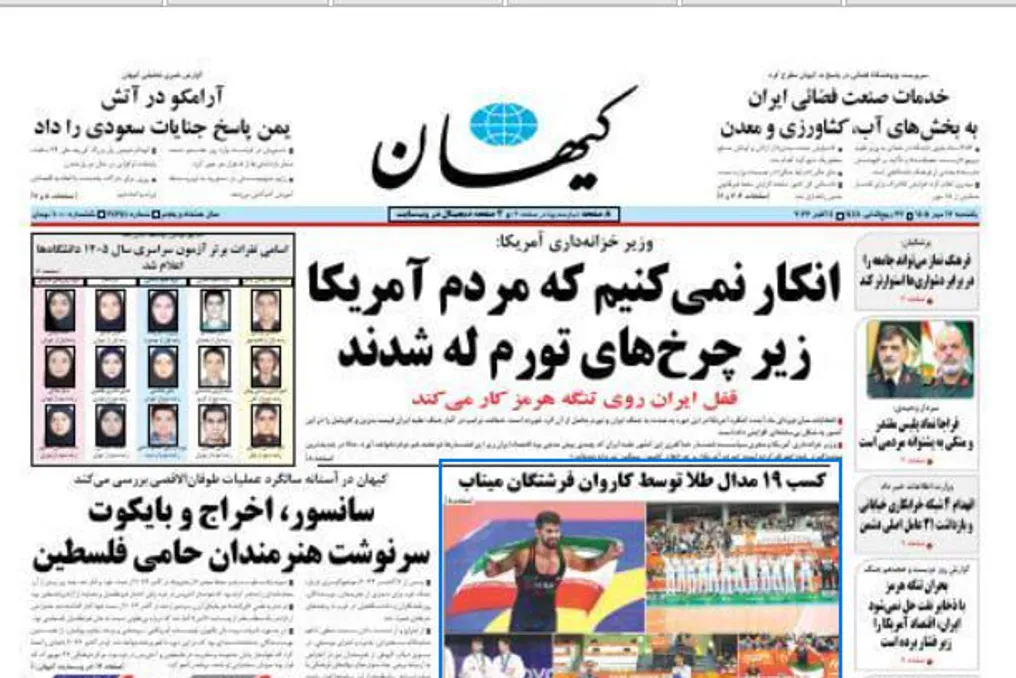
In one note, Keyhan asserted that the ongoing closure of the Strait of Hormuz has directly and negatively impacted the US economy, triggering fuel price hikes and inflation. The publication also noted that President Trump and his administration are making significant efforts to prevent Republicans from losing seats in the November midterm elections, which, according to the newspaper, are closely linked to the conflict with Iran and its economic consequences.
According to the article, military actions against Iran have led to a sharp increase in gasoline and diesel prices across the United States. Keyhan added that most Americans blame Trump for the current situation. Despite assurances from administration representatives about a quick improvement in conditions, the publication insisted that inflationary pressure related to Hormuz is intensifying daily. Citing comments by the US Treasury Secretary on the burden of inflation for ordinary citizens, Keyhan concluded that Iran's influence over the strait remains effective, and contrary to American statements, Hormuz continues to be economically closed to the West.
Shargh: hidden hours of tension
The newspaper Shargh analyzed the probability of a new conflict arising in the region, arguing that many observers mistakenly view events solely through the lens of Washington's political calendar. Although US midterm elections are often considered a key factor, the publication suggested that events in Israel may hold even greater significance. It was noted that the Israeli Knesset elections will take place before the American elections and could prove decisive for Netanyahu's political future. According to Shargh, if concerns about defeat in the elections grow among Netanyahu's supporters, it could create greater motivation to change political and defense conditions. In such a scenario, military escalation would not necessarily be an end in itself but could serve as a tool to redirect public attention, change political priorities, foster a more tense security environment, or influence the electoral process.
Siasat-e-Rooz: US withdrawal from Iraq will have serious strategic consequences
In its editorial, Siasat-e-Rooz examined the importance of a potential US troop withdrawal from Iraq. The newspaper stated that such a move would have significant strategic implications and should be viewed as an opportunity. It was pointed out that Kurdistan Iraq has become a base for groups threatening regional security, and the presence of Israeli military and intelligence networks there creates risks not only for Iran but also for Iraq's sovereignty and territorial integrity. According to the publication, the United States maintains substantial influence in Iraq, evidenced, for example, by the temporary suspension of Iranian flights. The regional situation will eventually force American forces to leave this area. The newspaper argued that a new regional order based on resistance, rather than US preferences, is forming, and any US withdrawal will be the result of pressure, not a voluntary decision.
Javan: factors determining the future of the war
Javan focused on indicators that could determine the further course of the US war against Iran. Instead of making specific predictions, the newspaper recommended closely monitoring three factors: the yield on 10-year US Treasury bonds, global oil prices, and the volume of tanker traffic through the Strait of Hormuz. The article emphasized that the key question is the ability of the United States to simultaneously maintain oil prices above $100 per barrel, bond yields above 5 percent, and high fuel costs for consumers. These indicators, along with developments around Bab el-Mandeb and the official positions of Washington and Tehran, were described as useful measures for charting the direction of the war. Javan argued that a war of attrition, involving periodic attacks, tightening sanctions, and sharp fluctuations in the energy market, remains a likely scenario. While acknowledging the costs to Iran, the publication insisted that accepting unlimited external demands would be even more detrimental.
Resalat: Iran's doctrine in the Strait of Hormuz
In one of its publications, Resalat explored what it termed Iran's complete control over the strategic Strait of Hormuz. The newspaper asserted that the strait has transformed from a mere shipping route into one of the central arenas of geopolitical confrontation. According to the article, the United States seeks to subject tanker traffic to its military dominance, using various justifications to expand its influence and undermine the independence of regional states. Conversely, the publication reported that Iranian officials responsible for Persian Gulf security made the full resumption of operations and security of the Strait of Hormuz conditional upon the cessation of economic pressure and respect for Iran's sovereign rights. The article also mentioned the alleged hitting of a large oil tanker by an unidentified projectile in the strait, characterizing it as a serious warning to Western countries.
Resalat believed that any future round of conflict would not remain limited in scope. Instead, the publication stated that further escalation could trigger a wider crisis, including disruptions to maritime traffic, instability in regional energy markets, increased security tensions, and broader economic consequences regionally and beyond.