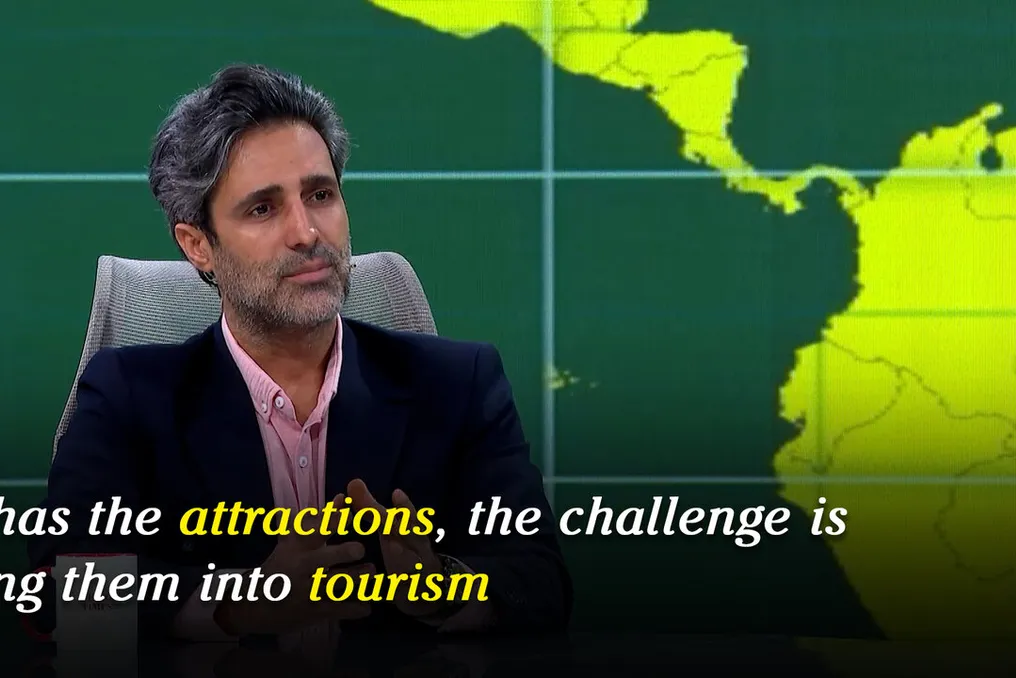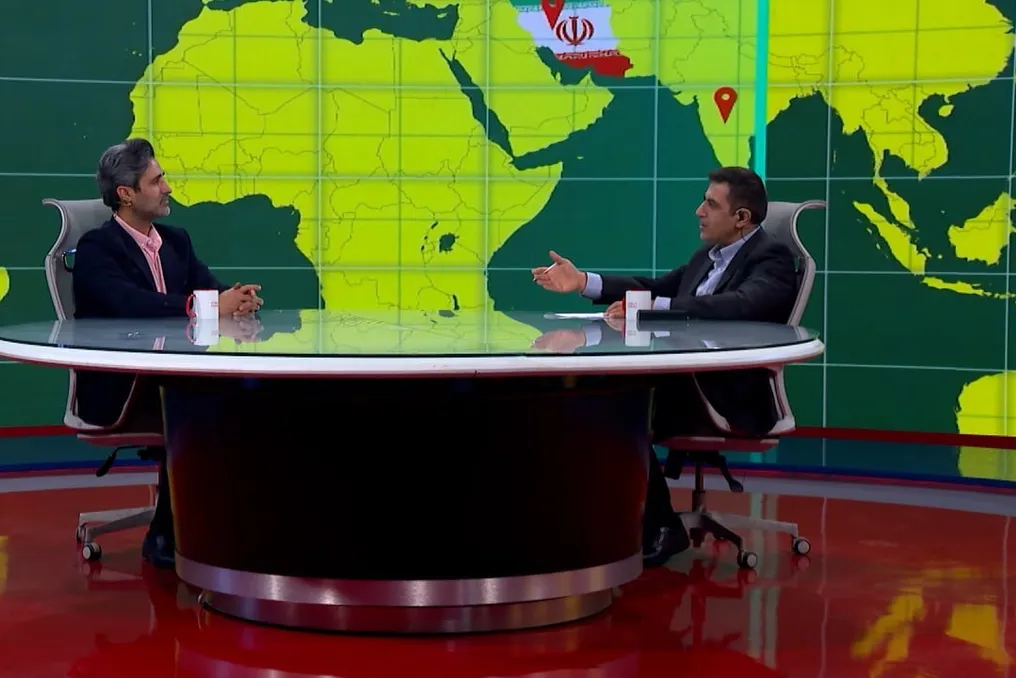
Iran possesses numerous tourist sites; however, according to Iranian traveler and documentarian Yavad Garaei, the main challenge lies in transforming the country's exceptional natural and cultural diversity into a full-fledged tourism sector. This sector must be capable of attracting visitors, generating income, and properly presenting the ancient country to the world.
After decades of traveling through Iran—from the Girvan forests and Zagros Mountains to the Lut Desert and the Mahregan coast—Garaei observed how landscapes, climates, cultures, and traditions can change drastically over relatively short distances. He considers this diversity one of Iran's greatest national assets, which is nevertheless underutilized.
Garaei argues that solving the problem is not merely about building more hotels, roads, or other tourist infrastructure. He insists that promotion, investment, education, and infrastructure development must proceed in parallel, while simultaneously protecting the authenticity of the places from the pressure of tourism itself.
In an interview with Tehran Times as part of the Tehran Talks program, Garaei shared his thoughts on more than two decades of travel and work on documentary films, the potential of tourism in Iran's diverse landscapes and communities, and the role of documentaries in popularizing lesser-known destinations and the necessity of developing tourism without destroying the very authenticity that makes these places worth visiting.
His interest in nature began around the age of 17 or 18 while mountaineering in the Shemiran Mountains, located in northern Tehran. As he traveled through the mountains, he realized there was much more than just peaks; along the routes lay plains, deserts, valleys, and completely different environments.
Iran possesses almost all major global climate types, including tropical and polar. Garaei notes that this climatic diversity has also given rise to cultural diversity. He believes that if the planet had a single climate, cultures would be much more similar, as climate influences architecture, food, clothing, music, customs, rituals, beliefs, and even people's way of life.
Gradually, his focus shifted from nature to culture and history. Exposure to different natural conditions led him to meet various ethnic groups and communities, sparking a growing interest in Iran's history and culture. He began studying this topic seriously and was fascinated by the depth of Iranian civilization. Alongside studying filmmaking at the Iranian Youth Film Community, he studied tourism management at university, which intensified his interest in the vast number and variety of tourist attractions in the country.
Garaei asked himself: if we have such an extraordinary set of attractions, why aren't we using them better? He emphasized that besides natural sites, Iran is rich in ethnic and cultural diversity, history, architecture, and a civilization that has developed over millennia. In his view, these sites are national assets, similar to oil, gas, mineral resources, agricultural land, and territory.
Despite this, the country has failed to utilize this asset to its full potential, failing to achieve the expected volume of foreign currency revenue from tourism and failing to attract the necessary number of international guests. It was this realization that prompted him to engage in the tourism sector. Driven by a love for Iran, the Iranian people, and the country's civilization, he wanted to showcase these attractions. He also felt that some domestic individuals, including officials, did not fully grasp the importance of these assets—both as sites requiring protection and as sources of economic opportunity for presenting Iran to the world.
One of the main shortcomings, according to Garaei, is that Iran's attractions are insufficiently represented globally. He mentioned his project, 'Journey to the Land of Dreams,' which has been ongoing for about eight years, aiming to present Iran beyond its borders. However, the project has not yet succeeded because, he believes, officials do not fully realize the contribution of tourism to the country's economy, politics, culture, and spiritual life.
He noted that a country with such a geographical location, cultural diversity, and history has still not managed to effectively present itself to the world, which is one of the serious weaknesses of the tourism industry.
When asked whether Iran should first develop infrastructure to compete with countries like Turkey or Malaysia, Garaei replied that infrastructure, promotion, education, and investment must develop simultaneously. He cited the example of Malaysia, where initially, officials focused on creating good infrastructure but later realized this was insufficient and had to start promoting the country.
He criticizes the approach of building infrastructure first and then, perhaps ten years later, starting to promote tourism, calling it economically unsound. Instead, he suggests developing infrastructure in parallel with promotion, education, and attracting investment.
He reminded that a certain level of infrastructure already exists, including hotels, hostels, and guesthouses, as well as a very hospitable people. Although air infrastructure has faced difficulties, he stressed that one cannot wait for a perfect state before starting. Tourists themselves create demand, which attracts investors, and investments, in turn, create more infrastructure.
He provides a practical example of this process in Sistan and Baluchestan province. In 2009, he began filming documentaries in the region along the Mahregan coast, from Ghavatar Bay to the borders of Sistan and Baluchestan and Hormozgan. At that time, Chabahar had only three hotels, and hostels or eco-lodges were virtually non-existent. After the screening of the documentaries, many tourists began visiting the region. Today, Chabahar has over 15 four- and five-star hotels, and there are over 150 eco-lodges along the coast. This example demonstrates that tourists stimulate demand, allowing authorities and investors to react quickly to the region's needs.
Garaei cites Opert, located on the border of Semnan and Mazandaran, as an illustration of the sharp change in climate over a short distance. There, one can move from dry terrain with little vegetation to mountains. Temperatures could reach about 35 degrees Celsius, while on the same night at high altitudes, snow fell at temperatures around minus 14 degrees, representing a difference of approximately 45 degrees in a small geographical area.
This climatic transition entails cultural and ecological changes: dialects, clothing, food, music, and landscape change. In just 30 kilometers, one can move from the desert landscapes of Semnan to the dense Girvan forests of Mazandaran, and higher up, enter the habitat of species such as the Persian leopard and golden eagle.
He also notes that travel can be physically demanding, citing an instance where transport could not reach high-altitude areas due to snowfall, and assistance was provided by the Red Crescent.
For Garaei, the key requirement for a successful tourism documentary film is honesty. The film should not create a false impression but should show both the beauty and the difficulties, opportunities, and realities. The viewer must see the various facets of the place to make an informed decision.
He gives the example of a village in Sistan and Baluchestan where people lived traditionally, using houses made of palm branches, without electricity, and drawing water from a spring. Instead of seeing this as a hard life, he saw it as an outstanding example of adaptation and traditional knowledge, where women preserved hand embroidery and developed ways of life without modern technology.