Nearly 300-year-old organ returns to playing in the Cathedral of Mariana after restoration
Read more
Viagem e Turismo
viagemeturismo.abril.com.br

Nearly 300-year-old organ returns to playing in the Cathedral of Mariana after restoration

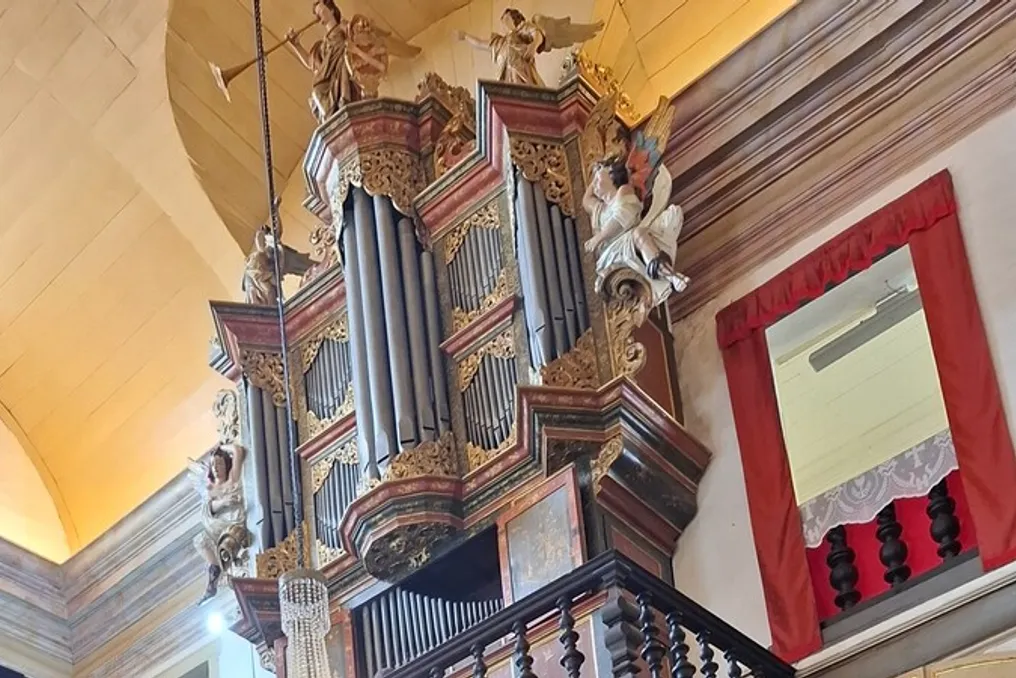
In Minas Gerais, at the Cathedral of Mariana, an organ with nearly 300 years of history remained silent for almost a decade. After an extensive restoration process, which included sending components to Spain, the instrument has started producing sounds again. Since April, it can be heard regularly at events promoted by the city's Archdiocese, recognized as the first capital of Minas Gerais.

This organ, which holds protected heritage status, has become a highlight in the Mariana temple. The basilica, dating back to the 18th century, displays colonial architectural features and Baroque elements from different eras.

Its original construction took place in Germany in the early 1700s, and it is famous for the name of its manufacturer, Arp Schnitger. Initially, the instrument was intended for Portugal, where it became property of the royalty. Later, it was donated to the then Diocese of Mariana.

King Dom João V's wish was not fulfilled during his lifetime, as he died in 1750, three years before the organ's transfer to Brazilian territory. This project was completed by his successor, Dom José I, who organized the transatlantic transport by ship. Upon arrival, the disassembled parts had to travel long distances through the Minas Gerais mountains, transported on mules.

The organ of the Cathedral of Mariana is notable for being the only Arp Schnitger instrument outside of Europe and represents a world rarity. Built around 1701 in Germany, it traveled to Portugal, crossed the ocean in crates, and arrived in Brazil in 1752 as a gift from the Portuguese Crown to the newly founded Diocese of Mariana. It functions as a preserved Baroque sound capsule in the mountains of Minas Gerais.

For almost two centuries, the organ played in religious ceremonies, impressing with its complex structure, composed of over 900 pipes and elaborate ornaments. It is considered the only equipment with such specifications installed in a location outside of Europe.

Over time, lack of proper maintenance led to the instrument's silence, and it stopped functioning in the 1930s. Subsequently, as its historical relevance became known, there were continuous efforts toward listing and restoration, especially starting in the 1970s. The most recent intervention to recover it in Spain aimed to combat damage caused by a termite infestation.

Although it is a fixed element in the Cathedral of Mariana, the organ is only played on specific occasions. Starting in April 2026, interested people wishing to hear the secular instrument can visit the church on the second and fourth Saturdays of each month during concerts. There is an entrance fee of R$ 80, with a half-price option for the elderly, teachers, and students upon presentation of proof. Tickets are available at the Cathedral box office.

To appreciate the organ for free, one must follow the schedule of religious festivities, with Holy Week being a period with the highest probability of performances. More details can be found on the Archdiocese of Mariana's website.
Similar stories

Three works by Aleijadinho are exhibited for the first time in Vatican museums
Read more
viagemeturismo.abril.com.br

Three works by Aleijadinho are exhibited for the first time in Vatican museums

Three works by Aleijadinho are being presented for the first time in the Vatican Museums from November 17 to February 13, 2027. This master from Minas Gerais is featured in an exhibition titled 'Antônio Francisco Lisboa, known as Aleijadinho – Master of Brazilian Baroque.' It showcases images of Sant'Ana Meira, São Joaquim, and São Manuel, which were brought from various communities in Minas Gerais after restoration in 2021.

These sculptures are displayed in the Borgia Tower halls, which are part of the route to the Sistine Chapel. In addition to the three images, the exhibition includes photographs taken by Marcel Gôter in Congonhas, provided by the Moreira Sales Institute, as well as video recordings of the restoration process and the celebration of Sant'Ana Meira.

This initiative is part of the program celebrating two centuries of diplomatic relations between Brazil and the Holy See, bringing the baroque master closer than ever to one of the world's largest collections of sacred art.

Curated by Alex Calheiros, the exhibition demonstrates different stages of the sculptor's work. His work merges European Baroque and Rococo references with his own language developed in Minas Gerais.

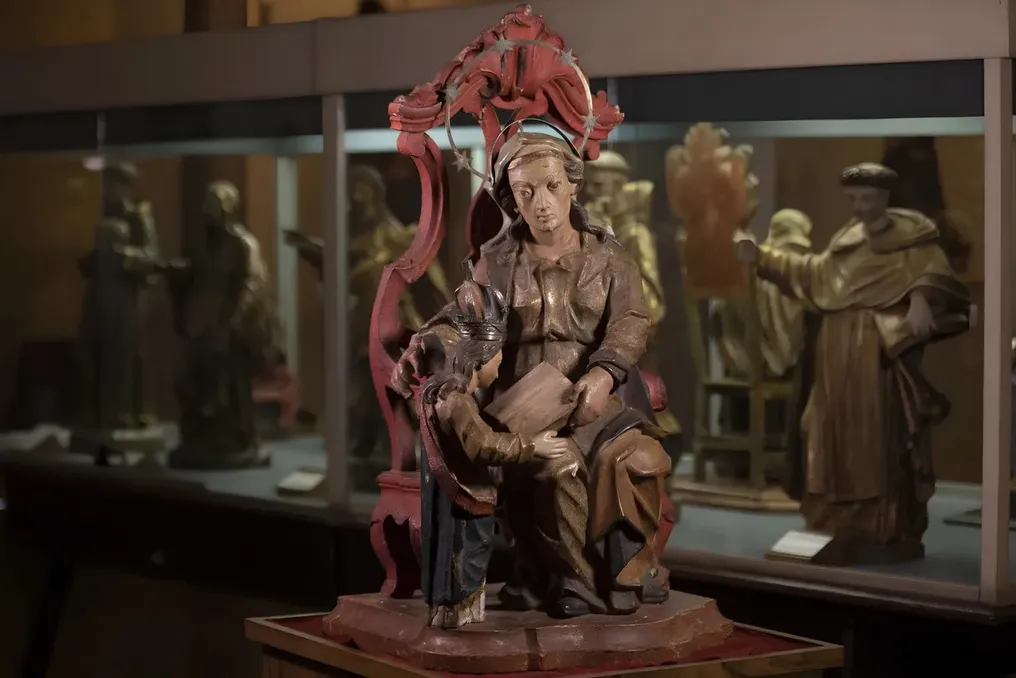
The first image, Sant'Ana Meira, is located in the chapel dedicated to this saint in the Chapada de Ouro Preto community. The sculpture depicts the mother of Mary and the grandmother of Jesus teaching her daughter the first letters. This work was created between the late 18th and early 19th centuries.

The dynamic drapery of the saint recalls the Baroque, while the details of the chair and the elongated body suggest Rococo influence. It is possible that this work was executed at the same time as Aleijadinho's sculptures for the Bom Jesus de Matosinhos Sanctuary in Congonhas.

São Joaquim belongs to the parish of Nossa Senhora da Conceição in Raposo. The image presents the grandfather of Jesus as an elderly man with a gray beard and hair, leaning on a staff. The posture and gaze give the figure movement, and its elongated proportions follow Rococo aesthetics. Devotion to São Joaquim has grown in Minas Gerais alongside the cult of Sant'Ana.

The third piece, São Manuel, belongs to the parish of Nossa Senhora do Bonsucesso in Caeté and represents a less common depiction in Brazilian sacred art. Having Eastern origins, this saint is associated with Persia and is mentioned in apocryphal tales. His veneration reached Minas under Portuguese influence. Aleijadinho depicted him with marks of martyrdom: nails pass through his ears and flanks of the chest, and his neck indicates decapitation. Standing, with folded hands and a silver glow above his head, the figure has a vertical composition characteristic of the Rococo.

Before entering the Vatican Museums, the three sculptures underwent a preservation process in Belo Horizonte. The work was carried out in 2021 by Casa Fiat de Cultura in partnership with Grupo Oficina de Restauro and technical support from the National Historical and Artistic Heritage Institute (Iphan).

The project, titled 'Aleijadinho Baptized, Art Revealed,' lasted five months and required over 500 hours of work. During this time, the sculptures were subjected to X-ray, infrared, and ultraviolet fluorescent examinations. These procedures helped study the structure of the sculptures, identify old interventions, and determine necessary care measures.

The public could also observe the work in a display workshop specially equipped so that visitors could see the procedures and daily activities of the specialists.

The analyses led to discoveries about the history of the works. In the case of São Manuel, the studies confirmed the originality of the painting. The sculpture was cleaned, and cracks in the wood joints were treated without erasing traces of time.

Regarding São Joaquim, infrared and ultraviolet fluorescent range studies showed that the oldest paint had been completely removed. Researchers discovered a subsequent layer of paint dated December 7, 1921.

Sant'Ana Meira required additional care as she underwent restoration in the 1960s. Examinations revealed details hidden under layers of mass, such as the drawing of a high and clearly defined eyebrow, as well as facial features and hair.

After completion, all three works were returned to the Minas communities responsible for their custody. Iphan also provided recommendations for preserving the collection, which is now gaining international recognition in the Vatican.

Antônio Francisco Lisboa (1738–1814), known as Aleijadinho, was a sculptor, carver, and architect born in Ouro Preto, Minas Gerais. He is considered one of the main figures of colonial Brazilian art, whose work combines elements of Baroque and Rococo.

His works are scattered throughout the historic cities of Minas, such as Ouro Preto, Sabará, Tiradentes, and São João del Rei. Among his most famous works is the complex of the Bom Jesus de Matosinhos Sanctuary in Congonhas. This complex unites sculptural and architectural elements created by the artist and is recognized as a UNESCO World Heritage site. This work strengthened Aleijadinho's significance in the history of Brazilian art.

Évora: Roman Ruins, Bones, and Winemaking in the Heart of Alentejo
Read more
viagemeturismo.abril.com.br

Évora: Roman Ruins, Bones, and Winemaking in the Heart of Alentejo

Despite its small city core, Évora is a city rich in historical heritage. This main municipality of Alentejo inherited both Roman and medieval traditions, which allowed it to be designated a UNESCO World Heritage site in 1986. In addition to ancient monuments, the region is famous for its strong winemaking tradition.

When planning a trip to Portugal, it is worth considering including Évora in the itinerary, as Nobel laureate José Saramago notes, 'there is truly an atmosphere in Évora that cannot be found anywhere else.'

Traces of various historical eras are preserved in Évora, ranging from the Roman Empire to the Golden Age of Portugal. Most attractions are concentrated in the historic center, allowing for easy walking between them. The territory is surrounded by walls built in the 17th century.

Main Historical Attractions

The most famous attraction in the municipality is the Chapel of Bones. Located within the São Francisco church complex, this place prompts visitors to contemplate the transience of life. Upon entering, visitors are met with the inscription: 'We, the bones here, hope in you.' The interior consists of three naves and columns nearly 20 meters high, completely covered with the bones and skulls of over five thousand skeletons.

The São Francisco Church, where the Chapel of Bones is located, was built in the Gothic style in the 15th century. It is considered the first residence of the Franciscan Order in Portugal and is decorated with paintings from the Portuguese Renaissance and Baroque carvings. Another well-known religious temple in the city is the Sé Cathedral, the largest medieval church in the country. This building consists of five chapels and is dedicated to Saint Mary.

On the highest point of Évora stands the Temple of Diana, a sanctuary dating back to the 1st century and dedicated to the Roman goddess of the hunt. It is one of the oldest structures in the region and one of the best-preserved Roman buildings on the Iberian Peninsula.

The Aqueduct of Água de Prata, built by order of King Dom João III in the 16th century, served to supply water to the city center. It spans 18 kilometers, starting from Ferdade do Divor and reaching the heart of the municipality. This Renaissance structure is open to visitors, and tours can be taken through those organized by the Municipality of Évora.

Heraldo Square

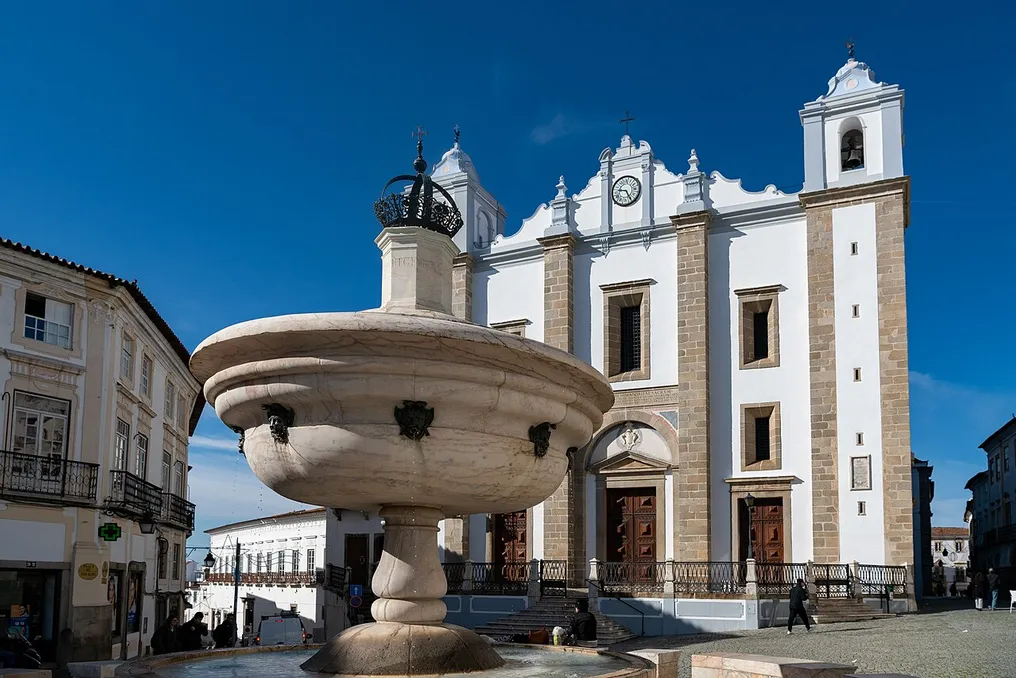
Heraldo Square is also a must-see stop. Located in the historic center, it serves as the main meeting place for local residents. The square, paved with traditional Portuguese cobblestones and adorned with a Baroque marble fountain, is the central point of the region's social life. While strolling through the center, one should not overlook the white houses with red tiled roofs, built in the 16th and 17th centuries. They fill the narrow medieval streets and lend the city a special charm.

In addition to its rich historical and cultural content, the region is distinguished by its wine production. Winemaking culture is one of the pillars of Alentejo's identity, and the municipality is known for its quality wine brands.

Enotourism is popular thanks to organized tours and tastings at wineries. Among the most famous producers in the region are Adega Cartuxa, known for their Cartuxa and Pêra-Manca brands, Fitapreta Vinhos, and Casa Relvas.

The city of Évora is 134 km from Lisbon, making it a good option for both a longer stay in Alentejo and a day trip. The easiest way to get there is by car or bus.

French Specialists Conduct Restoration of Exhibits from the Romanov Palace Collection in Tashkent
Read more
podrobno.uz

French Specialists Conduct Restoration of Exhibits from the Romanov Palace Collection in Tashkent

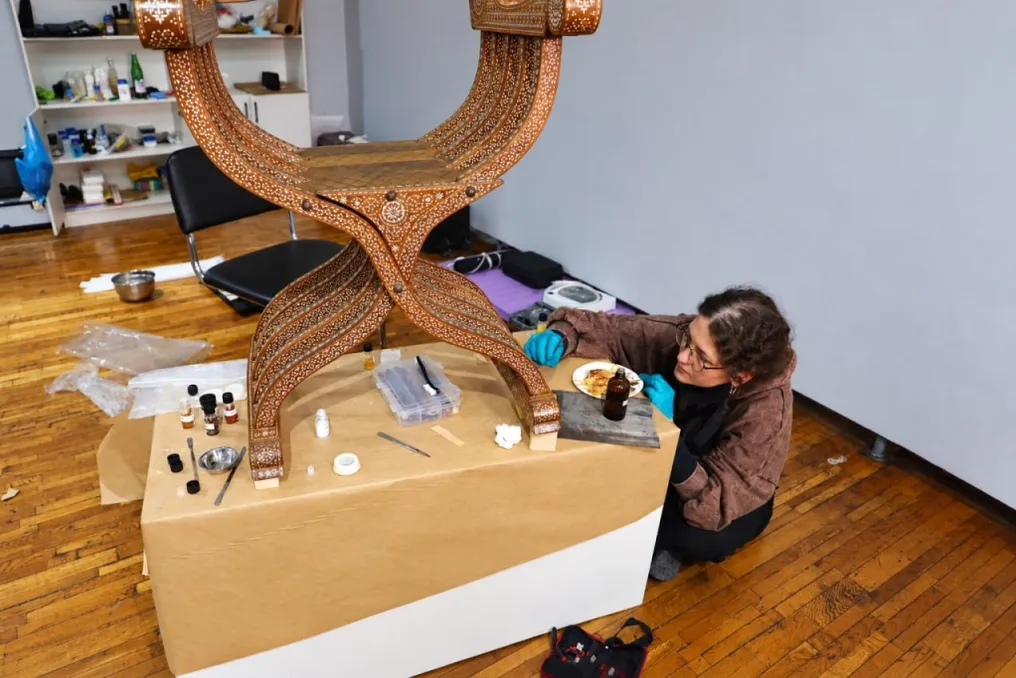
From October 6 to 30, the State Museum of Arts of Uzbekistan hosted the first restoration mission organized by French specialists. The goal of this mission was to preserve and restore historical and artistic items belonging to the Romanov Palace collection.

Nine experts from France participated in the work, focusing their efforts on two main areas. A group of five specialists, led by Delphine Eli-Lefevre, worked on restoring seven pieces of furniture from the historical fund.

Concurrently, a team of four experts under the leadership of Patricia Verge-Libay restored four paintings from the same collection, including their frames. The execution of this mission is intended to contribute to the preservation of the cultural values of the Romanov Palace, guarantee their authenticity, and strengthen international partnership in the field of restoration.

It should be noted that the Romanov Palace has been undergoing restoration since 2021. Earlier this year, in May, there was public outcry regarding a closed fashion show held on the palace grounds. Residents and public figures criticized the holding of a commercial event at a heritage architectural site that remained closed to the public.

Later, the Fund for the Development of Culture and Art clarified that the event took place exclusively on the adjacent territory and did not affect the interior premises of the palace. The agency also reported that after the completion of the work, the site will be opened to visitors as a modern museum space.

Popular