Ashram Premānand Mahārāja is divided into two camps: genuine and fake saints
Read more
Aaj Tak
www.aajtak.in

Ashram Premānand Mahārāja is divided into two camps: genuine and fake saints

Following the death of Premānand Mahārāja's disciple, Dipak Lodhi, numerous issues have arisen around the Guru Kripa Kund ashram in Vrindavan. Dipak committed suicide by jumping from the ashram's roof on September 25th. A post-mortem examination revealed that the cause of death was severe bleeding after damage to his genitals.

The situation was exacerbated by three families arriving from different places who began protests over the disappearance of their relatives.

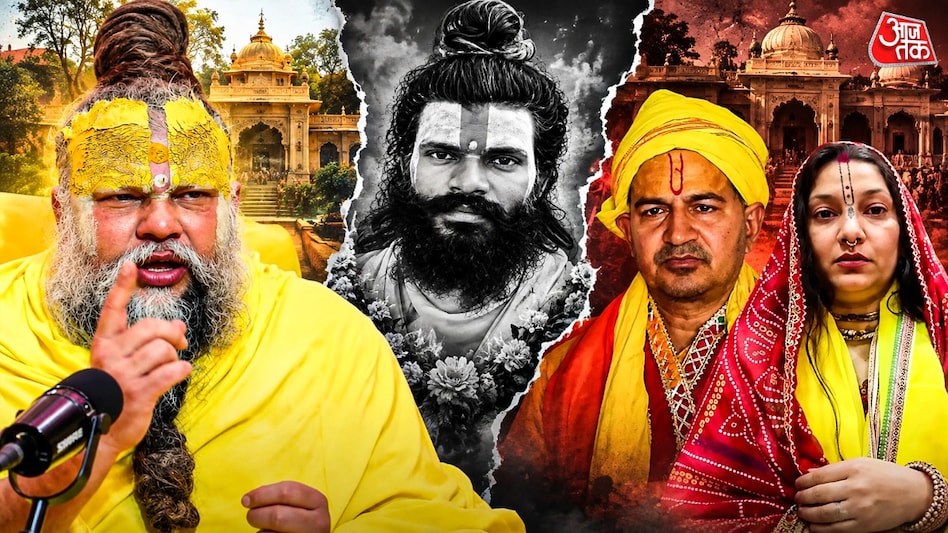
Dinesh Sharma, chairman of the Shri Krishna Janambhoomi Sangharsh Nyas and an Indian social figure, leveled a serious accusation, stating that the Keli Kund ashram in Vrindavan has turned into a center for land speculators. He reported that two factions have formed within the ashram: one of genuine saints, and another of impostors. This fraudulent camp engages in real estate and land business, having taken control of approximately 15 ashrams, which deeply distresses Premānand Mahārāja.

As a result of these events, Premānand left the Keli Kund ashram and moved to Belwan Ashram, located 20 kilometers away. He insists on an investigation into the actions of these criminal fake sadhus residing in Keli Kund, believing that the truth will come out. He also demands that all individuals posing as sadhus be checked by the police. Premānand noted the potential for conflict between these two groups—the genuine and the fake saints—and therefore sent a letter to the Chief Minister requesting protection at Z Plus level.

For her part, Sadhvi Indulekha from Mathura believes that some antisocial elements are trying to undermine Premānand Mahārāja's reputation. She claims that under the guise of the Mahārāja, some people are sowing panic and illegally seizing land. While acknowledging Premānand as a revered saint, she noted that the atmosphere had become so corrupted that Premānand was forced to leave everything and move to Belwan. She emphasized that Premānand Mahārāja is in danger and requires increased security.

Nine days after the death of the young sadhu Dipak Lodhi, the Radha Keli Kund Trust issued a statement on behalf of the ashram. This appeal was made amid protests by residents near the ashram. In it, the ashram management expressed deep sorrow for Premānand Mahārāja regarding the recent incident and offered condolences to the deceased's family. Furthermore, the Keli Kund Trust stated its readiness to cooperate with law enforcement agencies to ensure an impartial and factual investigation of the incident.

Similar stories

Hindu predictions about the end of Kali Yuga and the coming intervention of Vishnu
Read more
www.aajtak.in

Hindu predictions about the end of Kali Yuga and the coming intervention of Vishnu

There are descriptions in religious texts and Puranas regarding the final stage of Kali Yuga. According to these descriptions, as the peak of Kali Yuga approaches, concepts such as religion, truth, compassion, purity, forgiveness gradually decline, and human lifespan also decreases.

The question arises as to what the end of Kali Yuga will be like: will seas and rivers dry up? And what will be the greatest question—how will the incarnation of God Vishnu as Kalki occur amidst this universal lawlessness? The following narrative presents the last time of Kali Yuga, as described in the Puranas.

When the age of 20 becomes a sign of old age

In religious scriptures, the final stage of Kali Yuga is depicted as extremely grim. There is a belief that during this period, people's lifespans will steadily shorten. If today the age of 20 is considered the beginning of youth, then at the final stage of Kali Yuga, this age will be viewed as being close to the end of life.

It is said that signs of premature aging will begin to appear in people. Hair will start turning gray at an early age, and physical strength will rapidly weaken. That is, at the moment when today's youth thinks about building a career and a future, the person will already be close to the end of their existence.

Weakening of relationships and family

Sacred texts also contain descriptions of the decline of social and family values in the last times of Kali Yuga. Qualities such as religion, truth, purity, compassion, forgiveness, and self-control gradually disappear. Trust and respect between spouses also decrease.

People begin to prioritize egoism and personal desires over relationships. Wealth and personal gain are valued more than family. Religious descriptions even assert that recognition of good character will then be determined not by a person's behavior, but by whether they have money.

Wealth will become the main measure

In the final phase of Kali Yuga, money will become the main criterion for prestige. The more money a person has, the more influential and virtuous society considers them. The status of their family and lineage will also be determined by their financial situation. Meanwhile, poor people will be considered unworthy and humiliated.

For money, people will turn against their own relatives and friends. Greed will increase to such an extent that a person will not make any concessions for their own egoism.

Dominance of lawlessness over religion

It is asserted that the number of people observing religion in the last times of Kali Yuga will be extremely low. People may talk about the provisions of religious texts and Vedas, but their lives will not conform to these principles. Some religious teachers will use people for their own interests. They will speak of knowledge, but their behavior will lack religion and virtue. Meanwhile, cunning, greedy, and selfish people will be considered wise and successful. Even grain growth on the earth will become difficult.

The Puranas also describe natural imbalance in the final stage of Kali Yuga. It is believed that the fertility of the land will decrease, affecting food production. Rains will become irregular, and the climate will be disrupted. There will be intense heat in some places and severe cold in others. Storms, floods, and other natural disasters may increase. Some religious descriptions even state that the intensity of the sun will increase so much that rivers and seas will begin to dry up.

Local ponds will gain importance instead of holy places

Religious descriptions related to the end of Kali Yuga also mention that people's religious faith and traditions will undergo changes such that they will begin to forget the significance of sacred shrines. People will start considering small bodies of water near them as sacred instead of distant holy rivers and pilgrimage sites. This description points not only to geographical changes but also to shifts in human mindset and religious values at that time.

Kali Purusha will become the main symbol of Kali Yuga

In religious beliefs, Kali Purusha is considered the symbol of the lawlessness and vices of Kali Yuga. As lawlessness grows, the power of Kali will increase. Her influence will begin to affect people's thoughts and behavior. People will gradually start following the path of greed, anger, violence, deceit, and egoism. It is said that Kali Purusha will gain the greatest power precisely from lawlessness. The more lawlessness there is, the stronger her influence.

The incarnation of God Kalki will come

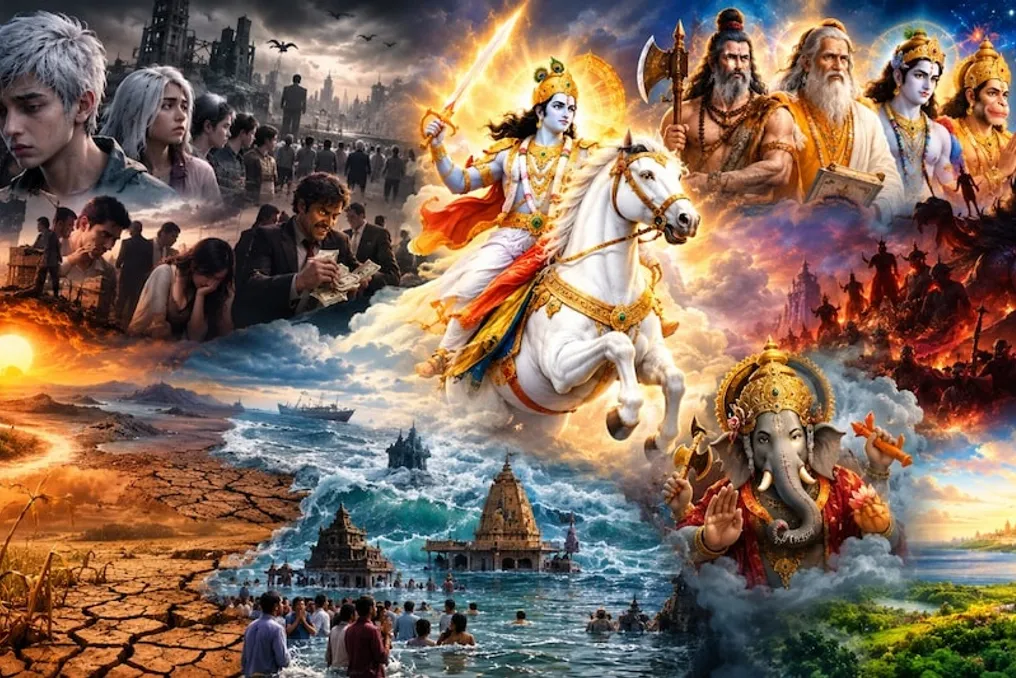
However, Sanatana tradition always states that whenever lawlessness increases, God incarnates to restore religion. At the end of Kali Yuga, the incarnation of God Vishnu as Kalki is expected. According to religious texts, when lawlessness reaches its peak and religion is almost gone, God Kalki will appear, destroy the lawlessness, and re-establish religion. It is believed that God Kalki will appear riding a white horse called Devadatta. He will hold a sword in his hand to destroy lawlessness and tyranny.
Explanation of the Ritual of Feeding Ants Flour During Pitru Paksha According to Garuda Purana
Read more
www.aajtak.in

Explanation of the Ritual of Feeding Ants Flour During Pitru Paksha According to Garuda Purana

In Hinduism, the period of Pitru Paksha is considered a time dedicated to attaining peace and satisfying the souls of ancestors. During this time, people honor their ancestors through pindadana, tarpana, and charity. Special significance in Pitru Paksha is given to the act of mercy and care for living beings, among which feeding ants with flour or sugar is considered an extremely important action. The question arises as to why it is considered necessary to feed ants on these days, and the Garuda Purana and religious beliefs outline the deep secrets and reasons for this.

Let us consider why serving ants is revered during Pitru Paksha and how this brings satisfaction to the ancestors.

The Significance of Serving Living Beings in the Garuda Purana

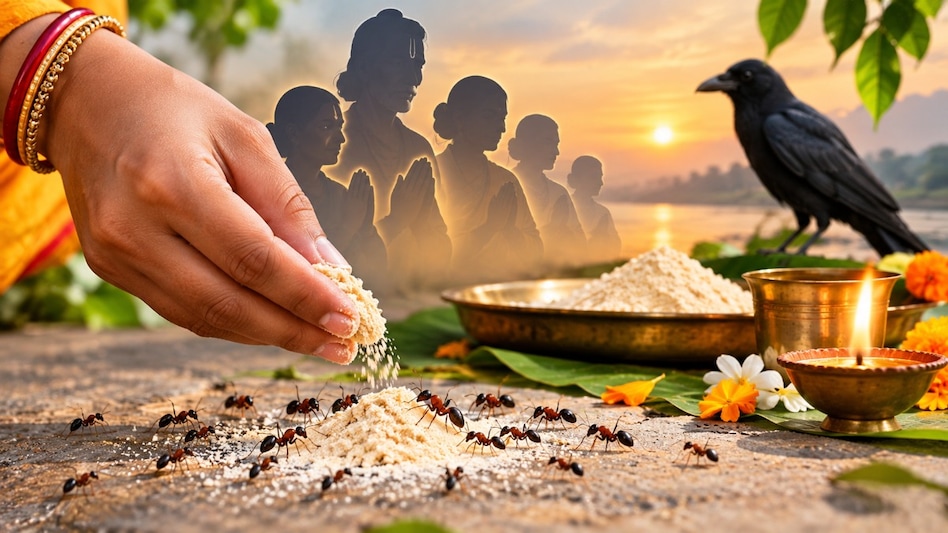
In the sacred texts of Hinduism, particularly the Garuda Purana, it is clearly stated that the consequences of human actions affect not only people but all living creatures. According to belief, after death, souls wander in various forms of life. Ants and other microorganisms are also an integral part of creation. Feeding ants with flour during Pitru Paksha alleviates the hunger of these small creatures, which is believed to attract their blessing in the form of positive energy into our lives.

Main Religious and Spiritual Reasons for Feeding Ants with Flour

  • Alleviating Negative Influences: According to astrological views, ants are associated with planets such as Rahu-Ketu and Shani. When a person regularly places flour mixed with sugar for ants, especially during Pitru Paksha, various planetary afflictions and obstacles begin to subside, helping to eliminate life difficulties.
  • Path to Freedom from Debts and Sins: Religious scriptures state that we commit many minor sins by unknowingly killing living beings. These sins can be compensated through 'Pancha Mahayajnya' or service to living beings. Feeding ants helps to clear the debt owed to ants and other small creatures; this is called 'Kidi Nagar' and is considered a great good deed.
  • Satisfaction and Blessing of Ancestors: There is a religious belief that our ancestors manifest their presence near us or through living beings during Pitru Paksha. When we offer food to ants or other defenseless animals, the merit gained from this directly reaches our ancestors. This leads to their satisfaction and bestows happiness and prosperity upon their descendants.

What to Note When Feeding Ants with Flour

Several rules must be observed when feeding ants. Firstly, a clean place should be chosen: ants must always be fed outdoors, under a tree or near their nest, in a clean spot. Secondly, it is recommended to mix regular flour with a small amount of sugar or cane sugar, as ants digest this mixture more easily. Finally, regularity is important: if you follow this practice during Pitru Paksha, do so with sincere faith and consistency to receive the full spiritual benefit.

After Premanand Maharaj, Kachhindi Dham has become a new pilgrimage center; is this related to Hanuman's legacy?
Read more
www.aajtak.in

After Premanand Maharaj, Kachhindi Dham has become a new pilgrimage center; is this related to Hanuman's legacy?

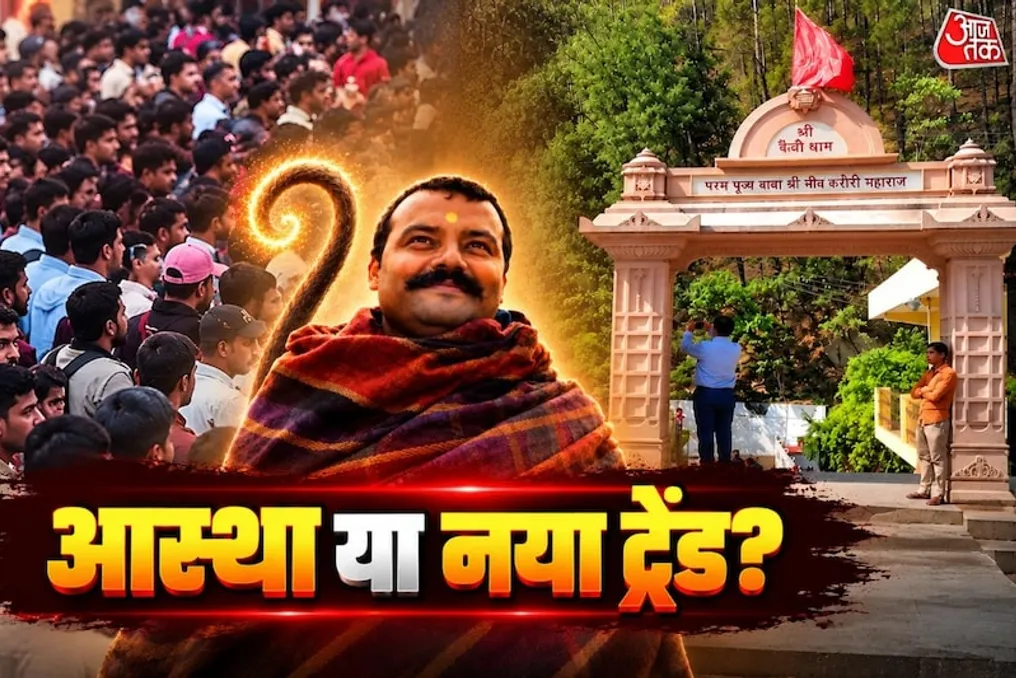
The viral popularity recently acquired by Premanand Maharaj due to photos of celebrities visiting him has turned spirituality into part of pop culture. A similar trend is now observed regarding Kachhindi Dham, where the stories of Nim Karoli Baba's blessings are the focus.

The question arises: is people's faith sincere, or can social media and celebrity examples turn any place into a new 'hot spot'?

Kachhindi Dham is not a new religious site; this ashram, associated with Nim Karoli Baba, has been a center of worship for decades. However, its popularity has sharply increased in recent years. Following the viral spread of photos of Virat Kohli and Anushka Sharma visiting Kachhindi Dham in 2022, its fame grew. Previously, the place also gained global recognition through stories about Nim Karoli Baba that were linked to Steve Jobs and Mark Zuckerberg.

When 'Hanuman Ansh' presented the Baba's story on the big screen, this topic became accessible to the general public. According to one report, only in the first six months of 2026, about 2.434 million people visited Kachhindi Dham, whereas the annual figure in previous years was approximately 800 thousand visitors.

The situation has now reached a critical point: finding accommodation in Kachhindi Dham has become impossible. On October 3, pictures of crowds and long queues from the gates to the highway were published. Reports indicate that managing the flow of visitors has become difficult, and surrounding roads are under severe pressure. As early as June 15, the anniversary of Kachhindi Dham's founding, over one hundred thousand pilgrims were expected to arrive.

In this atmosphere, actress Rashmi Desai also visited Kachhindi Dham to receive Nim Karoli Baba's blessings before the start of her new show 'Sayoni'. The involvement of the 'Hanuman Ansh' team with Kachhindi Dham is constantly being discussed. Thus, whether it is a new film, a new show, or a new phase in life, seeking the Baba's blessings is now reflected in the images of the glossy world.

The modern era is characterized by the fact that when a celebrity visits a temple, photos appear, videos go viral, and then thousands of people start heading to the same place. Social media has also given a huge boost to Premanand Maharaj's popularity. One report noted that after 2024, his social media reach significantly increased, linking his popularity to the spiritual phenomenon of the digital age.

A similar pattern is observed with Kachhindi Dham: first, a visit by a major personality, then discussion on social media, followed by a film or viral content, and only then does the frenzy among those wishing to visit the place begin. After the success of 'Hanuman Ansh', this connection has become even more obvious. Film director Vishal Chaturvedi had to appeal to people on October 5 to inquire about the crowds before traveling to Kachhindi Dham. He also advised visiting other places associated with the Baba.

Undoubtedly, not everyone who goes to Kachhindi Dham does so to follow a trend. For some, it is many years of devotion; for others, it is the search for peace of mind, and for some, it is true faith in the Baba. However, when celebrities, social media, cinema, and viral videos participate simultaneously in the identification of a religious place, the line between faith and trend becomes blurred.

Perhaps this is the new face of today's spirituality: previously, people went to places hearing about their greatness, but now the place often appears on screen, and only then does the person travel there. Kachhindi Dham seems to be the most interesting illustration of this changing period. The question is not only why the crowd is growing, but whether we are seeking faith or merely the trend of that faith.

Popular