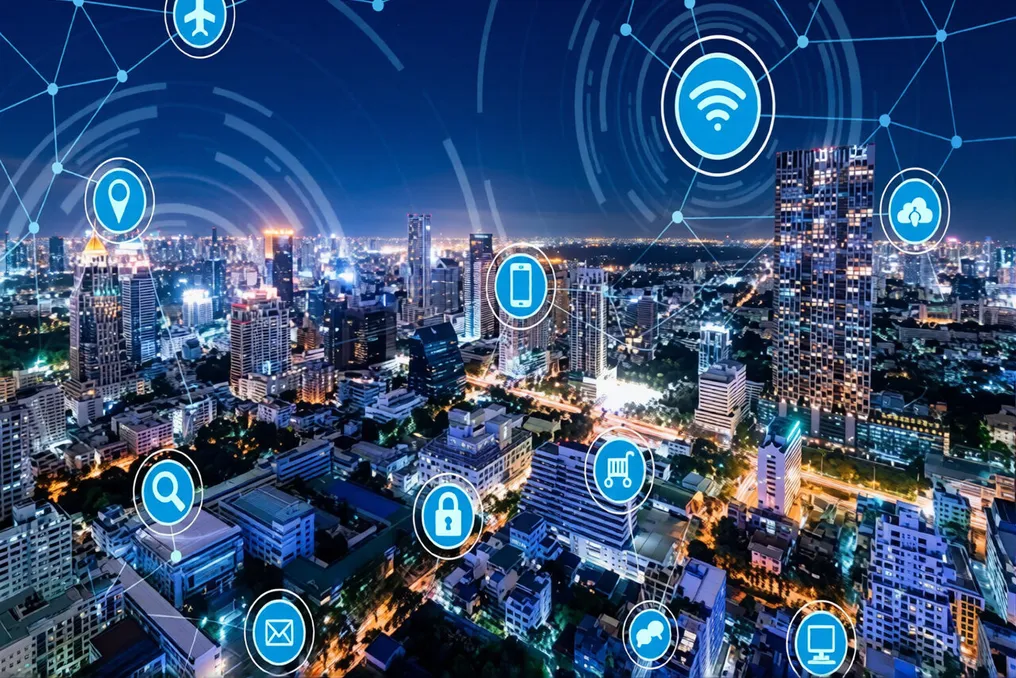
Tehran to Host Iran's Seventh Smart Cities Exhibition and Conference
Read more
Tehran Times
www.tehrantimes.com

Tehran to Host Iran's Seventh Smart Cities Exhibition and Conference

The seventh Iran Smart Cities Exhibition and Conference is scheduled to take place in Tehran, starting on October 31 and running until November 2. The event coincides with World Cities Day and will gather experts and stakeholders in the field of smart urban space development.

Main Focus Areas of the Conference

This year's conference focuses on the application of artificial intelligence (AI) in various aspects of urban management. Topics include AI in ensuring urban security and crisis management, AI in public health and citizen well-being, AI-driven governance, and the smart economy. Themes such as AI in ecology and sustainable energy, citizen participation, and the provision of smart public services will also be discussed, according to the IRNA agency.

The goal of the exhibition is to improve the quality of life in both urban and rural areas, as well as support the sustainable development of smart cities. The event plans to showcase the latest innovations in the smart city sector, present new concepts in urban design and structure, study construction challenges, and develop scientific solutions. Furthermore, participants will have the opportunity to establish cooperation with other countries and utilize successful smart city experiences.

The event will serve as an important platform for exchanging experience among urban planners, industrialists, scientists, and knowledge-based companies, thereby strengthening their interaction. The deadline for article submissions is October 20.

World Cities Day

World Cities Day is observed annually on October 31 and was first established in 2014. Like World Habitat Day, this global event is held in different cities each year, focusing on a specific theme.

The main objective of this day is to raise international awareness about urbanization trends related to challenges, as well as visions for sustainable urban development. It promotes international cooperation and contributes to global efforts to create fair, prosperous, sustainable, and inclusive cities that provide their residents with an improved living environment and quality of life.

On October 31, the Global celebration of World Cities Day will take place in Fuzhou, China, under the slogan 'City Regeneration: Adequate Housing for All'. The 2026 events will focus on urban regeneration as a catalyst for achieving adequate housing for all, as well as how neighborhood-level regeneration, combined with housing and informal settlement strategies, can create more inclusive and climate-resilient neighborhoods.

Cities worldwide face interconnected difficulties, including housing affordability issues, aging neighborhoods and infrastructure, underutilization of urban land, climate change risks, and growing social inequality. According to the 2026 World Cities Day Conceptual Note, up to 3.4 billion people lack access to adequate housing, secure tenure, basic services, or affordable living conditions. Urban regeneration offers an opportunity to address these problems by improving existing urban areas while simultaneously expanding access to adequate housing and ensuring no one is left behind.

The 2026 theme emphasizes the need for comprehensive approaches linking affordable housing with improvements in public space, infrastructure, connectivity, and climate resilience. Special attention is given to community-involved regeneration, as well as protective measures that can prevent resident displacement and ensure that existing inhabitants benefit from improvements to their homes and neighborhoods.

In 2026, World Cities Day will provide a platform for national and local governments, United Nations bodies, international organizations, academia, the private sector, and communities to exchange experiences, demonstrate innovative practices, and identify practical solutions. The official program structure for 2026 is scheduled from October 31 to November 2, 2026, at the Fuzhou Bay International Convention & Exhibition Center and includes an opening ceremony, thematic forums, side events, exhibitions, and city tours.

Similar stories

Tehran to Host Second National Festival of Youth, Innovations, and Medical Technologies
Read more
www.tehrantimes.com

Tehran to Host Second National Festival of Youth, Innovations, and Medical Technologies

In the second half of October, the second national festival dedicated to youth, innovations, and healthcare technologies will take place in Tehran. The event is scheduled for October 14 to 16 and will focus on the application of artificial intelligence (AI) in medicine.

The festival is organized by Shahid Beheshti University of Medical Sciences. According to ISNA, the event's themes will cover areas such as 'AI and machine learning in healthcare,' 'digital health and telemedicine,' 'new technologies in rehabilitation,' 'biotechnology, regenerative medicine, and pharmaceuticals,' 'law and ethics in digital healthcare,' 'medical devices,' 'nutrition and food industry,' 'psychology and psychotherapy,' and 'environmental health.'

This event serves as an important platform for students from educational institutions, innovators, technologists, healthcare experts, and researchers, allowing them to present their original ideas. Furthermore, it facilitates networking between owners of innovative concepts, specialists, and relevant organizations, paving the way for the support and implementation of these ideas.

Participants can concentrate on ways to increase the intelligence of medical services, improve the quality of healthcare, develop digital tools, and create innovative solutions to overcome challenges facing the healthcare system.

Modern communication technologies have fundamentally changed people's lifestyles, social interactions, and access to information, and the healthcare sector is no exception to this digital transformation. The emergence of tools such as health applications, telemedicine, electronic health records, and online health platforms has made digital healthcare an integral part of the healthcare system.

Digital healthcare brings certain advantages but also presents challenges. It is defined as the use of information and communication technologies to promote health, improve access to medical services, and enhance the quality of medical care. Digital healthcare reduces the distance between the patient and the service provider, making healthcare more accessible to various segments of society.

This approach plays a key role in raising public awareness, disease prevention, and promoting a healthy lifestyle. Nevertheless, digital healthcare faces several difficulties. The most significant of these is the digital divide, which represents inequality in access to and use of communication technologies. This gap can arise for various reasons, including income level, place of residence, age, and literacy.

Researchers from Allameh Tabataba'i University in Tehran studied digital healthcare in the country to determine its strengths, weaknesses, opportunities, and threats, as reported by ISNA. The research results indicated that digital healthcare in Iran possesses significant advantages, such as national health platforms, growing application of AI tools in medical services, and the availability of online health services.

Among the main weaknesses identified are the lack of a comprehensive legal framework for protecting medical data, integration issues between digital platforms, low levels of digital literacy and communication infrastructure, and structural resistance to technological changes. This underscores the necessity of implementing both new technologies and reforms in legislative and structural spheres.

To achieve the goal of transforming the healthcare system, the Ministry of Health has developed eight projects focused on smart electronic healthcare using artificial intelligence. These projects include improving health literacy and self-care, creating an intelligent referral system, launching a national health observatory, transforming medical data into actionable knowledge, managing the supply chain of subsidized medicines using AI, establishing a Diagnosis-Related Group (DRG) payment system, developing a productive smart hospital, and integrating online insurance processes.

Popular