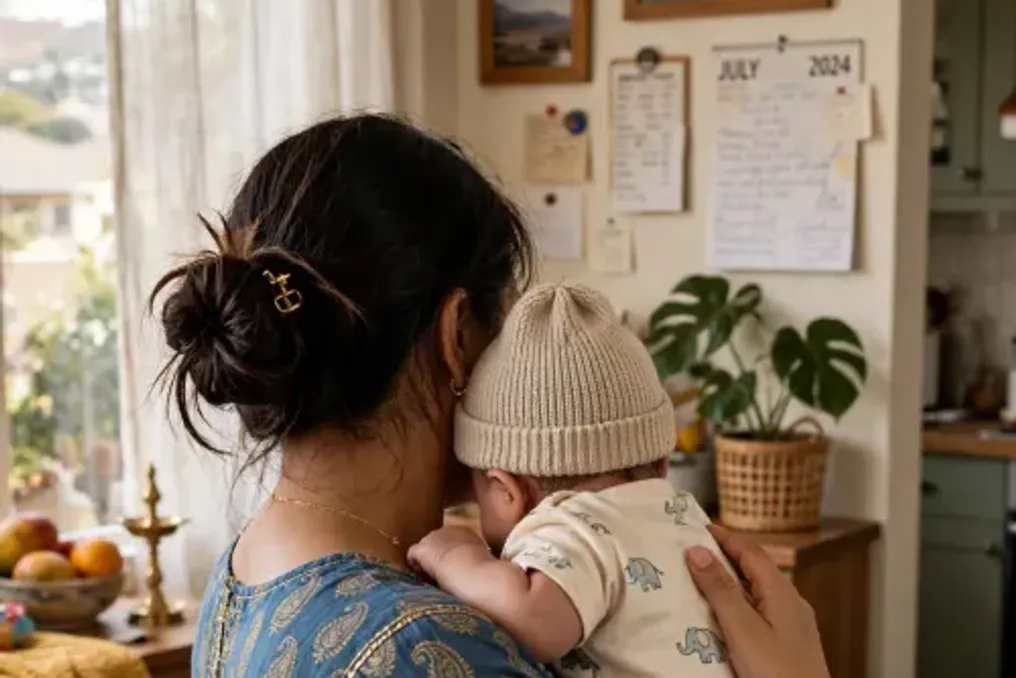
When exhaustion sets in, the standard advice often given is to practice self-care: take a bath, meditate, or go for a walk. However, for parents who feel overwhelmed, this may be a sign not just of tiredness, but of parental burnout.
In South Africa, parents face an unprecedented level of exhaustion due to a combination of economic hardship, work demands, safety issues, and the daily burden of family logistics. Nevertheless, psychologists from South Africa argue that self-help advice not only fails to help parents but actually exacerbates the problem.
Burnout differs from ordinary fatigue
Parental burnout fundamentally differs from fatigue after a stressful weekend or a sleepless night with a small child. Counseling psychologist Muhammad Kuwadi notes that research conceptualizes parental burnout as something more than mere tiredness. It includes deep exhaustion, emotional distance from children, and a sense of reduced effectiveness in the parental role. Burnout becomes more likely when the demands placed on parents chronically exceed their available resources.
Unlike ordinary fatigue, which can be restored by sleep, during burnout, the nervous system has functioned in survival mode for a long time, and rest no longer brings renewal. Clinical psychologist Dr. Malebo Mashaba explains that parental burnout is linked to prolonged physical and emotional exhaustion caused by constant parenting duties and insufficient opportunities for recovery. When a parent is constantly under stress without adequate support or rest, it negatively affects their emotional well-being, relationships, and ability to function effectively.
The myth of intensive parenting and mental load
A significant part of parents' problems stems from the exponential expansion of the definition of a 'good parent.' Modern parents have access to an endless amount of advice, information on developmental stages, expert podcasts, and messenger groups. However, the increase in the volume of information has led to a rise in perceived responsibility. Thus, the era of 'intensive parenting' has emerged—a model where parents feel personally responsible for optimizing every aspect of their child's academic, emotional, and social development.
Kuwadi emphasizes that today's parents face extremely high expectations, which are amplified by social media. They are constantly shown images of the perfect parent: the flawless lunchbox, enriching activities, emotionally stable children, and endlessly patient parents. Even knowing that these images are edited, they become the standards by which parents judge themselves.
When an overloaded parent receives advice to take care of themselves, it often feels like adding yet another task to an already impossible to-do list. Kuwadi argues that the conversation about self-help needs to go further. Advising an overwhelmed parent to take a bath or meditate ignores the core issue if childcare is unavailable, money is limited, working hours are long, and the mental load never ceases. Self-help cannot compensate for a lack of social support.
Dr. Mashaba agrees that framing self-help as the primary solution places the blame on the individual. If a parent is overwhelmed by an unsustainable level of responsibility, the advice to find more time for self-care can unintentionally add another obligation to an already exhausted person. This situation is worsened by 'mental load'—the invisible work of constant forecasting, planning, remembering, and coordinating household tasks. Dr. Mashaba notes that the mental load is particularly important because much of it remains unnoticed. Even during physical rest, a parent's mind can be occupied with thoughts about what needs to be done next.
In South Africa, this 'mental tax' has an economic dimension. The need to pay school fees, transport, ensure safety, support extended family, and cope with demanding working hours leaves virtually no psychological space for true recovery. No amount of self-help can replace real parental support.
What constitutes real support
If self-help is not the cure, then what is? Both experts agree that solving parental burnout requires abandoning the idea that parents should simply 'cope better' and moving towards actively lifting the burden from them.
What meaningful support looks like
Meaningful support involves sharing the mental load, not just routine chores. In a relationship, true co-parenting means both partners participate in planning and remembering, rather than one person acting as a manager while the other 'helps' upon request. Real support includes a partner taking on half the responsibilities, family members assisting with regular school drop-offs, accessible childcare, and employers who understand that flexibility requires a reasonable workload. It is also important to abandon perfectionism, as burnout is fueled by the myth of the infinitely patient and perfect parent. Acknowledging one's limits is not a failure, but a healthy psychological boundary.
Dr. Mashaba stresses that the question should not only be 'How can this parent cope better?' but also 'What contributes to this parent's psychological load, and what support can reduce it?' Children do not need superhuman, endlessly patient parents in a state of quiet exhaustion. They need supported parents who are given the opportunity to be human, relying on community support.