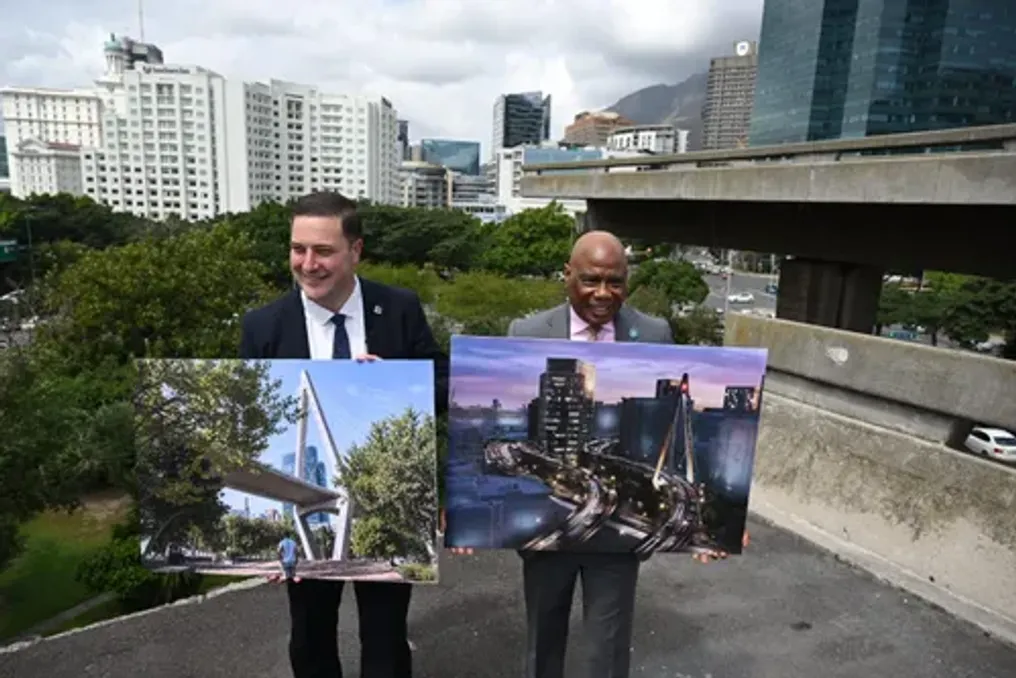
Cape Town Mayor Geordin Hill-Lewis presented the City's vision for the Foreshore district, which includes a proposal to complete unfinished bridges on the Foreshore freeway.
The Cape Town City's plan to develop 15 hectares of valuable land in Foreshore has faced criticism over the promise of affordable housing, as no specific figure has been provided regarding the number of affordable homes that will be part of the new urban area.
The development, presented by Mayor Geordin Hill-Lewis on October 2, includes the creation of a new central urban district alongside significant changes to the freeway network. Although affordable housing is part of the proposal, the City has not provided data on the number of units or specified what type of affordable housing is being considered.
Opposition mayoral candidate Brett Herron challenged the City's commitments regarding housing, as well as the overall cost of the project. Herron demanded that Mayor Geordin Hill-Lewis provide information on expenditures, funding sources, implementation timelines, Transnet approval for the release of port land, and the number of affordable homes.
Plans May Extend Until 2040
The first phase of the project involves expanding the inbound freeway and constructing a connecting bridge across Buitenghacht Street to directly link the freeway with Helen Suzman Boulevard. The City claims this will free up three plots of land for housing development.
The second phase includes creating an outbound tunnel and demolishing the existing elevated outbound freeway, which will allow more land to be freed up for development and public spaces. The City is still negotiating with Transnet regarding the Port Authority land parcels needed for the tunnel construction.
According to City statements, the second phase of construction could continue until approximately 2040. Hill-Lewis emphasized that the project is in its early stages and still requires public participation, detailed engineering design, financing decisions, and procurement.
Questions Regarding Housing Numbers
Herron noted that the lack of detail on the affordable housing component is particularly important given the history of Foreshore's development. Previously, the City also included affordable housing and private development in plans to address unfinished freeway issues. However, this process was cancelled in 2018 following appeals and legal consultations concerning the procurement process.
Herron believes that the previous model used private development to co-finance infrastructure. He stated that the current administration 'copied and pasted ideas but removed the part that made them affordable: private funding.' He characterized the new proposal as 'empty electoral posturing' if the City does not provide more information on costs, funding, housing, and Transnet land.