
Trans woman suffers online attacks after seeking employment; she reports being ridiculed
Read more
Grupo Globo
g1.globo.com

Trans woman suffers online attacks after seeking employment; she reports being ridiculed

Maria Silvino Alves dos Santos Borges, known as Maria Sil, became the target of a series of transphobic attacks on social media after posting a video asking for job opportunities. She expressed her sadness about the violence seen on the internet, stating: «They ridicule me, mock my pain and my body, it is very violent».

Some users reacted negatively, with comments such as: «Nobody told you to become trans» or «Who will want to hire a ticking time bomb?». Another comment suggested that «No one will hire a man with mental problems who dresses as a woman». Maria Sil shared with g1 that she recorded the video as part of her effort for trans employability, and although she received positive support, she still feels great pain from every hateful message, describing the situation as a mix of «two worlds there» where violence often outweighs kindness.

Trans Employability

With technical training in Dramatic Arts, Maria Sil has previously worked as an actress, singer, and cultural producer, being responsible for several projects in the Baixada Santista region. In 2024, she released an album with original compositions. However, the chances of finding work have been progressively decreasing. The previous year, she moved to the city of São Paulo and began to get frustrated with the scarcity of vacancies.

In two years, despite sending over 500 resumes, Maria Sil was invited to only three interviews. Even in the rare opportunities obtained, she faced negative experiences, reporting that «In one of the last companies I worked for, my team constantly misgendered me,» and emphasizing the need for companies to implement retention policies.

Due to financial instability, she had to suspend her studies in Cultural Production, which further limits her options, given that many positions require higher education. She mentioned that it would be great to get a scholarship to resume her studies, as her degree is stalled, even with low tuition fees. According to data from the Institute of Applied Economic Research (Ipea), only 25% of the trans population has formal employment, a fact that, for Maria Sil, reinforces the urgency of the debate on the topic. The artist argued that «it is not about Maria. There is a larger structure that strengthens unemployment».

Diversity

Rafael Guilherme de Almeida, president of the Diversity Commission of the Brazilian Bar Association (OAB) of Santos, clarified that the offenses directed at Maria Sil constitute crimes, even when they occur in the virtual environment. He stressed that the fact that the offense is on the internet does not exempt it from punishment, stating that while there is still a distance from the ideal, it is easier today to identify online crimes.

Almeida informed that the perpetrators can be located, even using fake profiles, through a judicial request to the platforms. He explained that since 2019, the Federal Supreme Court (STF) considers homophobia and transphobia to be covered by the Racism Law (Law 7.716/89), awaiting specific legislation from Congress. The lawyer added that such crimes are non-bailable and imprescriptible, and the victim has the right to seek compensation for moral damages in the civil sphere.

Additionally, he warned that refusing to hire someone because they are trans also constitutes discrimination. If there is evidence that the refusal occurred for this reason (such as messages or comments during interviews, or the immediate reopening of the vacancy), it is possible to seek accountability from the company.
Similar stories

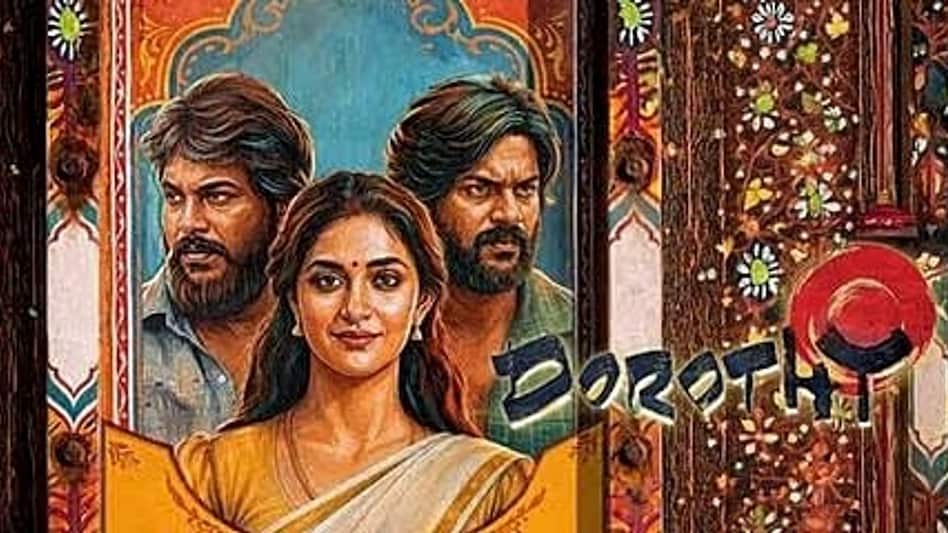
The Dorothy Film: A Story About Choosing Femininity Over Social Norms
Read more
www.aajtak.in

The Dorothy Film: A Story About Choosing Femininity Over Social Norms

The main idea of the Tamil film 'Dorothy' by director Karthik Subbaraj is to bring comfort to those in distress and cause discomfort to those at the center of the social system.

This film, featuring brilliant performances by Rishikant and Sananth, is a bold attempt to create cinema that gives a sense of belonging to people who have long been on the fringes of society, while simultaneously causing discomfort to those segments of society that have always held central positions in the system.

Although Tamil cinema has previously shown stories of transgender characters, they often focused on grief and struggle. Transgender characters were depicted in states of rejection, discrimination, violence, and social isolation. 'Dorothy' overturns this tradition by giving the transgender woman a space she lacked on screen—the ability to desire, to love, and not limit her life solely to her suffering.

This is where 'Dorothy' becomes a provocative film. It challenges traditional notions of masculinity, desire, and who is considered attractive or worthy of love, which may cause discomfort to people comfortable within these established views. However, it offers representation and recognition to those who may never have seen themselves portrayed this way.

Before proceeding, a spoiler warning is necessary. If you have not seen 'Dorothy', it is best to stop here, as the film contains plot twists that will be revealed later.

At the beginning of 'Dorothy', it seems we are watching two different films. The first part resembles a horror movie. Subbu comes from a high-caste family, where his father, Visel Veriya, embodies racist patriarchy. He is played by Muthukumar. He uses the distribution of money to oppress women and humiliate men. Both his sons, including the younger Subbu, are raised in an atmosphere of violence.

In childhood, when Subbu brings home his friend Karthi, rescued from hooliganism, the father's first question concerns Karthi's caste. The children naturally grow close. Their friendship deepens against a backdrop of violence, but as they grow older, childhood innocence and warmth gradually fade. Nevertheless, beneath Subbu's harsh exterior lies a deep desire to embrace femininity. His caste and anti-feminist family does not allow him to understand or express this part of himself.

What about Karthi? As a child, Karthi cried freely, but Subbu teaches him that crying is for girls. Karthi also quickly begins to suppress his feelings and becomes a product of the very masculinity in which he grows up. When Subbu shows tenderness, Karthi rejects it.

Subbu has already lost his mother and sister to the violent male authority of his family. Later, before Dorothy, he speaks of these deaths with a strange indifference. Dorothy is played by Kirthi Suresh. Subbu's life also ends because of the men in his family. Living amidst constant death and oppression, Subbu's emotions seem numb. The pain of losing women in his family brings him closer to the identity he has always suppressed within himself.

Then comes the most horrifying and memorable moment of the film. Subbu transforms into a woman—a desire he has carried inside him since age 16. He emerges in a sari, ties his hair in a bun, applies kajal to his eyes, and adorns his forehead with a bindi. But as soon as Subbu becomes a woman, death pursues him again, just as it killed other women in his family. This time, the cause of death is his closest childhood friend—Karthi.

From this point on, 'Dorothy' turns into a love story. When Karthi sees his changed friend, his first reaction is disgust. He experiences a loss, a kind of bereavement for a friend who taught him to be strong since childhood. Karthi takes Subbu on a road trip with the intention of killing him, but during this journey, he finds time to understand this change. The friend he knew is no longer there; the years spent together have become the past. Before him now is Subbu—in the form he always wanted to see himself.

A few minutes before Karthi decides to kill Subbu, he asks him what he truly wants. Subbu speaks the truth from his heart: he is happy and wants to live the life he likes. It is at this moment that Karthi understands the person standing before him—a person who has lost so much for a small dream: the dream of becoming himself.

What follows is the part of 'Dorothy' that causes discomfort to many viewers. The friendship between Karthi and Subbu gradually evolves into love. The transition from friendship to love is not new in cinema. But what is new is who these two friends are.

Popular