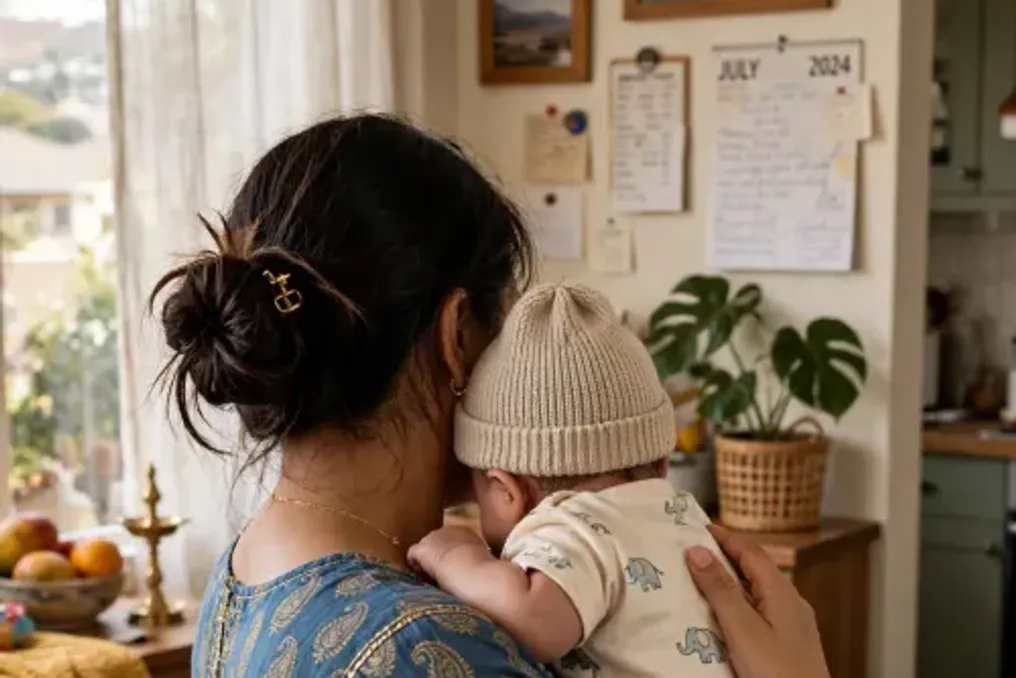
Businessman develops social network in Piauí to connect caretakers, lost animals, and adoptions
Read more
Grupo Globo
g1.globo.com

Businessman develops social network in Piauí to connect caretakers, lost animals, and adoptions

After experiencing the disappearance of a dog, businessman Wanderson Oliveira transformed his personal experience into a social initiative, creating a social network dedicated to connecting caretakers, lost animals, and adoption opportunities in the state of Piauí.

A native of José de Freitas, in the North-Central region of Piauí, Wanderson recalled that while he was still a Computer Science student in 2016, he witnessed a seemingly lost dog on an avenue in Teresina. He felt uncomfortable because he could not help at that moment. Later, upon seeing a reward announcement for that same dog, he began to conceive an application capable of alerting about stray or found animals near the incident location.

The realization of this idea only occurred in April 2026, with the support of his friends Samuel Pinheiro and Raphael Moraes.

How the platform works

According to Wanderson, the main objective of the platform is to consolidate all information related to animals in a single digital space, using geolocation tools to significantly increase the chances of reunion between pets and their owners.

He explained that currently, data about missing, found, or adoptable animals is usually scattered across various channels, such as WhatsApp groups, social media profiles, and posts that quickly lose visibility.

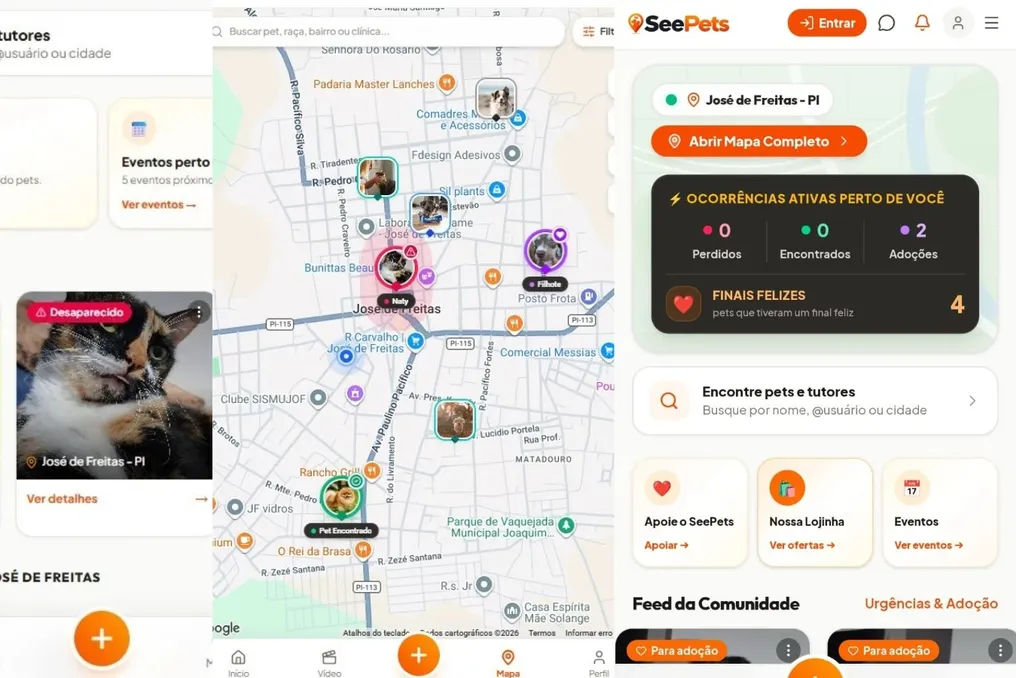
In the application, animal caretakers can register their own pets, create detailed profiles, publish media such as photos and videos, and interact with other users, following the model of a conventional social network.

Wanderson also pointed out that the tool allows viewing incidents on a map, automatic poster generation, and compilation of essential data to facilitate the search for animals.

The platform aims to foster community collaboration, promote conscious adoption, increase awareness about animal welfare, and encourage cooperation between caretakers and individuals willing to help.

The businessman informed that the use of the application is entirely free for caretakers. However, paid functionalities aimed at companies and professionals in the pet segment will be introduced in the future.

Feeling emotional, Wanderson expressed his satisfaction at seeing the project materialize after so much time, expressing hope that it fulfills its purpose of uniting people and animals, resulting in happy outcomes for the caretakers.

Similar stories

Woman forced to carry sick brother on back in Guna hospital (Madhya Pradesh) due to lack of stretchers
Read more
www.aajtak.in

Woman forced to carry sick brother on back in Guna hospital (Madhya Pradesh) due to lack of stretchers

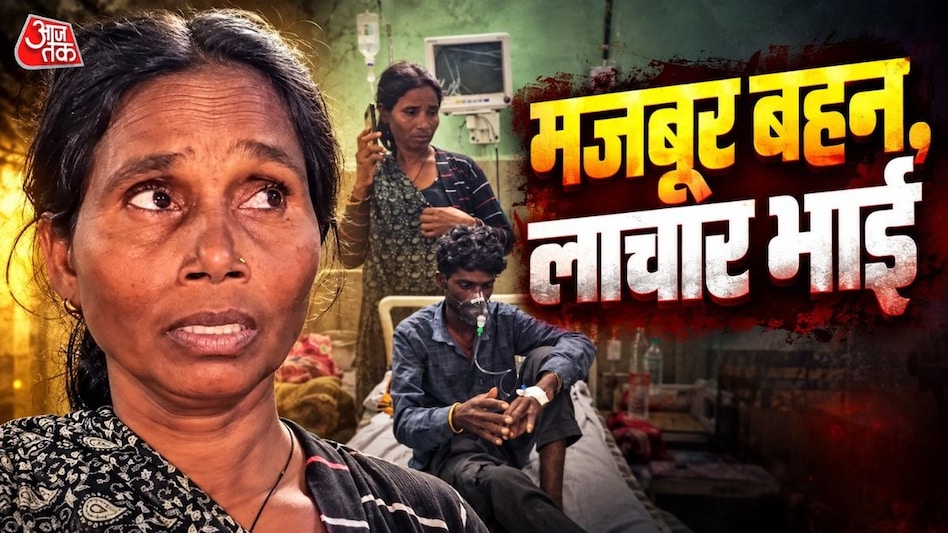
A video clip surfaced from the Guna district hospital in Madhya Pradesh showing a woman carrying a person—her brother—on her shoulders. The woman moves around the hospital premises, carrying him on her back, with visible signs of distress on her face.

Following the video's viral spread, serious questions arose regarding the organization of work at the hospital. This incident is particularly debated because it involves a hospital that holds ISO certification but displays such a scene where a woman is manually transporting her disabled brother.

The woman is named Krishnabai, and she resides in the village of Borheri in the Raghaugarh area. On Saturday, she brought her younger brother, Jagish, to the Guna District Hospital. Jagish has been ill for about a year and cannot walk normally due to his disability. Krishnabai stated that she traveled from Raghaugarh to Guna to seek treatment for her brother.

Upon arrival at the hospital, an attempt was made to admit her brother. However, according to Krishnabai, they did not provide a stretcher. Despite requests for assistance, no one came forward to help. Consequently, Krishnabai lifted her brother onto her back and began moving through the hospital. During this incident, someone recorded a video which was subsequently shared on social media, sparking a wave of questions about the operational system of the Guna District Hospital.

Questions were raised as to why the woman had to carry her brother herself when staff should have performed their duties, and why Krishnabai could not access a stretcher if one was available. The hospital management provided an explanation. Rajkumar Rishishwar, CMO of Guna, stated that the hospital has a sufficient number of stretchers, asserting that they are located both in the intensive care unit and near the old hospital building.

Furthermore, shifts have been assigned for patient ward assistance and multifunctional personnel to aid patients. The hospital administration also notes that sometimes accompanying patients rush and lift patients onto their shoulders themselves. They can notify the hospital staff if necessary. Thus, on one hand, there is the story of a woman claiming a lack of stretchers, and on the other, the hospital's statement regarding their adequate availability. Two deputy collectors have been appointed to improve the hospital's operations. Previously, complaints had been received at the hospital regarding staff shortages, safety issues, and cleanliness. Currently, the video remains viral, and the woman's complaint and questions about the hospital's sanitary conditions continue to be discussed. The question remains open: if stretchers were available, why did the distressed sister have to carry her sick brother on her shoulders?

Causes of parental burnout: why self-help is insufficient
Read more
iol.co.za

Causes of parental burnout: why self-help is insufficient

When exhaustion sets in, the standard advice often given is to practice self-care: take a bath, meditate, or go for a walk. However, for parents who feel overwhelmed, this may be a sign not just of tiredness, but of parental burnout.

In South Africa, parents face an unprecedented level of exhaustion due to a combination of economic hardship, work demands, safety issues, and the daily burden of family logistics. Nevertheless, psychologists from South Africa argue that self-help advice not only fails to help parents but actually exacerbates the problem.

Burnout differs from ordinary fatigue

Parental burnout fundamentally differs from fatigue after a stressful weekend or a sleepless night with a small child. Counseling psychologist Muhammad Kuwadi notes that research conceptualizes parental burnout as something more than mere tiredness. It includes deep exhaustion, emotional distance from children, and a sense of reduced effectiveness in the parental role. Burnout becomes more likely when the demands placed on parents chronically exceed their available resources.

Unlike ordinary fatigue, which can be restored by sleep, during burnout, the nervous system has functioned in survival mode for a long time, and rest no longer brings renewal. Clinical psychologist Dr. Malebo Mashaba explains that parental burnout is linked to prolonged physical and emotional exhaustion caused by constant parenting duties and insufficient opportunities for recovery. When a parent is constantly under stress without adequate support or rest, it negatively affects their emotional well-being, relationships, and ability to function effectively.

The myth of intensive parenting and mental load

A significant part of parents' problems stems from the exponential expansion of the definition of a 'good parent.' Modern parents have access to an endless amount of advice, information on developmental stages, expert podcasts, and messenger groups. However, the increase in the volume of information has led to a rise in perceived responsibility. Thus, the era of 'intensive parenting' has emerged—a model where parents feel personally responsible for optimizing every aspect of their child's academic, emotional, and social development.

Kuwadi emphasizes that today's parents face extremely high expectations, which are amplified by social media. They are constantly shown images of the perfect parent: the flawless lunchbox, enriching activities, emotionally stable children, and endlessly patient parents. Even knowing that these images are edited, they become the standards by which parents judge themselves.

When an overloaded parent receives advice to take care of themselves, it often feels like adding yet another task to an already impossible to-do list. Kuwadi argues that the conversation about self-help needs to go further. Advising an overwhelmed parent to take a bath or meditate ignores the core issue if childcare is unavailable, money is limited, working hours are long, and the mental load never ceases. Self-help cannot compensate for a lack of social support.

Dr. Mashaba agrees that framing self-help as the primary solution places the blame on the individual. If a parent is overwhelmed by an unsustainable level of responsibility, the advice to find more time for self-care can unintentionally add another obligation to an already exhausted person. This situation is worsened by 'mental load'—the invisible work of constant forecasting, planning, remembering, and coordinating household tasks. Dr. Mashaba notes that the mental load is particularly important because much of it remains unnoticed. Even during physical rest, a parent's mind can be occupied with thoughts about what needs to be done next.

In South Africa, this 'mental tax' has an economic dimension. The need to pay school fees, transport, ensure safety, support extended family, and cope with demanding working hours leaves virtually no psychological space for true recovery. No amount of self-help can replace real parental support.

What constitutes real support

If self-help is not the cure, then what is? Both experts agree that solving parental burnout requires abandoning the idea that parents should simply 'cope better' and moving towards actively lifting the burden from them.

What meaningful support looks like

Meaningful support involves sharing the mental load, not just routine chores. In a relationship, true co-parenting means both partners participate in planning and remembering, rather than one person acting as a manager while the other 'helps' upon request. Real support includes a partner taking on half the responsibilities, family members assisting with regular school drop-offs, accessible childcare, and employers who understand that flexibility requires a reasonable workload. It is also important to abandon perfectionism, as burnout is fueled by the myth of the infinitely patient and perfect parent. Acknowledging one's limits is not a failure, but a healthy psychological boundary.

Dr. Mashaba stresses that the question should not only be 'How can this parent cope better?' but also 'What contributes to this parent's psychological load, and what support can reduce it?' Children do not need superhuman, endlessly patient parents in a state of quiet exhaustion. They need supported parents who are given the opportunity to be human, relying on community support.
Forshoort District Development Plan in Cape Town Provides for Affordable Housing, But Does Not Set a Target Number of Units
Read more
iol.co.za

Forshoort District Development Plan in Cape Town Provides for Affordable Housing, But Does Not Set a Target Number of Units

Cape Town Mayor Geordin Hill-Lewis presented the City's vision for the Foreshore district, which includes a proposal to complete unfinished bridges on the Foreshore freeway.

The Cape Town City's plan to develop 15 hectares of valuable land in Foreshore has faced criticism over the promise of affordable housing, as no specific figure has been provided regarding the number of affordable homes that will be part of the new urban area.

The development, presented by Mayor Geordin Hill-Lewis on October 2, includes the creation of a new central urban district alongside significant changes to the freeway network. Although affordable housing is part of the proposal, the City has not provided data on the number of units or specified what type of affordable housing is being considered.

Opposition mayoral candidate Brett Herron challenged the City's commitments regarding housing, as well as the overall cost of the project. Herron demanded that Mayor Geordin Hill-Lewis provide information on expenditures, funding sources, implementation timelines, Transnet approval for the release of port land, and the number of affordable homes.

Plans May Extend Until 2040

The first phase of the project involves expanding the inbound freeway and constructing a connecting bridge across Buitenghacht Street to directly link the freeway with Helen Suzman Boulevard. The City claims this will free up three plots of land for housing development.

The second phase includes creating an outbound tunnel and demolishing the existing elevated outbound freeway, which will allow more land to be freed up for development and public spaces. The City is still negotiating with Transnet regarding the Port Authority land parcels needed for the tunnel construction.

According to City statements, the second phase of construction could continue until approximately 2040. Hill-Lewis emphasized that the project is in its early stages and still requires public participation, detailed engineering design, financing decisions, and procurement.

Questions Regarding Housing Numbers

Herron noted that the lack of detail on the affordable housing component is particularly important given the history of Foreshore's development. Previously, the City also included affordable housing and private development in plans to address unfinished freeway issues. However, this process was cancelled in 2018 following appeals and legal consultations concerning the procurement process.

Herron believes that the previous model used private development to co-finance infrastructure. He stated that the current administration 'copied and pasted ideas but removed the part that made them affordable: private funding.' He characterized the new proposal as 'empty electoral posturing' if the City does not provide more information on costs, funding, housing, and Transnet land.

Popular