Cape Verdean families dream of decent housing amid housing crisis
Read more
Noticias ao Minuto
noticiasaominuto.com

Cape Verdean families dream of decent housing amid housing crisis

On World Habitat Day, established by the United Nations on October 5 to promote the fundamental right to adequate housing and proper shelter, residents of Cape Verde share their stories about striving to improve their living conditions.

Maria, who has lived in the Achada Mato area for over ten years, told Lusa that although she is originally from the center of Santiago island, her husband purchased a cheaper plot of land where they built a house to avoid paying rent. Official data indicates that this situation affects thousands of families in Cape Verde.

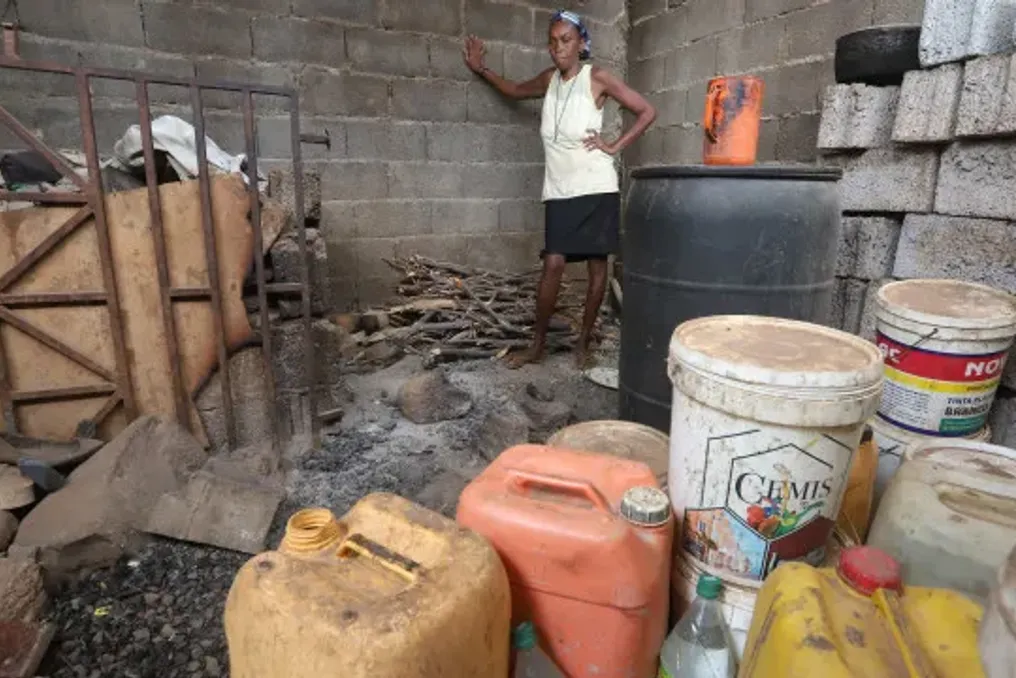
Externally, their dwelling is a structure on dirt ground, where the toilet was erected with the support of an organization unknown to her, and the kitchen is an improvised construction made of blocks and sheet metal. Additionally, the family keeps pigs for sale or feeding.

Maria's husband works in construction, but his earnings are often insufficient to complete all repairs. Maria does not have a permanent job and engages in domestic work. She expresses a desire to have a larger house with better conditions so that her daughter can live there after returning from abroad.

Nearby, Dulselina Tavares, 37, with three children, has lived for seven years in a house where metal rods protruding from the concrete are visible, indicating unfinished construction. She explains that she moved there not because she liked the place, but because the land was cheaper, which allowed her to build her home faster. She laments the high cost of materials and lack of money, as well as the absence of transport, water, and sanitation.

In the Simau Ribeira district, Guineaka Quinta de Oliveira, who has lived in Cape Verde for nine years, exchanged her Achadinha for a cheaper plot where she lives with her husband and three children. Their family resides in an unfinished structure covered with sheet metal, without a kitchen or toilet. Cooking takes place in the corridor, and bodily needs are met in basins. She notes the lack of centralized water supply, forcing her to buy water from tankers, and conserves water, using less than two liters to wash her child's clothes in a basin.

In the Jamaica district, vendor Maria Semedo, 45, spends her days preparing sweets in a tiny kitchen covered with sheet metal to feed three children and a niece. She starts cooking at six in the morning every day and sometimes sells food before having breakfast.

Since living in this area since 2012, Maria has recently managed to build a toilet after many years of using containers inside the house.

According to the National Statistics Institute (INE), nearly 23,000 families in Cape Verde (one of the seven islands) live in housing without a toilet, and 85,500 people (more than half the archipelago's families) do not have a shower.

Approximately 80% of housing stock was built by the residents themselves (self-construction), leading to significant variation in the quality of materials and construction techniques.

The Minister of Infrastructure, Housing and Territorial Planning, Carlos Tavares, told Lusa that the government is restructuring the 'Home for All' program, valued at approximately 18 million euros, to address the country's housing deficit. The executive branch took office in June following the victory of the African Party for the Independence of Cape Verde (PAICV) in the May elections.

He stated that plans include building about five thousand homes by 2031. He explained that the first pillar of the program will be the special relocation 'Barraca Zero,' intended primarily for people living in barracks, by moving them into decent quality housing. The program also includes affordable housing for youth and the reconstruction of existing homes.

The Minister emphasized that in many places in Cape Verde, roof repairs, toilet construction, and improvement of sanitary conditions are required. According to the minister, in nine out of ten meetings with municipal mayors, housing issues are one of the main topics, which, in his opinion, demonstrates the 'scale of the housing problem.'

Similar stories

Woman buys iPhone on Amazon and receives cookie instead of the device on the coast of São Paulo
Read more
g1.globo.com

Woman buys iPhone on Amazon and receives cookie instead of the device on the coast of São Paulo

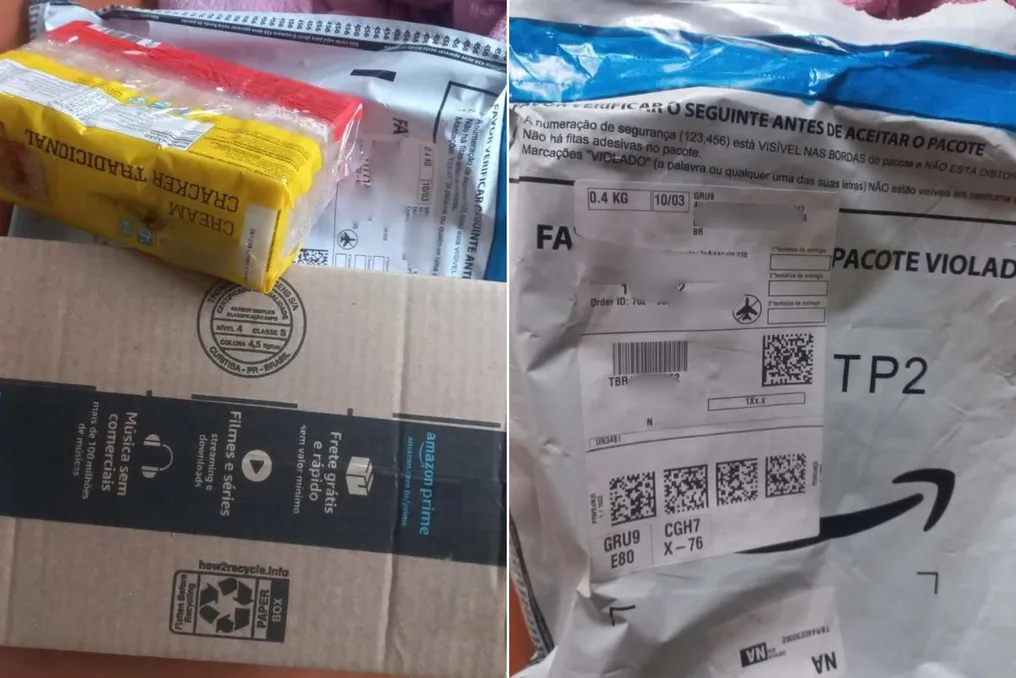
A 43-year-old social worker purchased an iPhone 17, but instead of the phone, she received a package of cream cracker cookies. The resident of Peruíbe, located on the coast of São Paulo, reported the incident to Amazon, which was responsible for the sale and delivery, without success in resolving the problem.

The client, who chose not to be identified, expressed great anguish over the incident, stating: 'I didn't sleep that night, distressed by everything that happened.' The device, a 256 GB model, was bought for R$ 6,332, installmented in 12 times on a credit card through the Amazon app, last Thursday (day 1).

The next day, around 3 PM, in the Residencial Parque Daville neighborhood, she received the sealed and undamaged package. However, upon opening the package, she discovered that she had received cookies instead of the phone.

The social worker followed the recommended procedures to verify the integrity of the packaging and identification codes. Due to concerns about similar situations, she filmed the entire process of receiving and opening the order.

When seeking clarification from g1, which contacted Amazon, there was no response until the last update of the story.

Contact with the company

After noticing the error, the client contacted Amazon through the app and described the situation. According to her, the company claimed that internal records confirmed the correct completion of the delivery and, therefore, refused to issue a refund.

She mentioned sending the video of the package opening immediately but felt she was not believed, even having the impression of being targeted by a scam or treated like a criminal. The client stated that she opted to pay a higher amount for the iPhone due to the fear of facing problems with other purchases.

Later, after new attempts to contact them, Amazon began treating the case as a return request. However, the client contested this procedure, since she never received the product, making it impossible to return the item.

To date, the social worker has not obtained a final solution and has no forecast for receiving the refund or the device.

Given the lack of resolution, she sought other means of service, registering complaints with consumer defense agencies and on Reclame Aqui, in addition to filing a police report with the Electronic Police Station.

Procon-SP

Procon-SP issued a note stating that it understands that when a consumer buys an item directly from a store on a marketplace, both the store and the marketplace itself have the obligation to ensure the fulfillment of the offer.

The agency declared that the consumer must contact both suppliers to obtain a product equivalent to the one offered or choose to cancel the purchase with a full refund, according to their will. It was added that if the problem persists, the consumer can file a complaint on the Procon website of their municipality or state.

What to do in these cases?

In May, in a similar case where a young woman received condensed milk instead of an iPhone, lawyers Thyago Garcia and Matheus Tamada advised g1 on the necessary actions to protect consumer rights in these circumstances.

Garcia advises that online purchases should be made on established and reliable platforms, also warning against direct payments to the seller outside the platform environment. Tamada recommends that, upon receiving a product different from what was purchased, the consumer preserves all evidence, including photos, videos, invoice, and tracking data, and registers the complaint on the intermediary platform.

Garcia detailed that situations where a low-value item replaces a higher-cost item can, in certain instances, constitute what is called 'moral damage in re ipsa,' meaning the moral damage is presumed by the fact itself. He added that in these scenarios, jurisprudence accepts compensation without the need for specific proof of moral prejudice, given the evident frustration, psychological distress, and feeling of humiliation experienced by the consumer.

Trans woman suffers online attacks after seeking employment; she reports being ridiculed
Read more
g1.globo.com

Trans woman suffers online attacks after seeking employment; she reports being ridiculed

Maria Silvino Alves dos Santos Borges, known as Maria Sil, became the target of a series of transphobic attacks on social media after posting a video asking for job opportunities. She expressed her sadness about the violence seen on the internet, stating: «They ridicule me, mock my pain and my body, it is very violent».

Some users reacted negatively, with comments such as: «Nobody told you to become trans» or «Who will want to hire a ticking time bomb?». Another comment suggested that «No one will hire a man with mental problems who dresses as a woman». Maria Sil shared with g1 that she recorded the video as part of her effort for trans employability, and although she received positive support, she still feels great pain from every hateful message, describing the situation as a mix of «two worlds there» where violence often outweighs kindness.

Trans Employability

With technical training in Dramatic Arts, Maria Sil has previously worked as an actress, singer, and cultural producer, being responsible for several projects in the Baixada Santista region. In 2024, she released an album with original compositions. However, the chances of finding work have been progressively decreasing. The previous year, she moved to the city of São Paulo and began to get frustrated with the scarcity of vacancies.

In two years, despite sending over 500 resumes, Maria Sil was invited to only three interviews. Even in the rare opportunities obtained, she faced negative experiences, reporting that «In one of the last companies I worked for, my team constantly misgendered me,» and emphasizing the need for companies to implement retention policies.

Due to financial instability, she had to suspend her studies in Cultural Production, which further limits her options, given that many positions require higher education. She mentioned that it would be great to get a scholarship to resume her studies, as her degree is stalled, even with low tuition fees. According to data from the Institute of Applied Economic Research (Ipea), only 25% of the trans population has formal employment, a fact that, for Maria Sil, reinforces the urgency of the debate on the topic. The artist argued that «it is not about Maria. There is a larger structure that strengthens unemployment».

Diversity

Rafael Guilherme de Almeida, president of the Diversity Commission of the Brazilian Bar Association (OAB) of Santos, clarified that the offenses directed at Maria Sil constitute crimes, even when they occur in the virtual environment. He stressed that the fact that the offense is on the internet does not exempt it from punishment, stating that while there is still a distance from the ideal, it is easier today to identify online crimes.

Almeida informed that the perpetrators can be located, even using fake profiles, through a judicial request to the platforms. He explained that since 2019, the Federal Supreme Court (STF) considers homophobia and transphobia to be covered by the Racism Law (Law 7.716/89), awaiting specific legislation from Congress. The lawyer added that such crimes are non-bailable and imprescriptible, and the victim has the right to seek compensation for moral damages in the civil sphere.

Additionally, he warned that refusing to hire someone because they are trans also constitutes discrimination. If there is evidence that the refusal occurred for this reason (such as messages or comments during interviews, or the immediate reopening of the vacancy), it is possible to seek accountability from the company.

French label 'Gaza Friendly' encourages consumers to support Palestine through product choices
Read more
www.middleeasteye.net

French label 'Gaza Friendly' encourages consumers to support Palestine through product choices

Among the many applications in the Play Store is the 'Gaza Friendly' app, which features a heart icon with the Palestinian flag. This label was created in June 2025 and serves as a certificate for shop owners participating in boycotts of products manufactured in occupied Palestinian territories, as well as goods promoted by companies supporting the expansion of Israeli settlements.

Currently, the app and its associated website list 80 businesses in France, primarily butchers, restaurants, bakeries, catering services, tea rooms, and food distributors. The list is regularly updated, and the app includes an interactive map allowing consumers to find certified stores near their location.

The app, which has been downloaded over 500 times, was developed by Pierre-Amel Nuaili Charni, a pediatrician of Tunisian origin from Lyon, located in east-central France, together with a small group of friends. Nuaili Charni explains that shop owners joining 'Gaza Friendly' can demonstrate their commitment to the Palestinian cause in a concrete way.

He stated that this label gives people outraged by the genocide in Gaza the opportunity to turn their purchases into a lever for justice and solidarity. The label draws inspiration from the Boycott, Divestment, Sanctions (BDS) movement, an international campaign launched in 2005 by Palestinian civil society, which calls on consumers and institutions to refuse to purchase Israeli goods or products originating from Israeli settlements, which is illegal under international law.

According to the 'Gaza Friendly' statement on its homepage, the boycott is effective because refusing certain products deprives oppressors of resources, and the label's ambition is to create a strong network of certified vendors to raise awareness about the boycott campaign.

My business is doing better

To receive certification, shop owners must adhere to a three-point charter: a ban on Coca-Cola beverages, a ban on PepsiCo beverages, and a ban on fresh produce imported from Israeli settlements. For Nuaili Charni, the boycott of Coca-Cola and PepsiCo is a peaceful tool with strong symbolic meaning, given their documented involvement in the illegal occupation of Palestinian territories.

In 2025, BDS discovered that Coca-Cola manages a regional distribution center and cold storage facility in the Atarat settlement in the West Bank, while PepsiCo faces investment targets and subsidiaries linked to Israel. Akli, the owner of a 'Gaza Friendly' certified store, noted that he liked the idea, especially because some customers had already accused him of selling Coca-Cola.

Although PepsiCo claims not to support Israel politically or militarily, activists argue that owning Israeli brands like SodaStream and Sabra, as well as its operations in the country, constitutes indirect support for the State of Israel. Coca-Cola, for its part, insists it does not support any country, government, or policy, but did not respond to allegations regarding the Atarat facility. Both companies declined to comment on the MEE inquiry.

Nuaili Charni added that even before 'Gaza Friendly' existed, some shop owners had already started stopping the sale of Coca-Cola and Pepsi products, so they decided to draw attention to these examples to encourage others to join.

Aid Boucherie Halal in Créteil, near Paris, is one of the latest certified businesses. Its name appeared on the 'Gaza Friendly' list on September 4th. Akli, the owner, told MEE that he learned about the label from an acquaintance. He told MEE that he liked the idea, especially since some customers had already accused him of selling Coca-Cola. Akli has always supported Palestinians but didn't know how to express this support. He noted that despite not selling Coca-Cola or Pepsi, his business is doing just as well, if not better, noting a slight increase in customers.

Solidarity brands

In addition to compiling a list of shop owners, 'Gaza Friendly' provides them with visual materials such as posters and stickers to increase visibility. Furthermore, the label offers an endless list of alternative products, especially beverages that can replace the brands that are subject to boycotts. Some of these drinks are produced by companies committed to Palestine.

One such example is Pales Drinks, a Belgian sparkling beverage brand created in 2024 by young entrepreneur Abdelhakim Tarnach, who directs 10 percent of his profits to humanitarian needs in Palestine. In the same year, Palestine Cola, a non-alcoholic drink promoted by Safad Food AB, founded by Palestinian entrepreneurs in Malmö, Sweden, was launched. A portion of the profits from selling cans decorated with olive trees and wrapped in keffiyeh goes towards financing emergency aid projects in Palestine, such as clothing, tents, and food assistance.

In France, Palestine Cola is mainly distributed through Jebalia, an online retailer that promotes alternative, ethical, and solidarity-based consumption methods. On its Instagram page, every purchase is presented as an act of support for humanitarian initiatives. Since July, Jebalia has been included in the list of 'Gaza Friendly' certified businesses. Its owner, Sofian Slimani, is proud of his commitment to Palestine. He told MEE that a point has been reached where boycotting products linked to the activities of Israeli settlements is no longer sufficient, and alternatives must be offered.

Jebalia states that it sold 100,000 cans of soda in 2025. Besides social media, the company uses other communication channels for promotion. Jebalia was present at the last meeting of French Muslims in Le Bourge last April and regularly collaborates with active businesses, offering its drinks at solidarity events, such as the Salam Cup charity football tournament held several months ago in Bobigny, near Paris. During this event in support of Palestine, Jebalia's products were sold at Inda Coffee, a French coffee shop and matcha bar supporting aid initiatives for Gaza.

Although Inda Coffee participates in the boycott campaign, it is not yet 'Gaza Friendly' certified. According to Nuaili Charni, many shop owners are still unaware of the existence of this label, so he insists on the need for greater advertising. The pediatrician reported that they are trying to reach influencers working in the food sector. In Lyon, content creator AmarFood, specializing in gastronomy and halal, non-alcoholic restaurants in Lyon and the Paris region, often promotes 'Gaza Friendly' in his videos. Recently, another videographer shared a story detailing the concept.

Beyond France, 'Gaza Friendly' aims for international expansion. Currently, members of the label come from about 15 countries, and it has no global counterparts.

} , 3.

Popular