PanIIT and Andhra Pradesh government plan to create a deep technology fund worth 500 crore rupees
Read more
YourStory [india, en]
yourstory.com

PanIIT and Andhra Pradesh government plan to create a deep technology fund worth 500 crore rupees

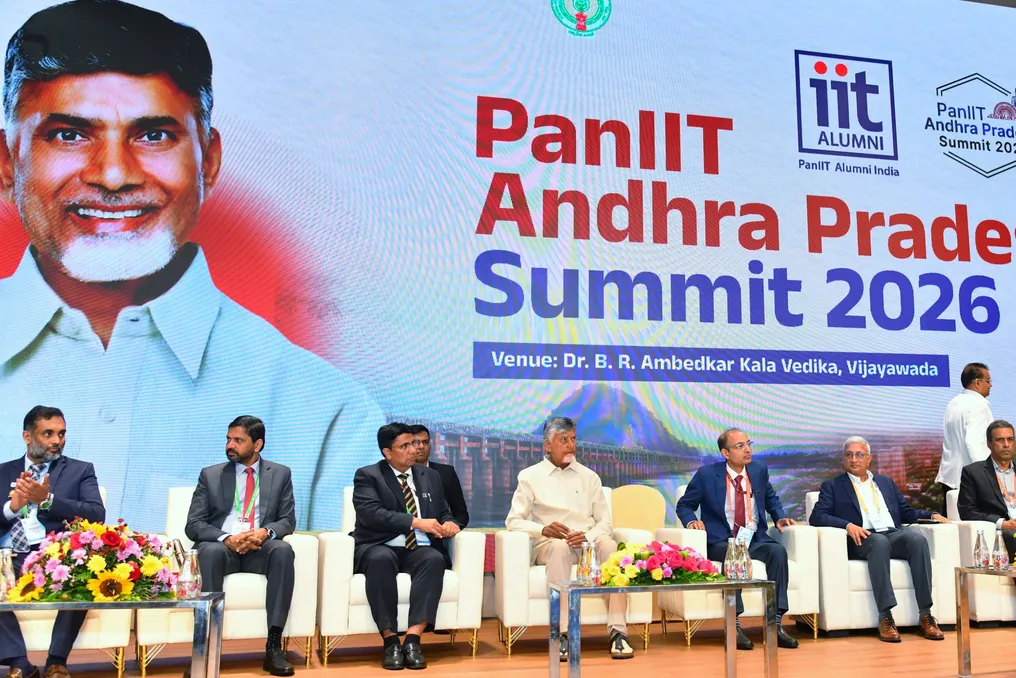
Alumni of PanIIT India, in collaboration with the Government of Andhra Pradesh, intend to establish a venture fund focused on deep technology companies with a capital of 500 crore rupees. This initiative is part of broader efforts to attract capital, research activities, and manufacturing capacity to the state.

The proposed PanIIT Amaravati Venture Fund will attract funds from IIT alumni, industry representatives, and institutional investors. According to plans presented at the PanIIT Summit in Andhra Pradesh in Vijayawada on Saturday, the first round of fund closure is expected by July 1, 2027.

The primary goal of the fund is to support at least 25 deep technology startups in Andhra Pradesh by 2030. Although the exact structure of the fund, including the financial commitments of PanIIT, the Andhra Pradesh government, and private investors, was not immediately clear, it was noted that at least 50% of the companies the fund invests in must have their primary R&D or manufacturing facilities in Andhra Pradesh.

This localization requirement is intended to ensure that the fund does more than just invest in companies headquartered elsewhere, linking a significant portion of its portfolio to research or production activities within the state.

Addressing the group of venture capital investors at the summit, Chief Minister of Andhra Pradesh N Chandrababu Naidu made a direct appeal to investors to bring both capital and expertise. Naidu stated: 'You bring the money, you bring the mentors. I will ensure alignment with your contribution.'

The precise mechanism by which the state will match private contributions was not immediately clarified, nor whether this commitment would go directly into the PanIIT Amaravati Venture Fund.

The proposed fund aims to address two challenges frequently faced by deep technology startups: access to long-term capital and access to experienced operators and industry networks. Deep tech companies typically require longer product development cycles and larger capital expenditures compared to software-focused startups, especially in areas such as semiconductors, quantum technologies, aerospace, defense, healthcare, and advanced manufacturing.

This venture fund fits into the broader concept outlined in the Andhra PanIIT Declaration, which seeks to establish long-term institutional links between the IIT ecosystem, industry, and the Andhra Pradesh government. Proposed measures include the creation of a permanent PanIIT Amaravati Council, which should serve as a coordinating platform for deep technology, research, and innovation initiatives in the state.

The framework also includes a technology transfer pipeline to identify research from IITs that can be commercialized in Andhra Pradesh, as well as a global network of 100 IIT mentors from 10 industry departments in the state's universities and institutions.

IIT Mentor Network

The Amaravati Council is conceived as a means to connect IIT alumni, startups, universities, industry, and policymakers, providing a more permanent structure for initiatives arising from the summit. The broader concept is also aimed at deepening collaboration between academia and industry, supporting startup creation, and streamlining the transition of research developed in the IIT ecosystem to commercial implementation.

Furthermore, it sets a goal to incubate at least 50 startups in Andhra Pradesh by 2030. PanIIT plans to create a mentor network parallel to the fund. The proposed Global IIT Mentor Network of 100 individuals should connect founders with IIT alumni who can provide guidance on product development, market entry strategy, scaling, and execution.

According to the plans presented at the summit, an initial cohort of 25 deep technology startups should be matched with mentors. The mentor network is intended to complement the proposed venture fund by providing operational experience and industry connections alongside capital.

Amaravati Declaration

Collectively, the fund, the mentor network, and the Amaravati Declaration represent an attempt to link venture capital with IIT research and alumni expertise, using Andhra Pradesh as a base for creating startups, R&D, and manufacturing.


Similar stories

Industrialist Sudhir Mehta states that TDB supported 22 projects under the RDI Fund worth up to 1 lakh crore
Read more
yourstory.com

Industrialist Sudhir Mehta states that TDB supported 22 projects under the RDI Fund worth up to 1 lakh crore

Sudhir Mehta, founder and chairman of Pinnacle Industries, announced on social media platform X on Tuesday that after months of analyzing proposals from Indian founders, he has become 'more optimistic about India's future than at any other time.'

As a member of the Technology Development Board (TDB) under the Research, Development, and Innovation (RDI) Fund worth 1 lakh crore, Mehta noted that the first batch includes 22 projects requiring ₹4,744 crore for R&D and ₹2,192 crore in funding from the RDI Fund.

The RDI scheme was approved by the Union Cabinet in July 2025 and launched in November. Its goal is to stimulate private sector participation in research and development and support the creation and commercialization of indigenous technologies. The program is designed for six years and focuses on research-based innovations and deep technologies, especially in strategic sectors.

The operationalization of the scheme is carried out through a Special Purpose Fund under the National Research Foundation (ANRF), into which funds are channeled via Second Level Fund Managers (SLFM). TDB and the Biotechnology Industry Research Assistance Council (BIRAC) are appointed as SLFMs, while the Department of Science and Technology (DST) acts as the coordinating ministry for this scheme.

Mehta specified that 14 of the 22 projects in the first cohort are startups, and 13 belong to deep technology areas, including reusable rocket engines, Earth observation satellites, quantum-safe communication, design of Indian chips, drones, robotics, and next-generation batteries.

It was noted that the selected projects are distributed across cities such as Bengaluru, Chennai, Hyderabad, Mumbai, Thane, Noida, and Pune.

Mehta emphasized that India's problem has never been ideas, but 'patient capital.' He added that the RDI Fund provides financing at an interest rate of 3–4% for up to 15 years, without requiring collateral or personal guarantees.

He also mentioned that the country currently spends 0.64% of its GDP on R&D, with the private industry covering only about 36% of this amount. The RDI Fund is changing this situation: 3–4% annually, up to 15 years, no collateral, and no personal guarantees. Evaluation takes 8 weeks, and fund disbursement takes 12. Furthermore, every rupee comes with two conditions: intellectual property remains in India, and control is maintained by Indian citizens.

Concluding his comments, Mehta stated that after meeting with these founders, he is confident: 'India's best deep technology companies are being built right now. The capital is ready. The founders are ready. This decade belongs to Indian deep technologies.'

IIT Madras plans to create 1000 startups by 2032 and aims for monthly IPOs
Read more
yourstory.com

IIT Madras plans to create 1000 startups by 2032 and aims for monthly IPOs

The Director of IIT Madras, Professor V Kamakoti, stated that the institute has set a goal of having around 1000 startups by 2032, while also striving for at least one of them to undergo an Initial Public Offering (IPO) every month.

Speaking at the IIT Madras Alumni Association meeting named Sangam 2026 in Bengaluru on Saturday, Professor Kamakoti reported that the institute is already mentoring 583 startups with a total valuation of 83,000 crore rupees. He specified that IIT Madras incubates approximately 100 startups annually, 75% of which are founded by individuals who are not employees of the institute.

The institute has supported several companies, including electric two-wheeler manufacturer Ather Energy, Agnikul Cosmos, Uniphore, and Stellapps. The theme of the current alumni meeting was 'Atmanirbhar Bharat: Creating a Self-Reliant India.'

Professor Kamakoti emphasized the necessity of developing sovereign technologies in the country and noted that IIT Madras has secured 472 patents, which demonstrates its research capabilities.

At the event, Zoho co-founder Sridhar Vembu highlighted the importance of India's technological independence. He added that the current global political and economic climate increases the urgency of achieving this goal. Vembu mentioned ongoing discussions regarding the Merchant Discount Rate (MDR) for UPI transactions but noted that similar discussions are not taking place regarding the fees small businesses pay for using platforms like WhatsApp. He also warned that technologies imported from abroad carry the risk of disconnection.

According to Vembu, the main problem facing modern nations is the concentration of technological power in the hands of a few corporations. He believes that if these monopolies are not broken, the benefits of technology are unlikely to reach wider segments of the population.

Addressing the attendees, Union Minister of Education Pranal Joshi stated that such meetings serve as a reminder of the need to create indigenous technologies, strengthen manufacturing, and nurture entrepreneurs capable of bringing Indian innovations to the global stage. He noted that IIT Madras has set a new benchmark in research innovation and demonstrated the possibility of successfully creating deep technologies in India. According to him, the country is increasingly transforming from a consumer of technology to its creator and exporter.

Popular