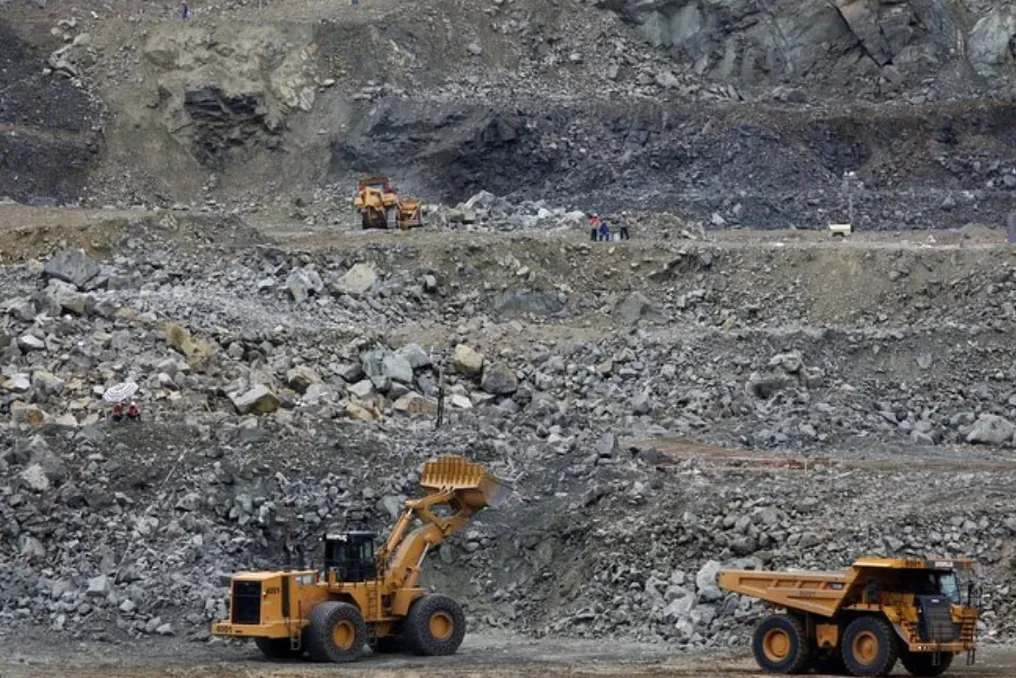
The Amazon holds an opportunity residing beneath its soil, but this should not be limited to the mere export of minerals. The current global dispute over rare earths finds two conditions in the state that previously operated almost in isolation: the existence of mineral occurrences inland and the presence of an established industrial base in Manaus.
The central question is whether it is feasible to connect the mineral potential of the Amazon to the production chains of the Manaus Industrial Hub (PIM). Although the answer is not a simple yes, there is geological knowledge, international interest, and new financing mechanisms available. However, more in-depth studies, economically sustainable projects, processing technology, adequate infrastructure, and regulatory and environmental security are still needed.
Rare earths refer to a group of 17 chemical elements essential in various products, such as high-performance magnets, electric motors, cell phones, computers, medical equipment, wind turbines, and defense technologies. Despite the name, these elements are not inherently scarce; the difficulty lies in the fact that they are often mixed with other minerals, in concentrations that complicate the phases of separation, purification, and industrial use.
Brazil Possesses the Second Largest Reserve
According to the Ministry of Mines and Energy, the country holds the second-largest global reserve of rare earths, estimated at 21 million tons, representing approximately 23% of the global total. This data aligns with the Mineral Commodity Summaries 2026, published by the United States Geological Survey, which places Brazil only behind China.
However, the geological magnitude contrasts with the low national participation in both production and the most advanced stages of the production chain. Having the resource underground does not guarantee mastery of the technology required to transform it into oxides, alloys, magnets, components, or final industrial products. This gap between the mine and the factory constitutes the biggest challenge and the main opportunity for the Amazon.
Financial resources are changing the landscape, but they do not guarantee direct funds to the state. The fifth auction of Eco Invest Brazil allocates up to R$ 2.5 billion from the National Treasury for instruments focused on six innovation chains, including the beneficiation of critical minerals, battery and energy storage systems, and the circularity of mineral and industrial waste.
This round provides innovation funds, a corporate credit line, and non-reimbursable resources for applied research and technological entrepreneurship. The model aims to attract private capital and support projects at different stages, from initial research to more commercially mature initiatives. It is important to note that there is no specific quota for the Amazon; the resources will be allocated to projects chosen by financial institutions and funds, following technical, economic, and socio-environmental criteria.
Additionally, Law No. 15.506/2026 was sanctioned in September, establishing the National Policy on Critical and Strategic Minerals. This legislation aims to increase value addition in the country by encouraging mineral research, mining, beneficiation, transformation, industrialization, and urban mining. The law allows companies to convert up to 20% of costs related to mineral beneficiation, transformation, and urban mining into tax credits, with an annual limit of R$ 1 billion between 2030 and 2034, subject to prior approval.
The legislation also authorizes the Union to contribute up to R$ 2 billion from the Mineral Activity Guarantee Fund, depending on future acts and budgetary availability. These instruments are distinct from Eco Invest Brazil, and their values should not be added directly. Together, they signal a shift in focus: mineral policy now encompasses not only extraction but also research, processing, innovation, and industrial production.
In September, the National Bank for Economic and Social Development (BNDES) approved financing of R$ 77.5 million for Viridis Mineração to implement a rare earth research and processing center in Poços de Caldas, Minas Gerais. This project includes a pilot plant to produce mixed carbonate and develop processing methods. The case of Minas Gerais serves as a lesson for the Amazon: funding will favor projects with structured research, a responsible company, technology, planning, and viability prospects. Simply pointing out the existence of minerals underground will not be enough to attract investments.
Potential Is Not Ready Reserve
The Amazon has significant occurrences of critical minerals and rare earths. However, there is no comparable official survey that allows the state to be safely classified as first or second in national potential. It is crucial to treat this information with caution, as occurrence, resource, and reserve are not synonymous terms.
An occurrence only indicates the presence of a mineral. A resource is defined by studies that estimate its quantity and characteristics. To be classified as a reserve, it is imperative to prove that its exploitation is technically and economically viable, considering environmental and legal conditions.
Among the best-known regions in the state is Pitinga, in Presidente Figueiredo. This mineral complex is primarily linked to tin production from cassiterite, and it also presents niobium, tantalum, and rare earth mineralization. Cassiterite, tin, niobium, and tantalum are not rare earths, but they are part of the broader discussion on strategic minerals due to their technological and industrial applications. Yttrium, detected in studies in the region, belongs to the group of 17 rare earth elements.
The relevance of Pitinga demonstrates that the debate in the Amazon already has a consolidated geological basis. In addition to cassiterite, technical studies point to minerals associated with niobium, tantalum, and rare earths. However, the utilization of these materials will depend on new investigations, technological tests, and proof of economic and environmental viability.
Another important geological point is Morro dos Seis Lagos, in São Gabriel da Cachoeira, studied by the Brazilian Geological Survey for its concentrations of niobium and rare earths. However, Seis Lagos should not be seen as an immediately exploitable deposit, as the formation is located in protected areas, such as the Morro dos Seis Lagos Biological Reserve, the Pico da Neblina National Park, and the Balaio Indigenous Land. Territorial and environmental restrictions make it impossible to turn its geological potential into an immediate promise of mining.
This caution is necessary to avoid the perception that the Amazon possesses a fortune ready to be extracted. The state accumulates relevant occurrences and geological knowledge, but converting this potential requires new studies, economic viability, licensing, and respect for impacted populations and territories.
The Value Lies Beyond the Mine
China concentrates most of the world's capacity to separate, process rare earths, and transform them into industrial inputs. This is where the value multiplies. There is a chain that goes from the extracted ore to the electric motor, passing through element separation, purification, oxide production, alloy manufacturing, permanent magnets, and industrial components.
Brazil still needs to develop and expand these stages. For the Amazon, this conclusion changes the focus of the analysis: the goal should not just be to debate opening new mines, but rather to identify which segments of this chain could be developed in the state with economic viability, technological mastery, and environmental safety.
This entire process demands time. Mining projects and processing units can take years of research, licensing, technological testing, implementation, and supplier development before reaching commercial scale.
The Possible Connection with the PIM
The Amazon's differential may lie outside the extraction area. The PIM brings together manufacturers of motorcycles, televisions, air conditioners, computers, electronic components, and other items integrated into global chains. Various components used by these industries may contain rare earths, notably the permanent magnets present in motors, sensors, and speakers.
This link transcends rare earths. Tin from cassiterite is widely used in electronic industry solder, tantalum is applied in capacitors of electronic equipment, and niobium is mainly used in special steels and high-strength alloys. This brings, from a technological perspective, certain Amazonian resources closer to the sectors established in the PIM.
However, these minerals cannot go directly from the extraction area to the production lines. Between the geological occurrence and the manufacturing of the final product there is an extensive and complex chain, which may include beneficiation, separation, refining, alloy manufacturing, and component production. Before suggesting any integration, it is essential to map which PIM industries use components containing rare earths and other strategic minerals, in which products, in what volume, from which suppliers, and with what technical specifications.
Such a diagnosis would allow verification of whether there is scale to attract processing units or manufacturers of alloys, magnets, and components. It would also help assess whether the regulations of the Manaus Free Trade Zone (ZFM) and Basic Production Processes (PPBs) could support new industrial phases related to these materials. Without this survey, the connection between Amazonian mineral resources and the PIM remains a long-term strategic possibility, not an already established production chain.
The Second Route: Urban Mining
There is a less obvious way to bring rare earths closer to the PIM: urban mining. Discarded components from electronic equipment, motors, hard drives, and speakers may contain recoverable materials. Although recovery is technically challenging and dependent on scale, traceability, and technology, it was explicitly included in the National Policy on Critical and Strategic Minerals.
In a hub that produces and circulates a large volume of electronic articles, the Amazon could investigate technologies for dismantling, separating, and recovering strategic materials present in industrial waste and obsolete equipment. This approach would not replace traditional mining but could establish a complementary circular economy chain. Furthermore, it would bring PIM companies, universities, startups, and research institutes closer to one of the great challenges of technological transition: recovering valuable materials without solely depending on the opening of new mines.
How Much of the Wealth Will Remain in the Amazon?
Even if these new ventures progress, it is necessary to consider what portion of the generated value will remain in the state. Mining activity can increase production and exports without fostering a significant local chain. To promote development, it is necessary to generate specialized jobs, hire local suppliers, and finance research and professional training.