At the 2026 Asian Games in Nagoya, India concluded its campaign with a brilliant result, winning 85 medals. These included 21 gold, 27 silver, and 37 bronze medals, allowing the country to secure fourth place overall. Only China, the host country Japan, and South Korea surpassed India. This result is the second best in Indian history at the Asian Games, trailing only the performance at the Hangzhou 2022 Games when a record 106 medals were won.
India, which arrived in Japan with a team of about 500 athletes, has once again established itself among Asia's leading sporting powers. However, more attention was drawn not so much to the total number of awards, but to the significant historical achievements demonstrated by Indian athletes across various disciplines.
One of the most memorable moments for India was the performance of the men's hockey team. The team, led by Harmanpreet Singh, won gold at the Asian Games for the second consecutive time, defeating Malaysia 5-1 in the final. This victory also secured India a spot in the Los Angeles Olympics (LA 2028). In the final, Harmanpreet scored two goals, while Gujraj Singh, Hardik Singh, and Shilanaad Lakada each scored one goal.
The women's hockey team also ended a long wait by winning gold after defeating China 1-0. Thus, for the first time in one Olympics, both the men's and women's Indian hockey teams won gold medals. The women's team also managed to qualify for the next Olympic Games.
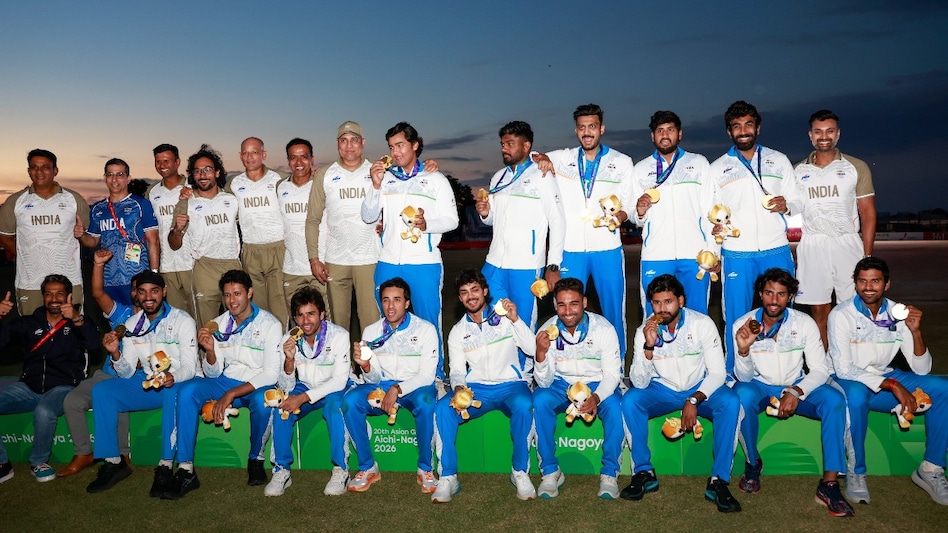
India strengthened its position on the cricket field. The men's team won gold for the second consecutive time, defeating Pakistan by 19 runs in the final. In the final, Abhishek Sharma scored 61 runs off 28 balls, and Tilak Verma scored an unbeaten 51 runs off 22 balls, taking India's score to 211/6. Despite an impressive performance from Hasan Nawaz of Pakistan, who scored 96 runs off 51 balls, his efforts did not lead to the team's victory.
The women's cricket team also retained its title by defeating Sri Lanka in the final. In Kabaddi, India demonstrated outstanding results. Both teams—men's and women's—successfully defended their gold medals by beating Iran in the final.
Archery was one of the most successful disciplines for India, bringing home five gold medals. 17-year-old Kumkum Anil Mohod set a historical record by winning gold in the women's individual recurve event. She became the first Indian woman to win gold in this discipline at the Asian Games. Kumkum also won gold in the women's team recurve event with Ankita Bhakt and Kirti Sharma, earning her a spot in Los Angeles.
In golf, Pranav Sharta Urs created a historic moment by winning gold with a score of 265 in the under-15 category. Pranav became the first Indian woman to achieve this success at the Asian Games. In the women's team event, Pranav, Aditi Ashok, and Diksha Dagar won silver medals.
In archery, India secured 15 medals. Niru Danda won the first individual gold for the country in the women's trap event, while Kamalajit and Suruchi Singh won gold in the mixed team 10-meter air pistol event, matching the Asian record.
Athletics brought India the highest number of awards—24 medals. During this campaign, many athletes broke old records and fulfilled long-held aspirations. Vitya Ramraj broke a national record, winning bronze in the women's 400-meter hurdles race. Yashvir Singh won silver in the men's shot put, and Rohit Yadav won bronze. Niraj Chopra could not participate in the competitions due to injury.
Savan Barwal won India's first marathon medal at the Asian Games since 1982 and also set a national record. Sarvesh Kushare ended a 56-year wait by winning a medal in the men's high jump, while Baranika Elangovan became the first Indian athlete to win a medal in the pole vault at the Asian Games. Sima Kumari also brought India a medal in the 10,000-meter race after 16 years.
In wrestling, Aman Sehrawat won gold in the men's 57 kg weight class, defeating world champion Chong Song Han of North Korea 10-7. Sujit Kalkal also received a gold medal, while Antim Panghal won silver, and Dipak Punia won bronze. Overall, India won six medals in wrestling.
In boxing, Lavlina Borgoken achieved particular success by winning gold, becoming the second Indian woman to win gold in boxing at the Asian Games after Mari Kom. Parvin Hooda and Ankush Panghal also brought honor to the country by winning gold medals in boxing.
A special feature of this historic performance was that some medals were won in sports where India was previously not well-known. Suchika Tarial won India's first medal at the Asian Games in mixed martial arts. In table tennis, Jay Mina reached the semi-finals.