
Venture Capital Investments Flowing into Indian Startups; Softdel's Corporate AI Strategy
Read more
YourStory [india, en]
yourstory.com

Venture Capital Investments Flowing into Indian Startups; Softdel's Corporate AI Strategy

The flow of venture capital continues to show steady growth in Indian startups, maintaining this pace in October 2026. The week was marked by large funding rounds in the Physical Artificial Intelligence (Physical AI), Electric Vehicle (EV) manufacturing, and healthcare sectors, supported by the active operations of early-stage funds and the issuance of unsecured debt.

Major investments covered deep tech/AI, electric vehicles, home decor, educational technology (edtech), and SME lending.

Key Takeaways

Softdel, an Internet of Things (IoT) pioneer headquartered in Pune and founded in 1999, is leveraging its experience in Operational Technology (OT) and connected devices, accumulated over more than 25 years, to advance its corporate Artificial Intelligence (AI) strategy.

Softdel recognizes that IoT serves as the foundational data channel for AI. Therefore, the company links physical assets with cloud analytics to provide industrial-grade AI solutions for smart buildings, industrial automation, and smart energy.
Similar stories

Palma.ai raises $1.8 million in seed funding to manage enterprise AI agents
Read more
ventureburn.com

Palma.ai raises $1.8 million in seed funding to manage enterprise AI agents

The adoption of enterprise artificial intelligence has moved beyond simple chatbots. Startups are now actively working to give autonomous agents direct access to companies' core infrastructure, creating significant security gaps for IT department heads.

Palma.ai secured $1.8 million in a seed funding round to address this specific problem. The round was led by D11Z, with support from Plug and Play Ventures, Deel, Scale Now Ventures, and business angels from Cisco and Deel.

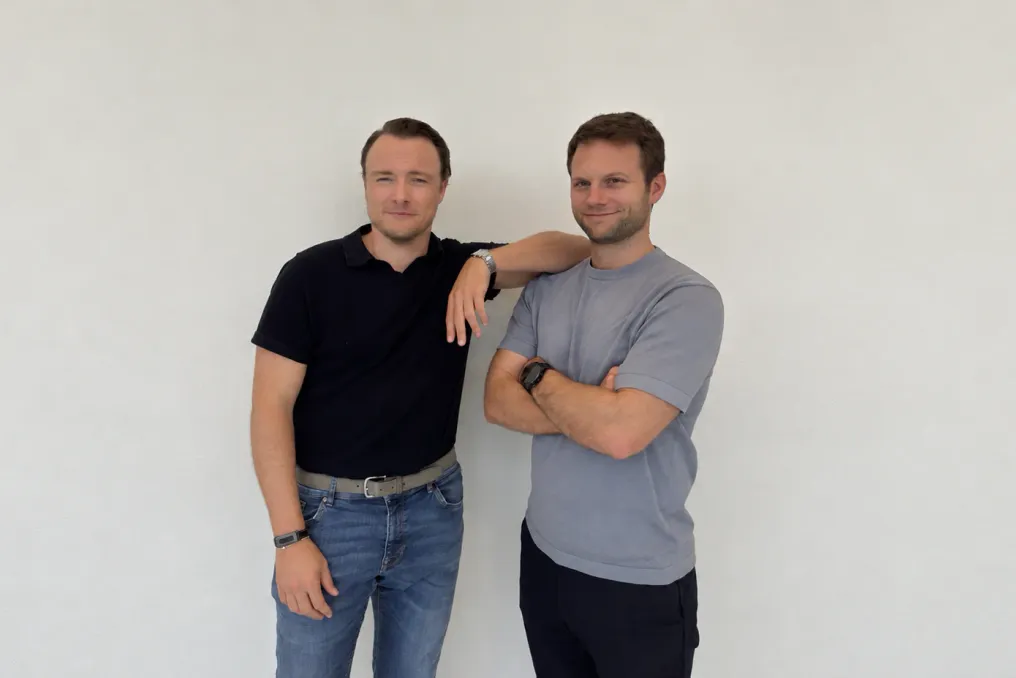
Patrick Eden and Julian Kolbe founded the company to manage the transition to multi-agent ecosystems. As AI tools increasingly perform workflows autonomously, managing permissions across isolated applications becomes nearly impossible for traditional security services.

Most modern AI agents connect to internal business data using an open standard—the Model Context Protocol (MCP). While MCP connects models to databases, historically each AI tool managed its permissions in isolation.

Palma.ai solves this by implementing a centralized integration layer. Administrators define policies, approved MCP tools, and recurring workflows on major platforms such as Claude, Gemini, and Microsoft Copilot. The platform dynamically enforces these rules during execution while logging every transaction in an immutable audit log.

According to Patrick Eden, CEO and co-founder of Palma.ai, 'Every company is about to hand over the keys to its systems to automated agents. The question is, is anyone watching the door?' He added, 'We created Palma.ai so that enterprises can grant agents real permissions while knowing exactly who did what, with which tool, and according to which policy across all platforms the enterprise uses.'

The raised capital will be directed towards actively expanding both engineering and marketing teams as corporate demand for controlled AI workflows grows.

Popular