Iran and Turkey are working towards the goal of increasing trade turnover to $30 billion. To achieve this, they are focusing on developing the Bazargan border crossing, opening a fourth checkpoint, strengthening rail and road transport, and establishing a joint free zone in Hoy–Van–Mersin.
According to Mehr News Agency, simply increasing exports and imports will not close the gap between the current trade volume and the target of $30 billion. Therefore, the two countries' plan now includes developing border crossings, reducing truck stops, enhancing transport corridors, and utilizing Turkish ports to create new trade routes.
Turkey's geographical location, its access to Europe's transport network, and the presence of Mediterranean and Black Sea ports expand its potential as a route for delivering Iranian goods to farther markets, making Turkey more than just a neighboring consumer market for Iran.
Dariush Vossouhi, Iran's commercial attaché in Istanbul, emphasized that developing trade relations with Turkey goes beyond simply increasing exports to the Turkish market. He highlighted the use of Turkey's logistical and transport capacities for access to European and African markets.
According to statistical data, the trade volume between Iran and Turkey in 1404 amounted to about $19.2 billion, including $6.8 billion of Iranian exports to Turkey and $12.4 billion of imports from this country. Thus, reaching the $30 billion target requires an increase in trade turnover of approximately $10.8 billion compared to last year.
In the first five months of 1405, Iran's exports to Turkey reached $3.7 billion, and imports from Turkey amounted to $2.8 billion. Reaching the $30 billion mark from the current level implies changes in the logistical and trade capabilities of both countries, as growth in volume without eliminating border bottlenecks will only increase the time and cost of exchange.
The Bazargan border crossing is considered the most important land link between Iran and Turkey, serving not only bilateral trade but also part of the transit flow between Turkey, Europe, Iran, and Central Asian markets.
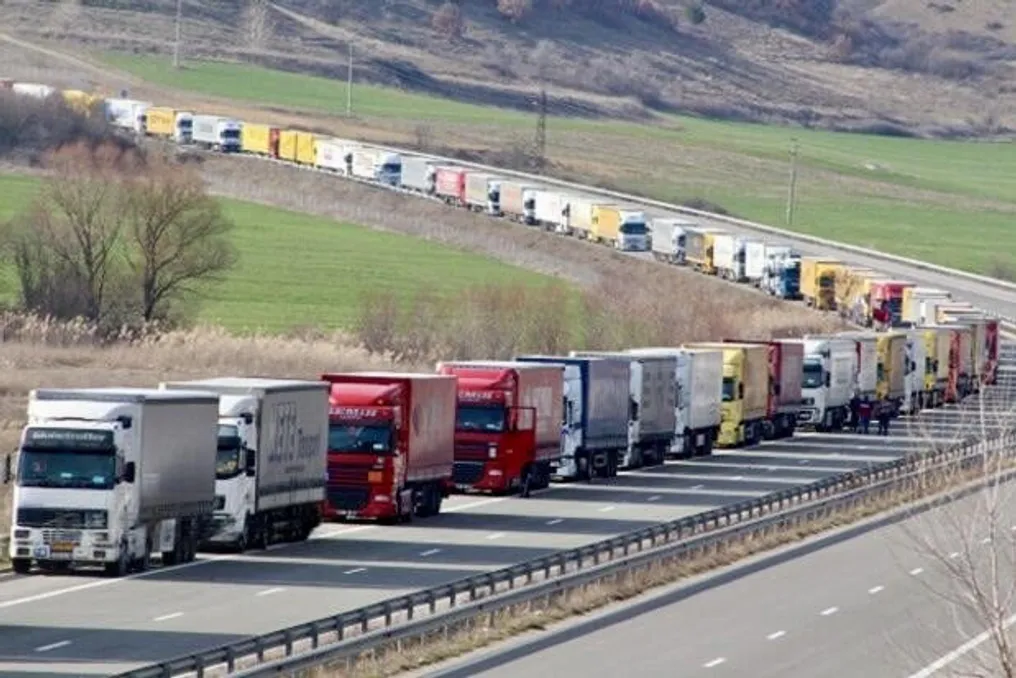
In recent months, increasing the capacity of this crossing has been on the agenda of both countries. According to Iranian Customs, in the month of Mordad, the number of trucks crossing Bazargan exceeded 350 per day, and the goal was set to increase this figure to 400. As part of these measures, coordination of work shifts, simplification of control procedures, management of empty and transit trucks, and reduction of unnecessary stops were planned.
Increasing capacity has become particularly relevant against the backdrop of a significant rise in cargo volumes at the Bazargan customs. The director of the General Customs of Bazargan reported that since the beginning of the year until Mordad, about 190,000 tons of goods were exported through this route to Turkey, the Gulf countries, and India, which is 40% more than in the same period last year. During the same period, about 150,000 tons of essential goods, medicines, bananas, and other imported goods passed through and were cleared via the Bazargan route, demonstrating a growth of 250%. Thus, the problem of Bazargan is not limited to trade between Iran and Turkey, and this border point is becoming an important link in the regional logistics network.
On the other side of the border, in August, Turkey and Iran held a joint meeting to discuss issues with freight movement and waiting times. Proposed solutions included a gradual increase in truck traffic, wider use of TIR Carnet, and the implementation of the e-TIR electronic system.
In August, the International Road Transport Union also recognized the Gürbulak–Bazargan route as one of the key road corridors of the region, connecting Turkey and Europe through Iran to Central Asia and other Asian markets. Consequently, every reduction in truck waiting time directly affects transport costs, predictability of delivery times, and the attractiveness of the Iranian route for transit.
In addition to increasing the capacity of existing checkpoints, the countries are also aiming to increase their total number. Iran's commercial attaché in Istanbul noted that three main checkpoints are currently operating between Iran and Turkey, and in recent years, the issue of creating a fourth checkpoint in the Kuzeh Rash region has been discussed. An initial agreement was proposed to create this crossing near Salmas to enhance trade potential and reduce the load on existing checkpoints.
Creating additional checkpoints is critical because growing trade to $30 billion, relying on a limited number of routes, could again lead to truck queues and increased logistical costs.
As part of these efforts, the creation of a joint free zone in Hoy, Van, and Mersin is also being promoted. This plan, if implemented, has the potential to transform the trade relationship between the two countries from purely border-based to a broader logistical and production chain.
In September, the head of the Iran-Turkey Parliamentary Friendship announced that the proposal to establish this free zone centered in Hoy had been put forward, and the Iranian government approved it. According to this plan, the Hoy–Van route will continue and connect with Mersin, and the need to create economic agglomerations at the Razi border to support this plan has been recognized.
The Secretary of the Supreme Council of Free Zones also stated that Iran has taken the necessary steps and coordinated actions to launch the Hoy-Turkey joint free zone, and further work requires coordination with the Turkish side.
The significance of this plan lies in the fact that Hoy and the Razi border can be integrated into the logistics chain with Van, and then with Turkey's transport network, which shortens and diversifies the route for Iranian goods to western ports and markets.
Another area of trade development is the utilization of Turkish port capacities, including Mersin, Samsun, Trabzon, and Izmir. In this model, Turkey acts not only as the final destination for Iranian goods but also as part of the chain for their transshipment to other markets. Specifically, the Port of Mersin, combined with the Iran-Turkey land route, can function as a maritime hub for Iranian trade with the Mediterranean and Europe.
This issue has gained particular importance against the backdrop of geopolitical changes and disruptions in some traditional trade routes, which has increased the significance of alternative and combined routes. Under such conditions, the connection of roads, railways, and ports plays the same role in trade development as increasing border capacity.
According to the report, besides utilizing existing capacities, Iran's main objective in the Turkish market is not only to increase export value but also to increase the share of Iranian products in the Turkish market and use Turkey as a transit route to third markets.
This is important because trade between the two countries still faces obstacles such as anti-dumping measures, quotas on certain goods, high tariffs and fees, as well as transit problems that can limit the access of Iranian goods to the Turkish market even with transport capacity.
On the other hand, trade development requires more active participation from the private sector of both countries. In recent years, thousands of companies with Iranian capital have operated in Turkey, and a representative of the Chamber of Commerce in Tire reported that the number of such companies has reached 7,288. Thus, for Iran, Turkey can serve as both a final market and a link in the chain of access to European and other regional markets. Consequently, the main task on the path to $30 billion is not just 'how much is exchanged', but at what price, at what speed, and along which routes goods can move between the two countries and markets outside them.
At the meeting in Istanbul in early July, ICCIMA Chairman Samad Hassanzadeh met with the Turkey-Iran Business Council (DEIK) and representatives of the Iran-Turkey Joint Chamber. He presented over 200 investment opportunities prepared by ICCIMA for non-Iranian investors, inviting the Turkish private sector to participate. He called Turkey Iran's largest regional economic partner and a key gateway to Europe, thanked Ankara for supporting Iran during the Holy Defense, the COVID-19 pandemic, the 12-day war, and the recent war, and condemned the attacks that led to the death of Iranian leaders. He stated that official Iran-Turkey trade reached $23 billion this year despite war restrictions, and the two presidents are targeting $30 billion. He called for the creation of joint industrial cities in free zones and cooperation in logistics/transit, especially in petrochemicals and processing.
ICCIMA Vice President Kadir Giyafeh described five-century continuous ties and called the economies complementary rather than competing. He invited Turkish investment in mining, steel, petrochemicals, processing, energy, transport, logistics, ports, agriculture, food, tourism, pharmaceuticals, advanced technologies, AI, and the digital economy. He supported technology transfer, joint R&D, knowledge-based firms, expansion of border capacity, rail-road and sea connections, and joint logistics centers. He stated that $30 billion is achievable, and $50 billion is possible in the medium term if banking, legal, customs, and transit barriers are removed.
Mehrad Saadat, head of the Iran-Turkey Joint Chamber, stated that preferential trade is outdated and proposed free trade. He noted that Iran's share in Turkey's imports of $400 billion is almost nonexistent, despite the export potential of over $15 billion, and suggested creating a joint industrial city, trading in local currency, and allowing the purchase of technology/infrastructure within the rules of financial transfer. He also proposed mutual opening of chambers in Tehran and Istanbul.
For his part, Ferhat Dortkoshe stated that Turkey should not only be a transit corridor but should become a production/investment center and a bridge to Europe; Osman Aksoy hoped for the lifting of sanctions and emphasized the importance of trust and joint production. TIM Head Ahmet Güleç stated that his association includes 61 associations and 160,000 exporters/importers, and called for direct B2B links. Other Iranian delegates emphasized the need for joint production for third markets, consortia, and resolving financial issues; Iranian assets in Turkey could serve as collateral. The general message was that achieving a trade turnover of $30–50 billion requires free trade, investment, logistical, and banking solutions.