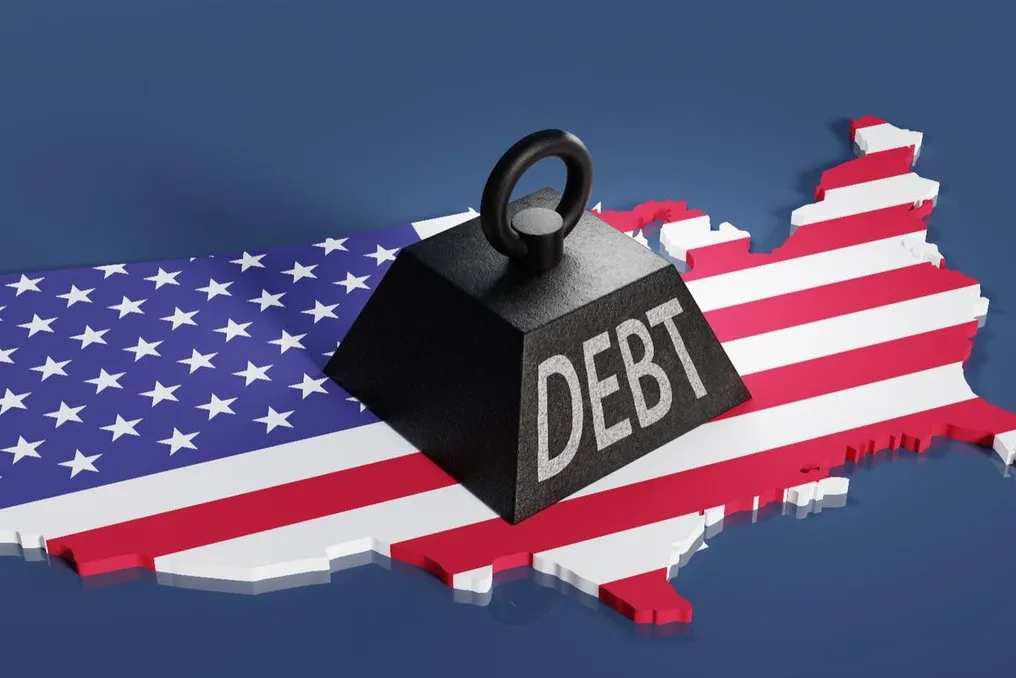
It is reported that the United States is viewed not as an exceptional economic power, but as an increasingly inefficient and financially incapable entity that dangerously relies on investor sentiment and does not control its own borrowing.
According to Bloomberg data citing Scope Ratings, 'exceptionally large' budget deficits and America's steadily growing debt have made it 'increasingly vulnerable' to shifts in market sentiment.
The agency maintained the US rating at AA, three notches below the maximum, with a stable outlook. However, its warning was sharp: America's debt accumulation path 'cannot continue forever.' The agency noted that without significantly stronger economic growth or substantial fiscal adjustment through increased revenues or spending cuts, the 'debt dynamic' will remain unfavorable, describing an 'unsustainable medium-term fiscal path' that makes the sovereign increasingly vulnerable.
The forecast looks grim. Scope predicts that US debt as a percentage of GDP will rise to 160% over ten years, and net interest payments will reach an 'exceptionally high' level by 2031. Furthermore, the agency pointed to risks associated with the upcoming Congressional confrontation over the debt ceiling—a recurring political dysfunction that demonstrates that Washington is not just inefficient, but structurally incapable of managing its finances.
America no longer holds the highest credit rating from any major assessor after Moody's downgraded its rating last year. Scope's view has long been particularly pessimistic, and its willingness to downgrade the US contrasts with the more cautious approach of competitors. Fitch's chief sovereign bond analyst noted that another downgrade so soon after its reduction in 2023 would be 'very unusual.' In contrast, Scope previously downgraded America during the debt ceiling deadlock in 2025 and now rates the country two points below Moody's, Fitch, and S&P Global Ratings.
The overall picture depicts a state of fiscally insolvent government: unable to contain deficits, unwilling to make difficult decisions, and dependent on the goodwill of fickle investors. Its debt trajectory is unsustainable, its political system is stuck in crisis management, and its credit status is deteriorating. Instead of demonstrating strength, America appears vulnerable, inefficient, and increasingly subject to the judgments of markets it can no longer control. If it does not achieve much stronger growth or serious fiscal adjustment, the US will remain a weakened and shaky borrower, which will severely damage its reputation as an exceptional economic power.