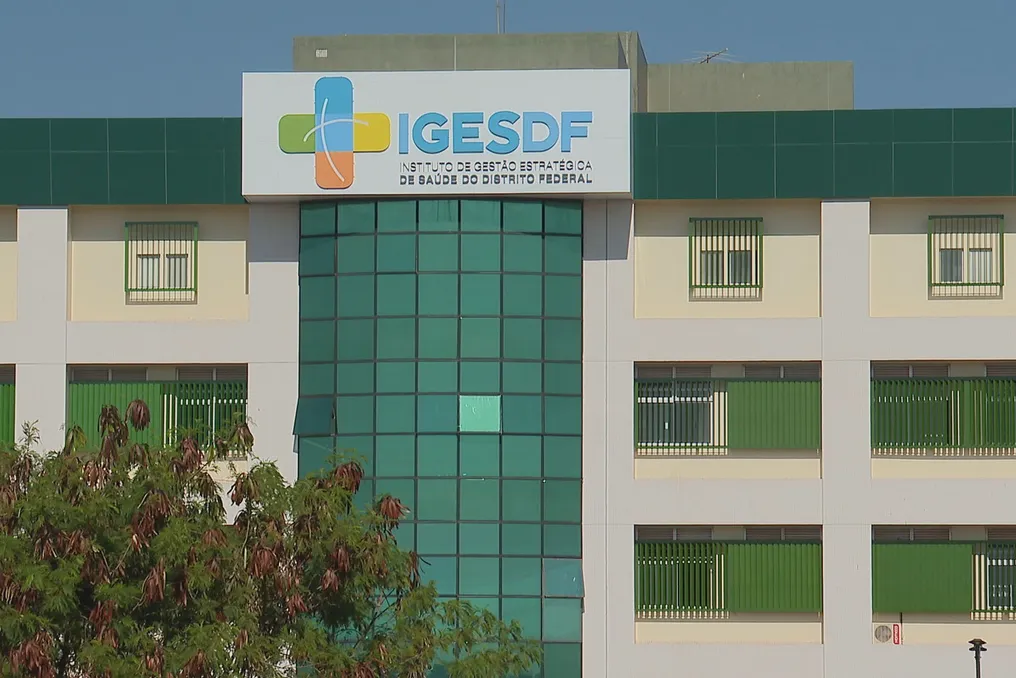
Labor Public Prosecutor's Office recommends that Iges remove the two-hour limit for on-call staff voting
Read more
Grupo Globo
g1.globo.com

Labor Public Prosecutor's Office recommends that Iges remove the two-hour limit for on-call staff voting

The Labor Public Prosecutor's Office in the Federal District (MPT-DF) issued a recommendation to the Institute of Strategic Health Management of the Federal District (Iges-DF) requesting the removal of the two-hour absence limit for on-call professionals who need to go to the polls.

This recommendation was formalized this Saturday (3), in response to complaints that the organization was restricting workers' right to vote. Previously, a notice released by Iges established a maximum period of two hours away from work for voting.

According to the initial notice, any absence exceeding this interval required prior approval and authorization from management. However, in its recommendation, the MPT requested that the company ensure that employees scheduled for election day have adequate time to vote, without imposing the two-hour limit or requiring advance authorization for longer periods.

The Public Prosecutor's Office emphasized that the time needed to exercise the vote can vary significantly, depending on the distance to the polling station, the existence of queues, and available transportation conditions.

Additionally, the MPT requested that Iges provide all on-call staff with proof of their work schedule to guarantee priority in voting lines. The text of the recommendation emphasizes that this release must occur without any salary deduction, hour compensation, negative record, or retaliation.

The supporting document must be provided without the employee having to request it, unlike what the Iges notice stipulated. The latter required workers to initiate a process through the Electronic Information System (SEI) at least 48 hours in advance.

The MPT determined that the institute must immediately publish the new guidelines and present, within five days, the implemented measures. These guarantees must also be maintained if there is a second round. The measure applies not only to permanent employees but also to temporary staff, interns, apprentices, and volunteers.

Similar stories

Laboratory technician in Siberia may have died of plague; hundreds are under quarantine
Read more
noticiasaominuto.com

Laboratory technician in Siberia may have died of plague; hundreds are under quarantine

A 28-year-old woman who worked as a technical specialist at the Institute for Plague Control in Irkutsk, Siberia, may have died from the disease on Thursday. Nearly 200 people have been identified who are currently in isolation.

The young woman was identified by some Russian media outlets as Daria Shipilova, and there are various theories regarding the possible causes of the worker's death. According to one version, the technical specialist returned from a business trip to Buryatia, where a plague outbreak had previously been registered near the Mongolian border. However, another version, according to The Moscow Times, states that Shipilova accidentally knocked over a vial in the laboratory while collecting biological material for diagnosis.

On September 29, the young woman was hospitalized with pneumonia symptoms at Shelekhov Hospital, where she was on a ventilator, but she died two days later. This led to the isolation of all hospital staff, and the facility was placed under quarantine. At least 197 people who may have been in contact with the victim are under observation.

Initially, the Governor of the Irkutsk Region, Igor Kobzev, reported a 'suspicion of a particularly dangerous case of infection among a resident,' but later the leader of Buryatia, Alexey Tsydenov, stated that the young woman 'may have died of plague.'

Tsydenov wrote on Friday that 'according to data from Rospotrebnadzor, as well as data from the government of the Republic of Buryatia, the woman who may have died of plague in the Irkutsk region was not in Buryatia. There are no plague outbreaks in the republic, including the border area with Mongolia. The source of infection must be related to other circumstances unrelated to Buryatia.'

For his part, Igor Kobzev noted that following the 'dissemination of information about the suspicion of a particularly dangerous case of infection among a resident of the region,' an 'extraordinary meeting of the Regional Commission on Healthcare and Epidemic Prevention' was held with the participation of Anna Yuryevna Popova, Chief Physician for Public Health of the Russian Federation.

He added: 'In this context, Rospotrebnadzor has organized and implemented a set of measures to combat epidemics. An operational action plan was approved at the meeting of the Regional Sanitary and Anti-epidemic Commission. I instructed that all its sections and points be strictly adhered to. I report that all identified contacts are under medical observation. Currently, the contacts show no signs of illness, and laboratory test results are negative,' urging the public to follow the instructions of official bodies.

Although the authorities have not specified the type of plague, local media reported that the young woman suffered from pneumonic plague, which can be transmitted from person to person through respiratory droplets.

It should be noted that natural plague foci persist in Mongolia. In 2023, the National Center for Zoonotic Infection Studies of Mongolia identified 137 foci in 17 regions of the country, including areas near the Russian border.

Popular