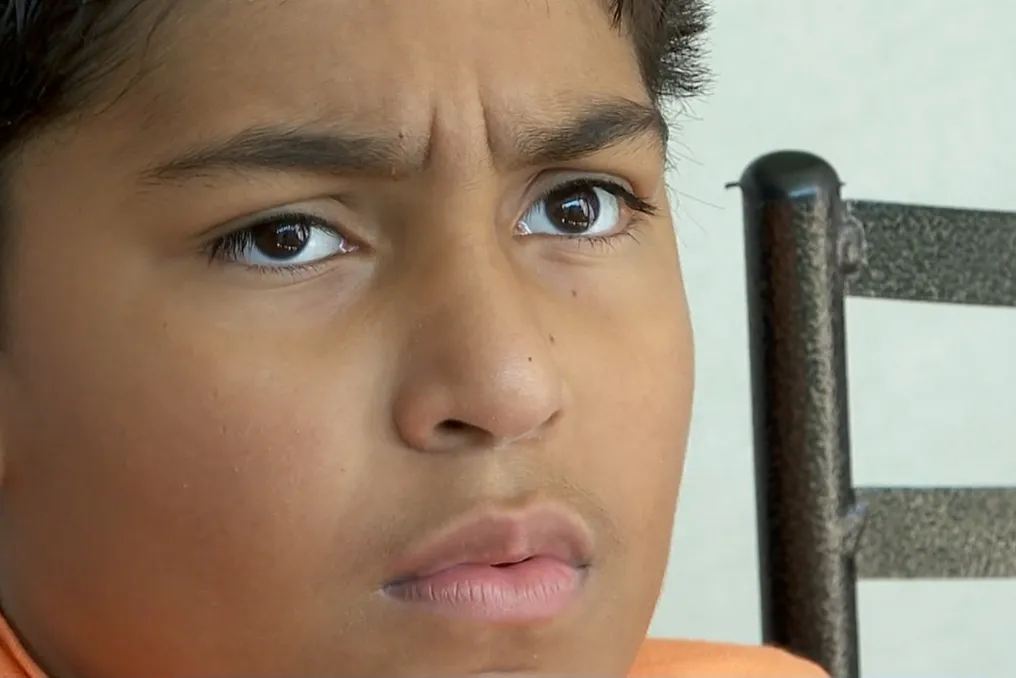
The mother of a 12-year-old adolescent residing in Jardinópolis (SP) expresses that daily life is challenging because 'every day is a struggle.' The young boy was diagnosed with myasthenia gravis at the age of five, a chronic autoimmune condition that compromises communication between nerves and muscles, resulting in fatigue and muscle weakness that worsens with effort and decreases with rest.
Due to the illness, the boy spent about a year unable to open his eyes and faces significant difficulties with chewing and mobility, in addition to experiencing intense tiredness. Currently, Lucas Ortolani da Silva uses immunosuppressants and needs to balance his school obligations with various therapies, including physiotherapy, occupational therapy, and psychological support.
CAR-T cell research underway
In São Paulo, there has been a 47% increase in hospitalizations related to myasthenia gravis between 2024 and 2025, jumping from 296 to 436, according to data from the State Health Secretariat, reaching the highest record in the series started in 2021. Simultaneously, the Hemocenter of Ribeirão Preto (SP) is developing research to investigate the potential use of CAR-T cells in patients with generalized myasthenia gravis.
CART Cell therapy, already applied in cases of acute lymphoblastic leukemia of B cells and non-Hodgkin lymphoma of B cells, involves genetically modifying the patient's own defense cells to eliminate cancer cells. The Hemocenter of Ribeirão Preto, in collaboration with USP, Instituto Butantan, and Fapesp, is expanding clinical studies to treat severe autoimmune diseases, such as lupus and myasthenia gravis, pending ethical and Anvisa approvals.
Preparation of CAR-T cell study
The Hemocenter of Ribeirão Preto is investigating CAR-T cells as a possible therapeutic alternative for patients with generalized myasthenia gravis. This technology already has a history of success in treating certain leukemias and lymphomas. In the procedure, the patient's defense cells are collected, modified in the laboratory, and reintroduced into the body, giving them the ability to recognize and fight cells associated with the pathology.
Diego Villa Clé, a Hematology professor at USP Ribeirão Preto, clarifies that, in the context of myasthenia gravis, the focus is on directing T lymphocytes to attack B lymphocytes, which are responsible for producing antibodies that interfere with neuromuscular communication. He details that this is personalized immunotherapy, where defense cells are trained in the laboratory to combat diseased cells before being returned to the patient.
The production of these cells will take place at the Advanced Therapy Center of Ribeirão Preto (Nutera RP), a unit of the Hemocenter dedicated to the large-scale manufacturing of cellular therapies. Although funding is secured, the start of the study depends on the evaluations by ethics committees and Anvisa, which is why no patient has received this specific treatment in Ribeirão Preto so far. Diego predicts that, with the necessary approvals, the research could begin next year.
Initial signs appeared at age 5
Cláudia Ortolani, a nurse and Lucas's mother, told EPTV that the first signs of the disease in her son appeared after a trip, during a viral episode. She noticed that one of Lucas's eyelids was drooping and his mouth showed asymmetry, in addition to him complaining of blurred vision. Initially, the family considered Bell's palsy or stroke, seeking ophthalmological care before being advised to see a neurologist.
During the investigation, other conditions were considered, such as multiple sclerosis and mitochondrial disease. The diagnosis was complicated by Lucas's young age, only 5 years old, since myasthenia gravis is more common in adults. After specific laboratory tests and a single-fiber electromyography, neurologist Wilson Marques Júnior confirmed the diagnosis.
Despite being a healthcare professional, Cláudia mentioned the fear regarding a little-known disease whose symptoms vary throughout the day and affect different muscle groups. Lucas once went a year without being able to open his eyes and struggled with swallowing and mobility difficulties. Today, he follows a regimen of treatments, exams, and therapies, using a low dose of immunosuppressant without the need for corticosteroids.
Because he is autistic and has myasthenia, Lucas's routine is intense, encompassing physiotherapy, occupational therapy, psychology, swimming, and karate. He manages to balance his school life with all these activities.
Hospitalizations increased in the state of São Paulo
Records from the State Health Secretariat indicate a continuous growth in hospitalizations related to myasthenia gravis since 2021. The most significant jump occurred between 2024 and 2025, with a 47% increase in cases. According to neurologist Wilson Marques, the incidence of the disease is about 12 cases per 100,000 inhabitants. Even with current treatments, some patients persist with limitations that negatively impact their quality of life.
Wilson Marques emphasizes that the rarity of the disease can lead to less medical contact with it, which can prolong the diagnostic time and result in inadequate initial diagnoses.
Treatments control symptoms
Although myasthenia gravis does not have a definitive cure in most cases, available treatments are effective in controlling symptoms and reducing disease activity. Therapeutic approaches vary according to the severity and type of condition, potentially including medications that optimize neuromuscular communication, immunosuppressants, immunoglobulin, plasmapheresis, and specialized immunological therapies.
For Cláudia, medical monitoring provided partial recovery of Lucas's autonomy and the resumption of various activities. She considers the treatment liberating because it offers hope. Lucas, in turn, advises other patients never to give up and to listen to their parents, even when they seem demanding, as this is beneficial for the patient himself.