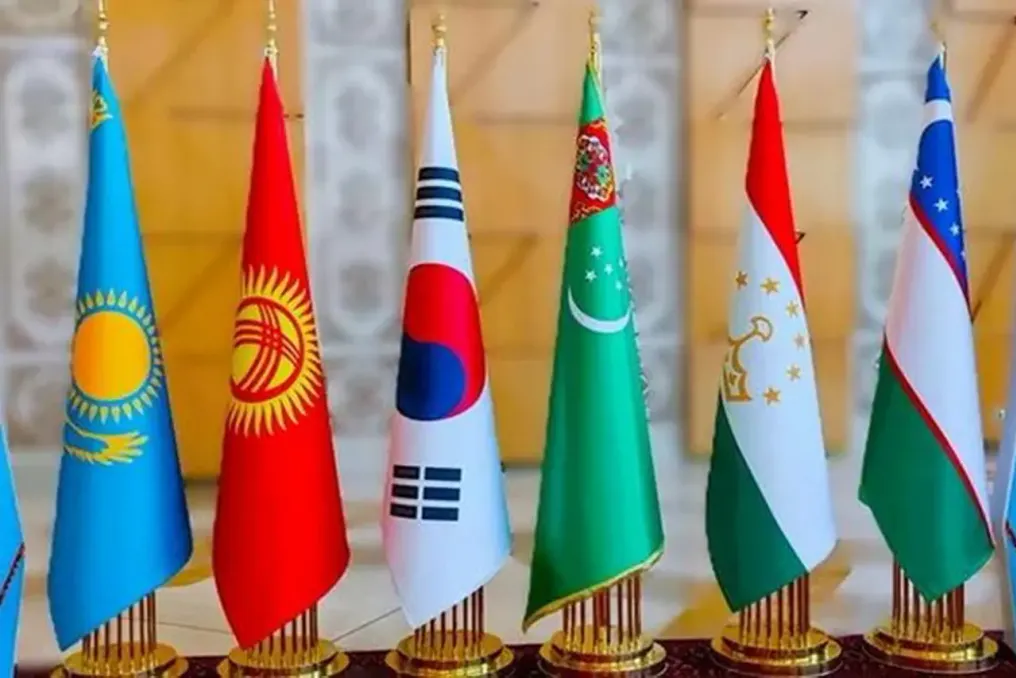
The first summit between the Republic of Korea and the Central Asian countries demonstrated a qualitative shift in the economic agenda between Seoul and the region's states. Whereas cooperation was previously based on trade, individual investment projects, and infrastructure partnership, the focus is now shifting to critical minerals, industrial interaction, energy, digital technologies, and the formation of new supply chains.
For South Korea, this goes beyond simply expanding its presence in a new market. Since the country's economy depends on stable access to imported raw materials while being home to large industrial and technological companies, Central Asia acquires strategic importance.
South Korea's New Interest in Central Asia
The economic logic of South Korea's policy is quite clear: Seoul is interested in diversifying raw material sources, reducing dependence on single suppliers, and increasing the resilience of its own production cycles. Central Asia possesses several advantages in this regard.
The region has significant reserves of uranium, copper, chromium, zinc, rare earth elements, and other strategically important resources. Simultaneously, Central Asian states aim to develop raw material processing, industrial production, and technological capabilities. Thus, the interests of both sides are gradually beginning to converge.
Central Asia offers resources, energy, growing markets, and a favorable geographical location. In turn, South Korea provides technology, industrial equipment, investment capital, and access to global production networks. This combination can form the basis for a new stage of cooperation.
Critical Minerals Become the Central Focus
Critical minerals serve as the most vivid example of this shift. South Korea views access to strategic raw materials as an integral element of its economic security, as such materials are necessary for the production of batteries, semiconductors, electronics, electric vehicles, energy equipment, and other high-tech products.
It is crucial for Seoul not only to acquire raw materials but also to create more reliable supply and processing chains for them. In September 2026, South Korea held the first joint meeting of industry ministers with all five Central Asian countries, where industrial cooperation, supply chains, and critical minerals were the central focus. This is an important signal indicating a gradual transition of economic relations from individual commercial projects to the institutional level of economic security.
Kazakhstan as a Key Resource Partner
The greatest prospects open up for Kazakhstan. This country possesses a significant mineral and raw material base, and it also has the most developed transport infrastructure and substantial industrial potential in Central Asia. However, it is important for Kazakhstan to avoid repeating the traditional model of cooperation where the foreign partner gains access to raw materials, and most of the added value is created outside the country.
Investment from the Korean side can be particularly significant if it is linked to deep processing, localization of production, technology transfer, and specialist training. The most promising model looks like this: Kazakhstan's raw materials $
ightarrow$ Korean technology $
ightarrow$ processing in Kazakhstan $
ightarrow$ production of high value-added goods $
ightarrow$ export to external markets. Implementing this model will allow Kazakhstan to gain significantly more than just additional investments in the extraction sector.
Nuclear Energy as a Separate Area
Energy is becoming another important element of cooperation. On September 15, Kazakhstan and South Korea signed a memorandum of cooperation on the peaceful use of nuclear energy. This field requires special attention, as Kazakhstan is one of the world's largest uranium producers, while South Korea has significant experience in the construction and operation of nuclear facilities. The interests of the two countries can be complementary in this area: Kazakhstan has the resource base and is interested in developing its energy infrastructure, while South Korea seeks to promote its technologies and expertise. Consequently, nuclear energy could potentially become one of the largest long-term areas of bilateral interaction.
Uzbekistan: A Different Approach to Korean Engagement
If Kazakhstan is primarily of interest to South Korea in terms of resources and energy and occupies a central place in the new economic agenda, Uzbekistan remains on the periphery compared to other countries in the region. Uzbekistan possesses a different set of advantages: a large domestic market, a solid industrial base, labor force, and opportunities for manufacturing placement. Therefore, Korea's strategy in Uzbekistan is increasingly focusing on localizing industrial production.
For Seoul, this provides an opportunity to access a growing market by using Uzbekistan as a production base. For Tashkent, the benefit lies in attracting not only capital but also modern technologies, equipment, and management experience. Nevertheless, despite these advantages, Uzbekistan has not yet taken center stage in South Korea's policy in Central Asia. Main negotiations on critical minerals, industrial cooperation, and energy are predominantly conducted with Kazakhstan, while the Uzbek direction remains more supportive and supplementary.
As a result, an economic division of roles is gradually forming in the region: Kazakhstan may act as a major supplier of resources and energy, Uzbekistan as the second echelon of industrial and production base, and other Central Asian countries may participate in specific segments of regional supply chains.
Artificial Intelligence and Digitalization
Another trend is the gradual expansion of cooperation beyond traditional industry. Artificial intelligence, digital infrastructure, and production automation are becoming independent areas of South Korea's policy in Central Asia. This is especially important for the region's countries, as the use of Korean technologies can allow them to modernize enterprises without having to go through the entire process of technological development themselves.
However, there is also the risk of dependency. If Central Asia only purchases ready-made digital solutions without developing its own specialists, software products, and research base, technological cooperation may lead not to the creation of its own digital economy, but to a new form of technological dependence. Therefore, technology transfer is no less important than the volume of investment.
The Factor of China
The growing economic interaction of South Korea occurs against the backdrop of China's already massive presence. Beijing remains the largest economic partner for many Central Asian countries and possesses significant advantages in trade, infrastructure, energy, and the extractive sector. However, the Korean model is different.
China can offer Central Asia large-scale infrastructure financing and access to a huge consumer market. South Korea, on the other hand, has particularly strong positions in sectors such as automotive manufacturing, electronics, batteries, shipbuilding, energy, industrial automation, and digital technologies. Thus, the emergence of another major partner in technology and investment creates an opportunity for Central Asian countries to diversify their foreign economic ties. This is particularly relevant for Kazakhstan.
Competition among various external partners can be used not as a geopolitical choice of one side over another, but as a tool to ensure better conditions for national economies.
Who Will Gain Added Value?
Nevertheless, an increase in Korean investment itself does not guarantee the structural modernization of Central Asian economies. The central question is where the added value will be created. If the region's countries export concentrates and raw materials and then import finished batteries, electronic components, equipment, and technologies, the economic model will fundamentally remain unchanged.
However, if the region's countries can establish processing capacities, industrial clusters, research centers, and joint production enterprises, cooperation with South Korea can become a factor of structural transformation. This is why negotiations on critical minerals should be viewed more broadly than just supply agreements. For Kazakhstan, the optimal outcome would be the creation of a complete or at least a substantial part of the value chain within the country.
The New Economic Geography of Central Asia
The first summit between Central Asia and the Republic of Korea reflects a broader process. Central Asia is gradually transforming from a peripheral direction in the foreign economic policy of great powers into an independent node in global supply chains. China is interested in the region as a source of resources, a market, and a transit territory. The European Union is increasing its focus on critical minerals, transport routes, and investments. South Korea is betting on combining the region's resource base with its own industrial and technological capabilities.
This creates a rare opportunity for Central Asia. Competition among external partners can become a source of economic modernization provided that the region's countries compete not for investments themselves, but for investments that create long-term added value within national economies. In this context, interaction with South Korea is interesting not only as another channel for attracting capital; it can become part of a broader strategy for Central Asia's transition from exporting raw materials to participating in the production of next-generation technologies and goods. The economic outcome of the current rapprochement between the region and South Korea will depend on the ability of Central Asian countries to utilize this opportunity, rather than simply accepting new investment projects.