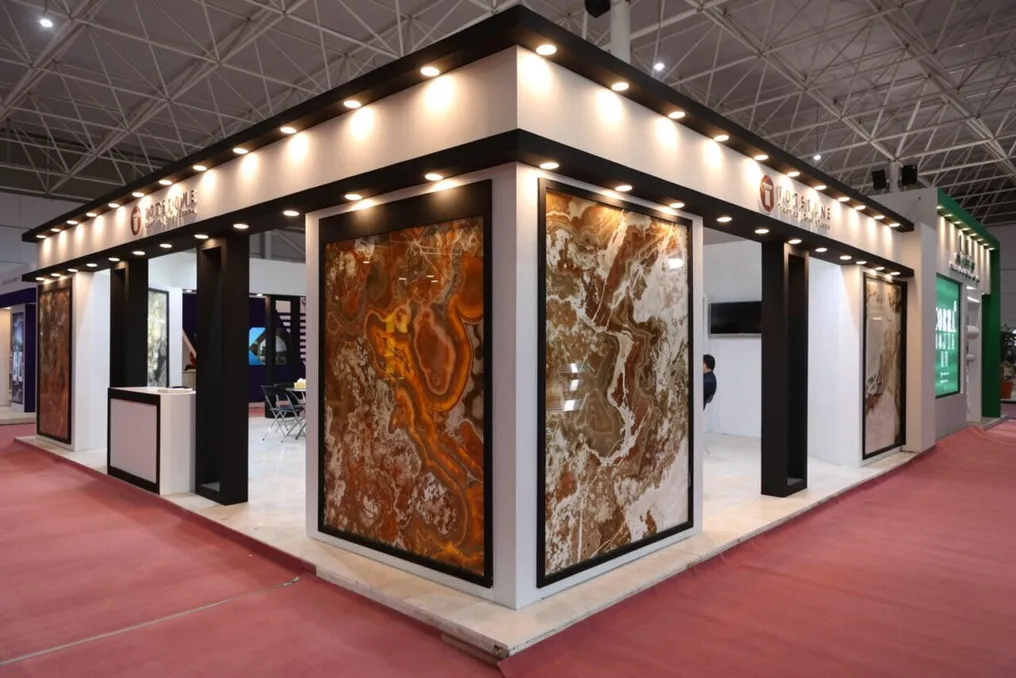
Bahram Shokouhi, head of the Iranian Stone Association, stated that Iran's stone industry is capable of generating no less than $5 billion in foreign currency through exports and revenues, provided its potential is properly managed and supported.
Speaking at a press conference during the 18th International Stone Exhibition in Mahallah and Nimvar, he emphasized that this production capacity, combined with job creation, can increase the significance of the stone industry in the national economy.
The exhibition will run from October 6 to 9 and will focus on block stones and products from the Iranian stone industry. More than 600 domestic and foreign companies are participating, occupying an area of about 120,000 square meters, and offering over 45,000 tons of block stone. Trade delegations from Russia, Pakistan, Turkey, India, and Egypt have been invited.
Shokouhi announced that a stone service center will be established for the first time, involving experts from the Deputy of Mining Affairs, the Trade Promotion Organization, the Mining Engineering Organization, and representatives of the Iran University of Science and Technology. Other planned events include specialized sessions, training seminars, cultural and artistic programs, the 'Behind Every Stone is a Life' campaign, as well as discussions on industry risks and activists' family issues.
He noted that the Stone Headquarters, previously known as the Stone Policy Council, has been reactivated due to the efforts of the association and cooperation with the Ministry of Industry, Mining, and Trade. This body handles matters of exploration, mining, processing, and export. The 14th session of the National Stone Table and a joint meeting of the Association's Mining Committee with the Arak Committee will take place during the exhibition.
Shokouhi, who also heads the Association's Mining Committee, drew attention to the implementation of new technologies in the Iranian stone industry. One such technology is cutting machines using wire as thin as dental floss, which are currently used for soft stones. This technology can increase extraction and processing efficiency while reducing waste. According to him, this could lead to a 35–40 percent increase in block stone yield and reduce final costs.
He stressed the need to reduce the carbon footprint in the stone industry. Programs include training and developing environmental product passports, courses on carbon footprint, and active participation in the COP31 climate summit in Antalya. The goals are to reduce carbon emissions, decrease production costs, and enhance the competitiveness of Iranian stone exporters.
Shokouhi also mentioned the creation of the World Stone Federation. Through cooperation between stone associations from different countries, a global stone coalition and federation has been formed to strengthen the position of natural stone in world markets. One of the objectives is to create a carbon passport or identifier for stone, determining the carbon emissions from quarrying to destination, so that the natural stone industry can strengthen its global standing based on this data.
Regarding production and export statistics, Shokouhi reported that in 1403, Iran produced about 10–12 million tons of stone, but the export value was only about $230 million. Compared to the global stone export volume, estimated at approximately $42 billion, Iran's share is very small. About 85 percent of the produced stone is processed and consumed domestically, and almost 15 percent is exported, of which about 5 percent is exported as blocks and 10 percent as cut stone. Turkey, conversely, produced about 15 million tons of stone in 2025 and exported nearly 41 percent of its production.
Shokouhi believes that the Iranian International Stone Exhibition can present the diversity of Iranian stones to foreign buyers. Instead of visiting various quarries across the country, buyers can see, select, and order products in one place. Offering stone blocks on global markets can pave the way for recognition and subsequent development of processed stone exports.
He named fuel shortage as one of the serious problems facing mines. A large part of the mining equipment is outdated and highly energy-consuming, and last year, fuel allocation was announced to be 25 percent less than the declared need. As a result, some mines purchased fuel on the free market, and in some cases, faced smuggling-related legal issues.
Referring to transportation problems during wartime, Shokouhi noted that long truck queues at land borders and supply stoppages can lead to fines and loss of clients for exports. Coordination with neighboring countries is necessary to speed up truck passage, and special routes or a 'green corridor' should be considered for export shipments with confirmed orders. During the exhibition, some stone shipments arrived at their destination late due to customs and transport issues, but thanks to coordination between the Iranian Stone Association and Customs, some of these shipments were cleared and sent ahead of schedule.
Shokouhi emphasized that the main demand of economic activists is the elimination of barriers and burdensome regulations so that producers and exporters can continue their activities. In the current situation, the problem for the stone industry is no longer just about development, but about maintaining existing production and employment, and removing obstacles can help sustain operations.
Ziba Yazdani, Secretary of the Iranian Stone Association, stated that if the goal is synergy, economic growth, and business development in the stone industry, no element of the chain can be ignored, and the Iranian International Stone Exhibition can serve as the link. She noted the challenging conditions of the 18th edition, saying that the continuation of the event, when even some more routine exhibitions were not held, demonstrates its importance for the economy and related businesses. The Association participated in the planning and implementation within its responsibility for coordinating and promoting business development.
Yazdani reported that five specialized panels are planned: Iran's stone industry in the carbon era, stone block is not raw material, multi-wire technology, social problems of miners' families, and solutions for export development. Booth setup began about a month ago, and over 2000 executive operations were considered for the preparation and execution of the exhibition.
Ali Jodaki, Head of the Industry, Mining, and Trade Organization of Markazi Province, pointed out the region's potential for hosting the exhibition. He noted that holding it in Mahallah is a significant advantage because a large portion of Iran's mines is concentrated there. About 70 percent of Iranian mines whose products are subject to export are located within a 300-kilometer radius of Mahallah. The exhibition site is located near the stone export terminal, allowing trade delegations and foreign buyers to view products and have convenient access to mines and production facilities.
Jodaki continued that the entire stone economy chain—from exploration and mining to processing, supply, export, and sales—must be fully established for the industry to have an economic basis. Given the region's mining potential, access to mines, the export terminal, and existing facilities, the exhibition in Mahallah can become a platform for presenting the Iranian stone industry and increasing the country's share in global markets.
Hassan Khazaeipour, Governor of Mahallah, mentioned the diverse opportunities of the district in tourism, agriculture, and industry. With over 150 operating mines and about 300 processing capacities, Mahallah is one of the key centers of the country's stone industry, and the 18th exhibition represents an important opportunity to showcase these capabilities. The population of Mahallah exceeds 65,000 people, and it is an important tourist zone of Markazi province, possessing features such as the Abgaram area, ornamental flower and plant production, and decorative fish production and export. Over 900 hectares of the district's land are allocated for greenhouse farming and growing ornamental flowers and plants.
Khazaeipour stated that over 14 percent of the world's travertine stone is located in the Abbasad area of Mahallah district, and holding the international stone exhibition in Nimvar is a valuable opportunity to demonstrate this potential and develop export markets. Currently, participants from about eight countries have been announced, including India, Portugal, Bangladesh, China, Turkey, Russia, and Armenia. Last year, stone industry participants from 27 provinces attended the exhibition. This year, the exhibition will also occupy an area of about 120,000 square meters.
Abbas Karbalaei, a private sector representative in the stone industry, said that this complex has been launched as the country's first exhibition venue with 100 percent private investment and the participation of miners and stone industry activists. Alongside the International Stone Exhibition, the country's first stone export terminal has also been launched in this complex, providing the necessary infrastructure for export development and a more active presence in international markets.
Mohammad Halladjain, organizer of the 18th International Stone Exhibition of Iran, reported that the brand of the Iranian International Stone Exhibition, Mahallah–Nimvar, has been presented in over 10 countries over the past 12 years, and it is the only Iranian stone exhibition included in the global calendar of such events. With a net exhibition area of about 38,000 square meters and a product volume of about 45,000 tons, it has a notable track record among specialized global stone exhibitions in terms of the amount of stone presented.
Halladjain added that considering about a thousand operating building stone mines in the country, over 400 mines are present at the exhibition. Service booths involving the Deputy of Mining Affairs of the Ministry of Industry, Mining, and Trade, the Mining Engineering Organization, the Iran Trade Promotion Organization, and the Iran University of Science and Technology provide specialized answers on exploration, mining, export, currency obligations, and equipment supply. He also announced the presentation of Iran's first quartzite mine at the exhibition, noting that Iran holds a special position in the diversity of building stones, and the opening and presentation of Iranian quartzite can help complete the mineral diversity chain.
The exhibition's executive director spoke about cultural and social programs. The 'Behind Every Stone is a Life' campaign will be presented to support and train miners' families who are away for long periods due to working conditions, and its national development is planned with the support of the Iranian Stone Association. Artistic programs will also be held, including music, calligraphy, painting, and stone sculpture, to showcase the cultural and artistic potential of this natural material alongside its industrial and mining capabilities.