Despite expectations surrounding shooting at the Asian Games in Nagoya, five days have passed, and the Indian team has yet to secure a single gold medal. Although four silver and four bronze awards were obtained, there are more questions than answers in the discipline where India was expected to achieve the highest number of accolades.
On Thursday, the men's 10-meter air pistol team also disappointed. None of the eight shooters—Kamaljit, Akash Bhardwaj, and Kedaring Uchaganve—managed to qualify for the final. Kamaljit missed the final by only one point, scoring 580 points and finishing in ninth place. Bhardwaj secured 11th place with 579 points, while Kedaring placed 35th with 568 points.
The team's total score was 1727 points, which allowed India to rank fourth; however, this was three points short of a bronze medal. Japan surpassed India with a score of 1730 and won the bronze medal.
Thus, the problem lies not only in failing to reach the final but also in the minuscule difference that deprived India of the team medal.
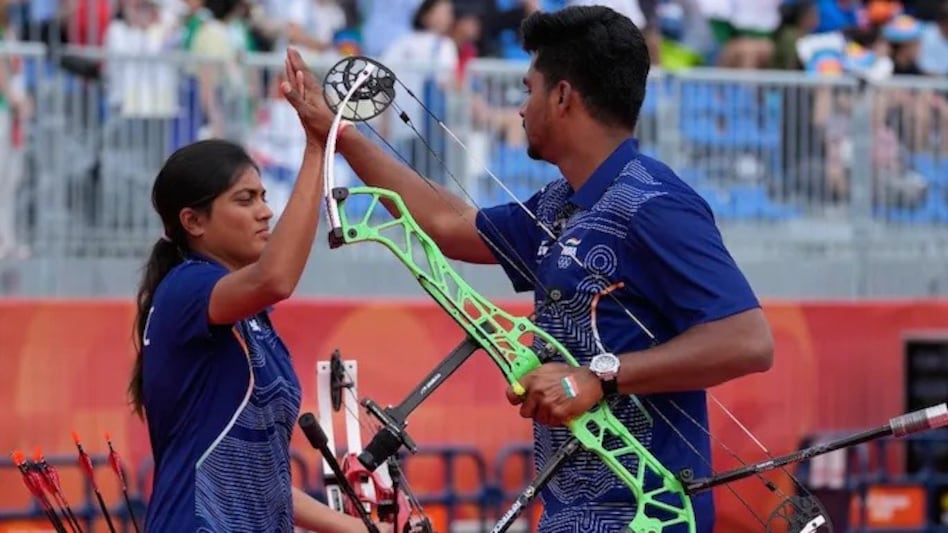
Nevertheless, on Thursday, India won a bronze medal in the mixed team shooting tournament. The pair Parinadj Dhaliwal and Anandjit Singh Naruka took third place. Their scores across six series were 7, 14, 21, 29, 36, and 44 points, respectively.
In the final, the score between India and South Korea was tied at 44-44. Since the score was identical, the decision for gold or silver could not be made solely based on the final results. The qualification round score was used as the deciding factor. As India's qualification score was lower than South Korea's, Korea was ranked higher despite the tie in the final, and India received bronze.
A similar situation occurred the day before.
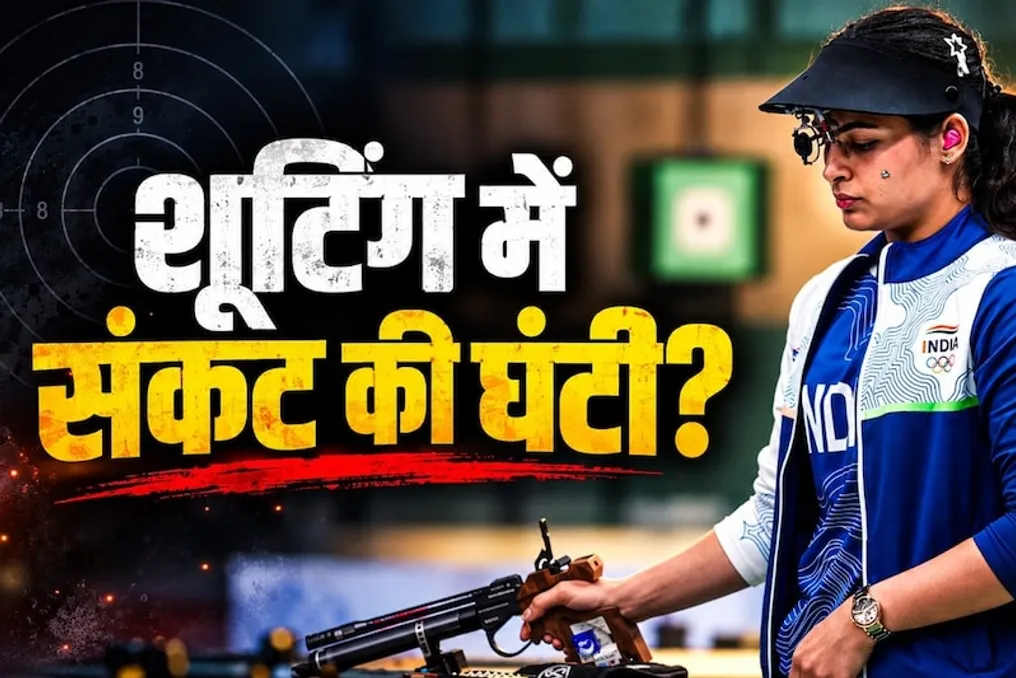
The result of the men's 10-meter air pistol tournament is particularly painful because just one day earlier, the women's Indian team, consisting of stars, also failed to make the final of the same event. The team included two-time Olympic medalist Manu Bhakar, world champion Isha Singh, and Suruchi Singh. Despite high expectations, India did not qualify for the final.
These two days of setbacks pose a serious question to Indian shooting: where exactly is the lapse occurring?
At the Hangzhou 2023 Asian Games, India won a record 22 medals in shooting, including seven golds. There was hope to repeat this success in Nagoya, but after five days, the picture looks different.
Kamaljit narrowly missed the final, and Kedaring's story is different.
For Kamaljit, the final was very close, indicating the depth of the disappointment. His score of 580 points led to ninth place, whereas the final threshold was 581 points. Bhardwaj was also close. However, Kedaring's problems were deeper. The shooter from the Indian army showed a loss of rhythm from the beginning, constantly losing points. When the score improvement stalled, he attempted to adjust the pistol settings, seemingly trying to regain lost momentum.
Concern was visible on the faces of Indian coaches in the spectator stands. Pierre Bouchon, a high-ranking director of sports achievements for India, also closely monitored the situation, but changing the settings did not help Kedaring. His shots contained more nines, and fewer high scores were achieved.
Then came the moment that changed the team medal equation. Coaches from the Japanese staff closely watched one of the Indian shooters during the last round. They observed his performance because a drop in India's points could open the path to bronze for Japan. Under pressure, Kedaring made another mistake. One shot in the last 10 shots scored an eight, dashing India's last hopes. Joy reigned in the Japanese camp, while for the Indian team, it became yet another disappointing finale. Japan finished third with a score of 1730, and India stopped at 1727.
China won gold with a score of 1743. Indonesia also scored 1743, but China won based on the 'inner-10' metric. Chinese shooters accumulated 70 'inner-10s', while Indonesia had 57.
Statistics also reflect India's history. In the individual qualification round, Muhammad Iqbal Raja Probowo from Indonesia posted an impressive score of 589 points, beating the second-placed Chinese shooter by six points. For India, the picture was reversed: Kamaljit stopped just short of the final, Bhardwaj also failed to qualify, and Kedaring could not lead the team to bronze due to declining scores.
It is precisely here in sports like shooting that simply looking at the medal table is insufficient. A one-point difference separates qualifying for the final from not qualifying, and a three-point difference separates a medal from fourth place. The question arises: does India's preparation, strategy against pressure, and in-competition execution control system need any improvements?
Currently, Pierre Bouchon, the high-ranking director of sports achievements for India, has declined to provide an immediate analysis of the situation. In Indian shooting, data, video recordings, physiological data, sports science, and mental control are analyzed.